

The Carbon Floor: How Vertical Integration Just Repriced Australian Grazing Land
APN ANALYSIS: A-251127-AUS131243
Executive Summary
London-based specialist investor Cibus Capital has structurally altered the Australian rural land market with the Q3 2025 launch of its A$300 million ‘Cibus Carbon’ fund. This vehicle is systematically acquiring marginal grazing land, not for livestock, but for large-scale carbon farming projects. The move is strategically timed to coincide with the bottom of the 2024/25 ‘Grazing Correction’, a period that saw land values in target regions fall by over 13%. A key factor is that Cibus Capital’s prior acquisition of Withcott Seedlings, a major national nursery, provides it with a vertically integrated supply chain. This ‘proprietary supply chain control’ allows it to execute environmental plantings at a cost base competitors cannot match, structurally inverting the traditional land value equation.
For property professionals, this event establishes a new paradigm for valuing marginal rural assets. The Highest and Best Use (HBU) for vast tracts of land in semi-arid Australia is no longer grazing, but carbon sequestration. This has created a ‘structural price floor’ under land values, where the price is now underpinned by the asset’s potential to generate Australian Carbon Credit Units (ACCUs), not its carrying capacity for sheep or cattle. This creates a two-speed market: assets with carbon potential are now acquisition targets for institutional capital, while those without remain exposed to agricultural commodity cycles. Understanding this bifurcation is now a primary consideration for valuation, agency, and investment strategy in the rural sector.
Background & Strategic Context
This event validates and calibrates several core APN macro-theses, demonstrating how state-level policy creates market dislocations that can be leveraged by strategically positioned capital. The launch of the Cibus Carbon fund is not an isolated investment but a structured response to a confluence of regulatory drivers, market cycles, and supply chain constraints, confirming the direct causal link between policy frameworks and asset repricing.
A Policy-Driven Demand Signal (APN Sovereign Policy Composite Index™ (SPCI, 24800)): The strategic context is set by the Federal Government’s Safeguard Mechanism, a state-level intervention that creates compliance-driven demand for high-integrity ACCUs. Cibus Capital’s entire strategy is predicated on this government-mandated market, demonstrating how SPCI-aligned actions define the boundaries and create the profit opportunities for new asset classes.
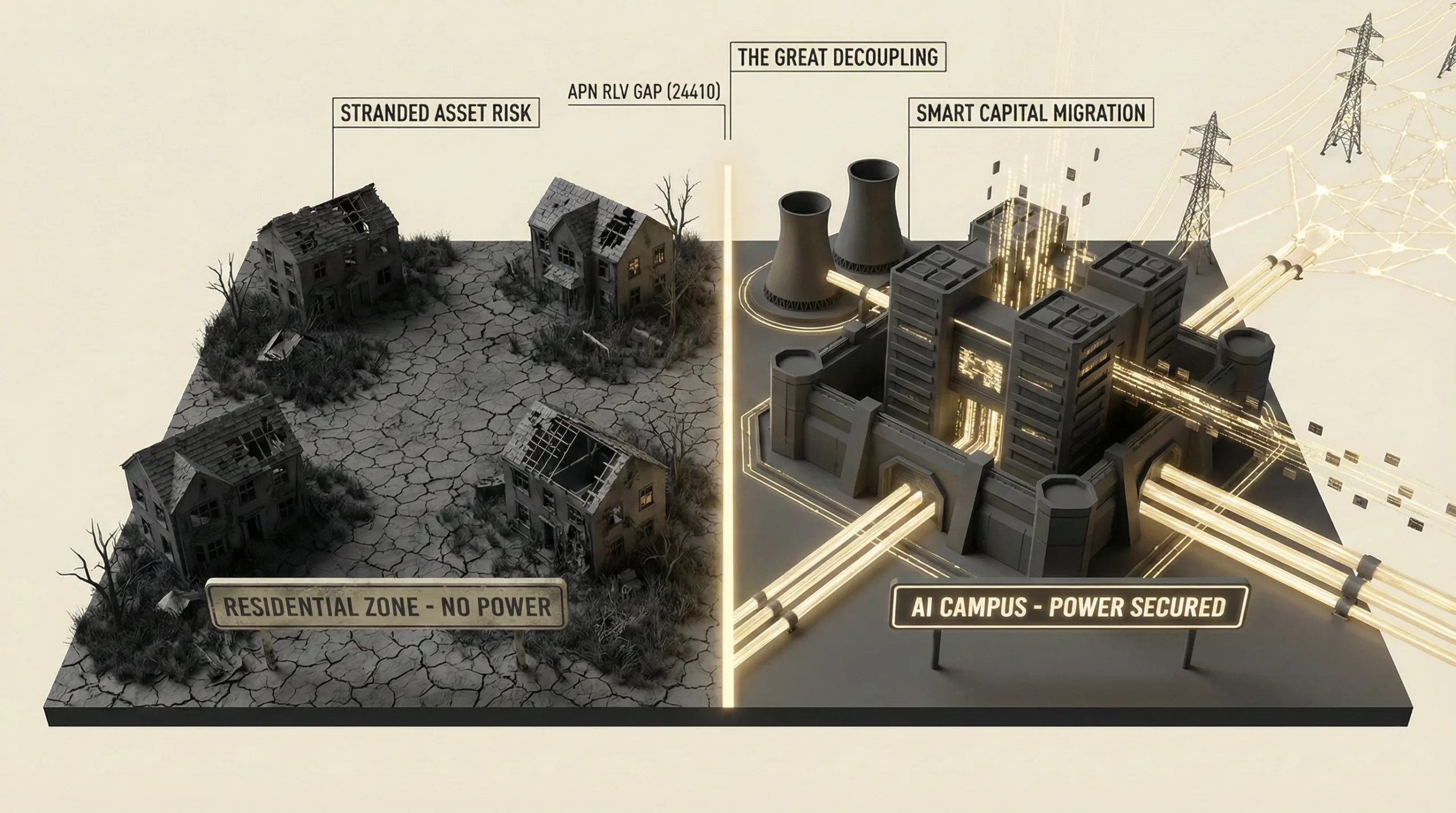
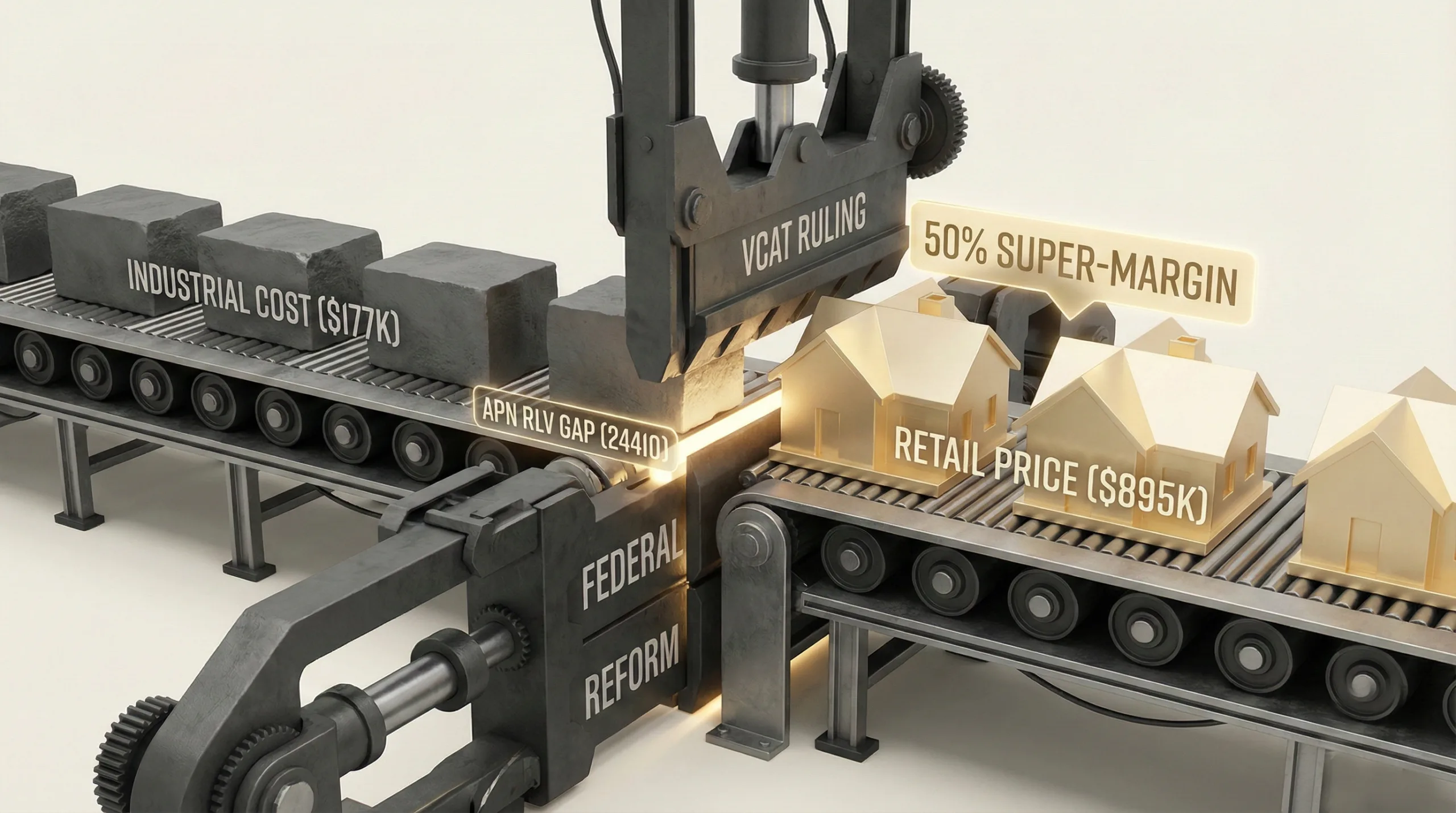
The Viability Gap Inversion (APN Residual Land Value (RLV) Gap™): This is a direct example of the APN RLV Gap™ (24410) inverting. The contraction in grazing returns combined with a stable ACCU price and Cibus’s unique cost advantage means the RLV for carbon farming now structurally exceeds the RLV for traditional agriculture, inverting the HBU calculation.
Quantifying the Green Premium (APN Financial Climate Sensitivity™): The Cibus strategy is a market-based manifestation of the APN Financial Climate Sensitivity™ (24510). Land with high carbon sequestration potential is attracting a quantifiable ‘Green Premium’ (24520), as institutional capital reprices the asset based on its positive climate attributes rather than its vulnerability to drought and commodity price volatility.
Deconstruction of the Source Event
This deconstruction is based on an internal APN analysis synthesising fund structural outlines, market data, and supply chain analysis. The key facts are:
- The Capital Vehicle: On 30 September 2025, Cibus Capital launched ‘Cibus Carbon’, a dedicated Australian fund targeting A$300 million to acquire a land portfolio capable of generating 11.25 million ACCUs over 30 years, implying an estate of over 90,000 hectares.
- The Market Context: The fund’s entry follows a material ‘Grazing Correction’ in 2024/25, where marginal grazing land values fell ~13%. The August 2025 sale of Disalie Station, NSW, for $665/ha established the market ‘floor’ price that triggered Cibus’s acquisition model.
- The Vertical Integration: A Cibus-managed fund acquired a majority stake in Withcott Seedlings in May 2022. Withcott holds ~11% of the national nursery market share and uses advanced automation, giving Cibus a formidable cost and supply advantage for the critical input required for carbon projects: seedlings.
- The RLV Inversion Proof: APN modelling confirms that while standard operators face unviable planting costs of ~$2,500/ha, Cibus’s ‘Withcott Advantage’ lowers this to an estimated $500/ha. This transforms a negative RLV into a positive Carbon RLV of ~$1,642/ha, which is 2.5x the benchmark grazing land value.
- The ‘Proprietary Supply Chain Control’: The Australian market faces a sustained supply constraint of native seedlings, with lead times exceeding 18 months. Cibus’s control over Withcott’s industrial-scale production effectively structurally excludes competitors, allowing it to secure the primary arbitrage opportunity created by the RLV inversion.
Analysis & Balanced View
The ingenuity of the Cibus strategy lies not in the deployment of capital, but in the foresight of its 2022 acquisition of Withcott Seedlings. This was a pre-emptive supply chain strategy, executed years in advance, designed to leverage a known delivery friction point in the emerging Natural Capital sector. The ‘Grazing Correction’ was merely the cyclical trigger that activated a long-planned structural arbitrage. This reveals a paradox at the heart of the market: the downturn in the traditional agricultural sector was the necessary precondition for the emergence of a more higher-yielding, climate-focused asset class.
However, the strategy is not without material risk. The entire model’s viability is contingent upon the stability of Australia’s carbon market policy. Any adverse regulatory change to the Safeguard Mechanism or the integrity of ACCUs could cause a material reduction in the ‘Carbon RLV’ overnight. Furthermore, there is material operational risk. Even with a secure supply of seedlings, the successful establishment of nearly 100,000 hectares of environmental plantings in semi-arid zones faces material threats from drought, fire, and disease. While Cibus has achieved a dominant position in the seedling market, it has not mitigated climatic risk. The ‘proprietary supply chain control’ is also a transient structural barrier; the success of this strategy provides a direct model for other institutional players to follow by acquiring or developing their own supply chain assets, which will eventually erode Cibus’s first-mover advantage.
Strategic Implications for Property Professionals
- For Rural Valuers & Agents: The Highest and Best Use (HBU) analysis for marginal grazing land is now structurally altered. Valuations based solely on Dry Sheep Equivalents (DSE) or livestock revenue are no longer structurally viable in carbon-eligible regions. A ‘Carbon RLV’ calculation, factoring in ACCU potential and establishment viability, must be integrated into all appraisals. Agents must reorient their marketing to highlight carbon potential to attract the new dominant buyer class.
- For Institutional Investors & Fund Managers: The Cibus model is the new strategic model for deploying capital into Natural Capital assets. The key insight is that vertical integration into supply chain friction points is more critical than the land acquisition itself. Future success in this space will depend on securing access to seedlings, seed banks, and planting services to de-risk project execution and maintain margins.
- For Agribusiness Operators & Farmers: Owners of low-productivity grazing land now possess an asset with a potential new revenue stream or a floor price for divestment. The primary constraint is execution. This will likely spur a new market for partnerships between landowners (who provide the land) and integrated carbon developers (who provide the capital and supply chain access), or simply initiate a period of accelerated sales to aggregators at the ‘carbon floor’ price.
- For Buyers’ Agents & Land Aggregators: Search mandates must be recalibrated to prioritise land based on its eligibility for Environmental Planting methodologies (e.g., rainfall zone, clearing history) and its pricing relative to the grazing-to-carbon RLV inversion point. Due diligence must now extend beyond soil and water to include a ‘Seedling and Establishment Feasibility’ assessment as a primary gating factor for any carbon-focused acquisition.
APN Index Management
The APN Codex 24000 Series is a proprietary set of indices that translates complex market forces into measurable metrics. This section outlines how the preceding analysis is validated against, and informs the calibration of, these frameworks.
- Validation: This analysis provides validation for the APN Residual Land Value (RLV) Gap™ (24410). It is a practical demonstration of the framework’s core principle: a structural inversion where a new land use (carbon farming) displaces the traditional use (grazing) as the HBU due to a shift in economic drivers.
- Index Calibration: The APN Financial Climate Sensitivity™ (24510) is recalibrated. ‘Carbon Sequestration Potential’ is now weighted more heavily as a primary variable in calculating the APN Regional Green Premium Uplift™ (24520) for semi-arid grazing zones, directly linking ACCU generation potential to asset value.
- Data Capture: This event triggers a new data capture mandate for the APN Symbiotic Intelligence Network™ (24310). The network will now actively track and quantify the availability, lead times, and pricing of native seedlings and contract planting services as critical inputs for rural land valuation and project viability.
- Framework Linkage: The analysis confirms the causal chain wherein the APN Sovereign Policy Composite Index™ (SPCI, 24800) (via the Safeguard Mechanism) creates market conditions that allow a vertically integrated incumbent (Cibus/Withcott) to be uniquely positioned to capture the resulting value.
Disclaimer
The analysis and information contained in this deconstruction are for general informational and strategic purposes only and do not constitute financial, investment, legal, or any other form of professional advice. The Australian Property Network (APN) is a strategic intelligence organisation and is not a licensed financial advisor.
This analysis is based on data and information from third-party sources believed to be reliable; however, APN provides no warranty as to its accuracy, currency, or completeness. Images used in this analysis are for illustrative and conceptual purposes only and may not represent real persons, properties, or events.
All frameworks (Codex 24100-24800) are proprietary to APN.
Property values and market conditions can go up or down. Before making any property or investment decisions, you must conduct your own thorough research and seek independent professional advice tailored to your specific circumstances.