
Big Bank Predicts Brighter Outlook for Aussie Property as Rates Dip
ANZ has revised its property price growth forecasts upwards, citing recent interest rate cuts by the Reserve Bank of Australia (RBA) as a key driver. According to ANZ’s newly released Australian Housing Outlook report, combined capital city home prices are now projected to increase by 5% by the end of 2025 and 5.8% by the end of 2026. This represents a significant adjustment from the bank’s February forecast, which anticipated growth of just 0.9% this year and 3.8% next year.
This revised outlook suggests a potentially more buoyant period for the Australian property market, particularly for property professionals such as agents and mortgage brokers. The increased price growth predictions could stimulate market activity, leading to higher transaction volumes and increased demand for property-related services.
Impact of Interest Rate Cuts
ANZ senior economist Adelaide Timbrell noted that the RBA’s rate cuts in February, May and August are expected to boost borrowing capacity, enabling buyers to bid more aggressively in competitive situations such as auctions. This aligns with historical trends, as the report indicates that capital city prices have typically gained momentum following the commencement of interest rate cutting cycles. The report showed that home prices historically gain momentum once an interest-rate cutting cycle had begun, with capital city prices increasing by 6.1% on average in the first year since cuts began in 1996, 2001, 2008 and 2011.
RBA Governor Michele Bullock acknowledged in a recent press conference that lower interest rates generally lead to increased property prices, stating, “We do know that historically, as interest rates fall, then activity in the housing market picks up.” This reinforces the expectation that the recent rate cuts will provide further support to the housing market.
Regional Performance and Underlying Factors
The ANZ report identifies Sydney, Melbourne and Darwin as the capital cities expected to experience the strongest performance in 2025 and 2026. Darwin is expected to lead the pack with 14.3% growth in 2025 and 6.1% in 2026. The report also highlights the influence of solid income growth and lower inflation on housing affordability. When inflation is lower, households have more disposable income, which can be directed towards saving for a deposit. The report predicts a slow-down in growth for Brisbane, Perth and Adelaide and a significant uptick in the other capitals.
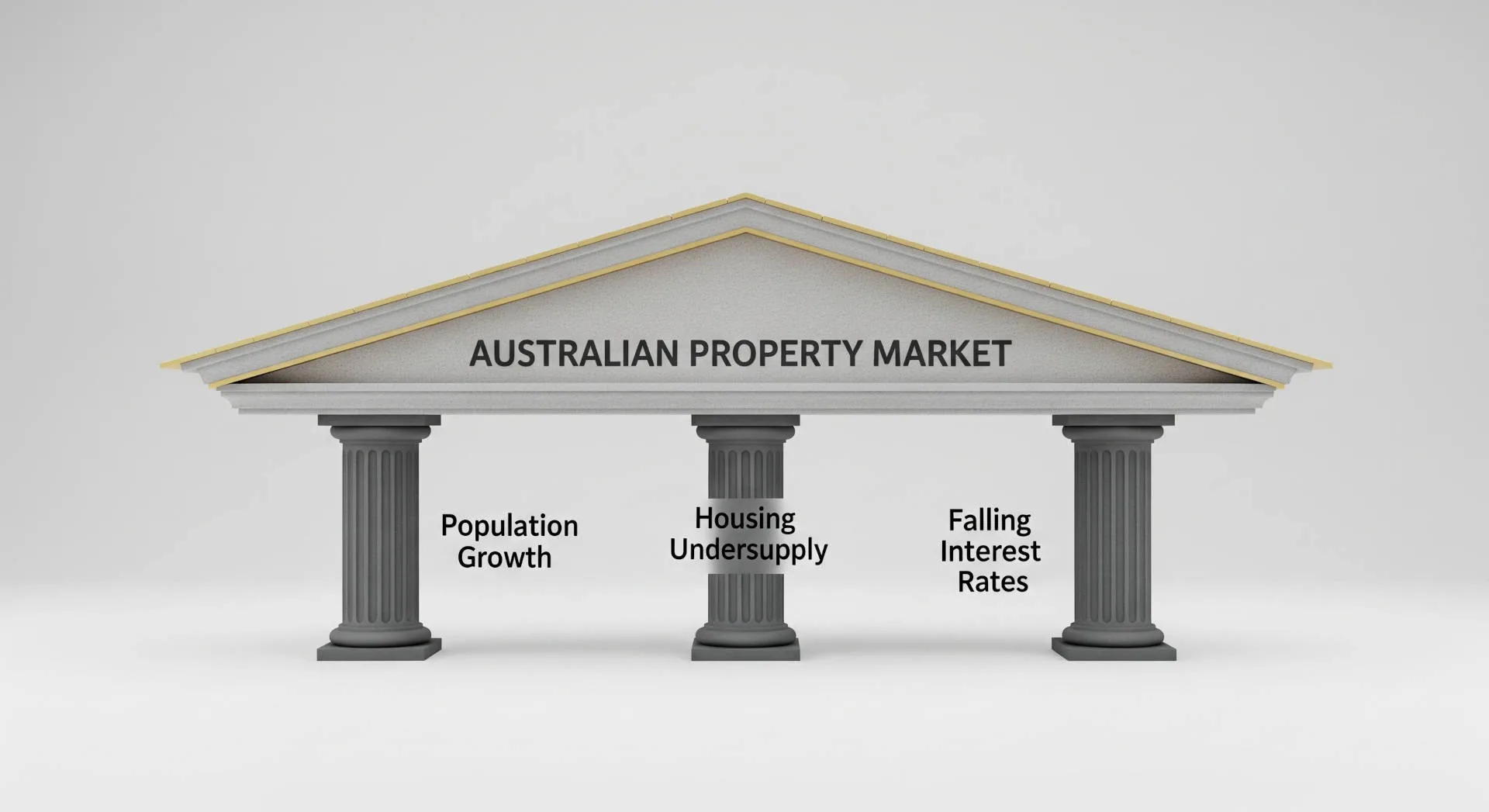
REA Group senior economist Eleanor Creagh suggests that while the latest rate cut will likely contribute to further price increases, the pace of growth is expected to be more moderate compared to the past two years. Creagh attributes this to persistent housing undersupply relative to population growth, which continues to exert upward pressure on prices despite affordability constraints.
Supply-Side Dynamics
A key factor underpinning the revised price growth forecasts is the ongoing shortage of housing supply. The report highlights that new and total listings remain down year-on-year. According to the latest PropTrack listings report, new listings are down 3.3% in the overall capital city market in the year to June, however it showed a slight up-tick in total listings of 0.8%. This limited supply intensifies competition among buyers, further driving up prices.
Timbrell suggests that as housing prices rise, more homeowners may be inclined to put their properties on the market, potentially alleviating some of the supply constraints. However, she also notes that the resilience of the Australian household sector, with very few homeowners behind on their mortgages, means that many are choosing to wait out periods of price stagnation rather than selling urgently.
Melbourne’s Potential Rebound
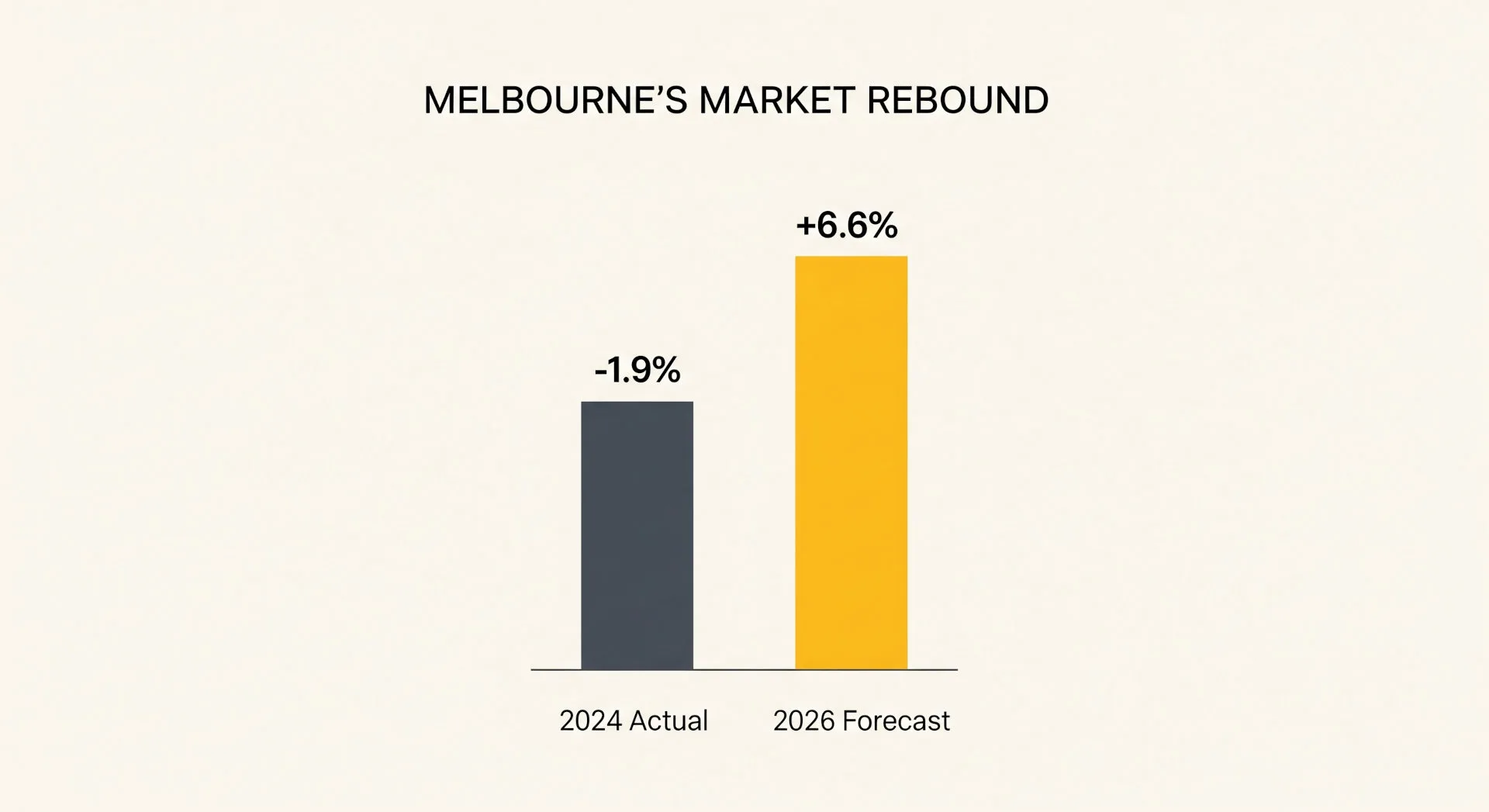
The report anticipates a shift in the two-speed market, with a slowdown in growth for Brisbane, Perth and Adelaide, and a corresponding acceleration in other capital cities. Melbourne, which experienced a 1.9% price fall in 2024, is projected to see a 4.1% increase this year and a 6.6% surge in 2026 – the largest predicted increase for all capitals in that year. This “catch up” is attributed to a period of relative weakness in Melbourne’s housing market compared to other capitals.
This anticipated rebound in Melbourne’s property market presents opportunities for property professionals operating in the city. Agents, developers and investors may need to adjust their strategies to capitalise on the expected increase in demand and prices.
Implications for Property Professionals
The revised property price growth forecasts and the underlying factors driving these changes have several implications for property professionals:
- Agents: Increased market activity and rising prices could lead to higher commission earnings. Agents need to stay informed about the latest market trends and adjust their listing strategies accordingly.
- Mortgage Brokers: Lower interest rates and increased borrowing capacity could drive demand for mortgages. Brokers need to be prepared to handle a potential surge in applications and provide tailored advice to borrowers.
- Developers: The ongoing housing undersupply presents opportunities for developers to bring new projects to market. However, they need to carefully consider factors such as land availability, construction costs and planning regulations.
- Investors: Rising prices and potential rental yield compression may require investors to reassess their investment strategies. They need to carefully evaluate the risk-return profile of different property types and locations.
Overall, the ANZ’s revised outlook suggests a more positive trajectory for the Australian property market, driven by interest rate cuts and persistent supply constraints. Property professionals need to closely monitor these developments and adapt their strategies to navigate the evolving market landscape.
Risks to the Forecast
While the ANZ forecast presents a positive outlook, property professionals should note that it is contingent on several key assumptions and is not without downside risks. A balanced analysis must consider factors that could alter this trajectory:
- Sticky Inflation: The forecast’s primary driver is the expectation of RBA rate cuts. If inflation proves more persistent than anticipated or re-accelerates, the RBA may be forced to delay its cutting cycle or hold rates higher for longer. This would dampen borrowing capacity and could invalidate the core premise of the forecast.
- Labour Market Softening: The outlook assumes a relatively robust labour market. Should unemployment rise more sharply than expected, it would reduce household income, curb buyer demand, and potentially lead to an increase in distressed listings, placing downward pressure on prices.
- Regulatory Intervention: If lower rates fuel the market too quickly and raise financial stability concerns, the Australian Prudential Regulation Authority (APRA) could intervene with macroprudential tightening. Measures such as increasing the mortgage serviceability buffer or introducing stricter loan-to-value ratio limits would act as a direct brake on credit availability and temper price growth.
This article is based on a report from www.realestate.com.au titled “Big bank ups property price-growth call as interest rates fall”. You can find the original article here: https://www.realestate.com.au/news/big-bank-ups-property-price-growth-call-as-interest-rates-fall/
Given the predicted rise in home prices due to interest rate cuts and the existing undersupply, how can property professionals proactively address the growing affordability gap and ensure equitable access to housing for diverse socioeconomic groups?
Disclaimer
The information contained in this article is for general informational purposes only and does not constitute financial, investment, or legal advice. The Australian Property Network (APN) is not a licensed financial advisor. The content is based on data from third-party sources and is provided without any warranty as to its accuracy, currency, or completeness. Property values can go down as well as up. Before making any property or investment decisions, you should conduct your own research and consider seeking independent professional advice tailored to your specific circumstances.