
HAFF Audit Request Triggers Dual Risk: Policy Uncertainty and RLV Gap Widening via Crowding Out
APN ANALYSIS: A-251025-AUS41
Executive Summary
The formal request to the Australian National Audit Office (ANAO) for an audit into the Housing Australia Future Fund (HAFF) “availability payments” has created a dual, negative market distortion. This Project Overlord event, anchored by claims of high costs (up to $1.7 million per home over 25 years), is degrading policy certainty and paralysing the social housing pipeline.
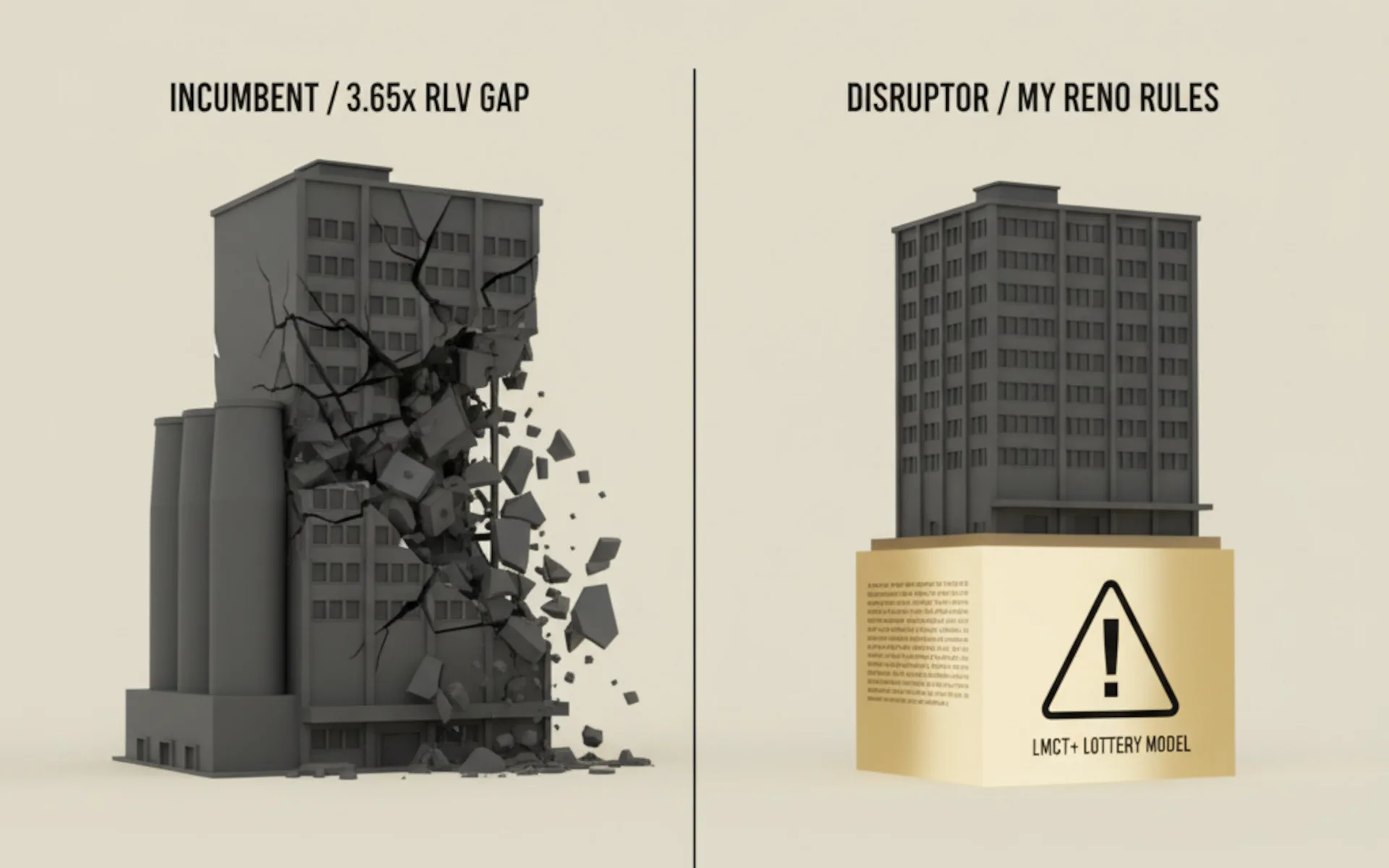
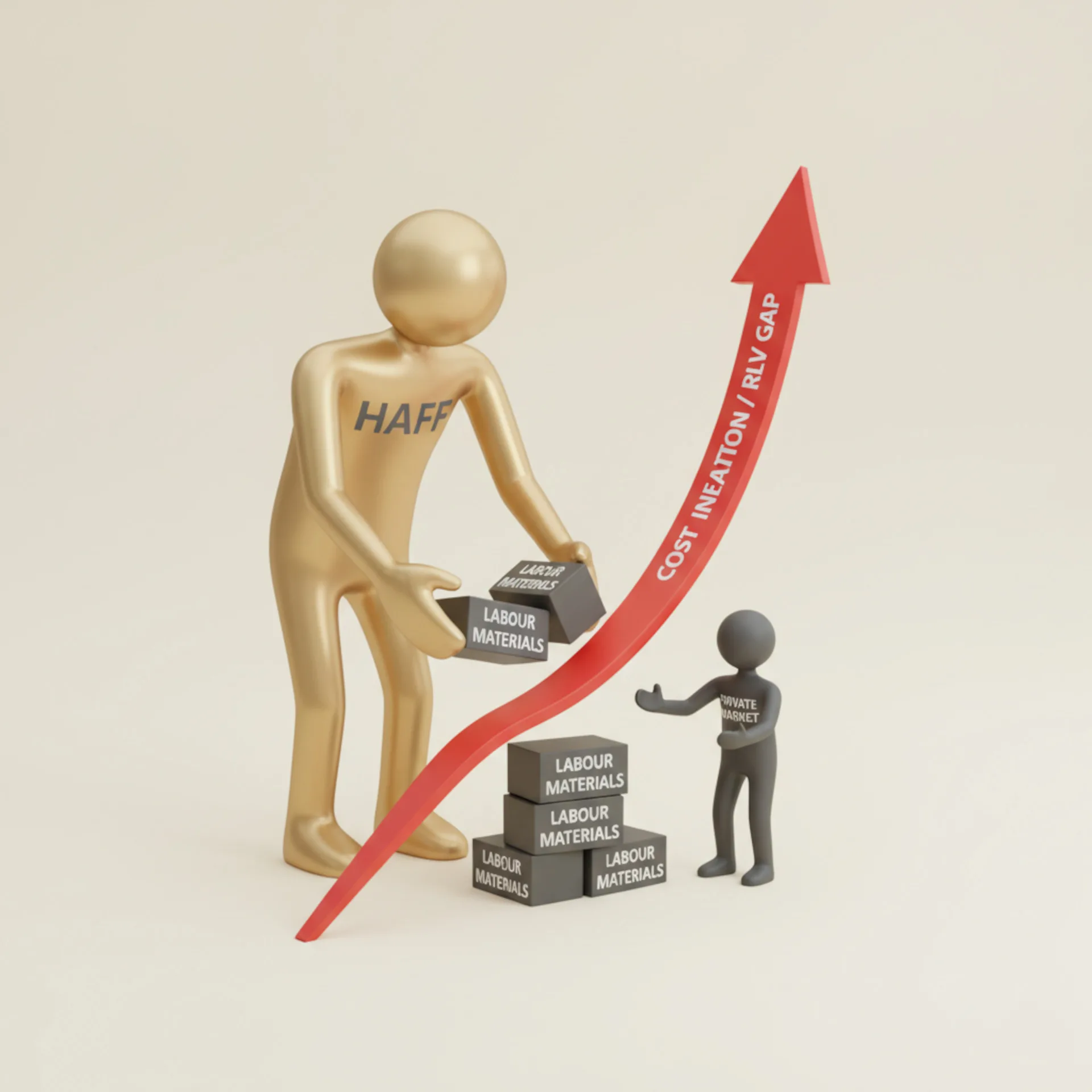
Simultaneously, the HAFF’s injection of capital into a severely constrained construction market is triggering a resource “crowding out” effect. This paradoxically inflates input costs for the entire sector, widening the Residual Land Value (RLV) Gap and limiting the feasibility of private-market supply.
Background & Strategic Context
This audit request and the subsequent market impact highlight a fundamental conflict in the government’s housing policy, and its strategic implications are best understood through our core intelligence frameworks:
State-Led Intervention (Project Overlord): This is a core Project Overlord event. A formal request to the national auditor (ANAO) to scrutinise the government’s flagship housing policy introduces a significant political risk. The resulting policy uncertainty “hobbles strategic planning” for delivery partners, effectively paralysing the pipeline.
Pipeline & RLV Gap Impact (Codex 24400 & Key Metrics): This intervention has a direct, negative impact on the APN Future Development Pipeline Index™ (24400) and a core Key Metric, the Residual Land Value (RLV) Gap. In a market with a 116,700-worker deficit, the HAFF acts as a price-insensitive buyer, “crowding out” private projects by inflating costs for scarce labour and materials. This inflation directly widens the RLV Gap, pushing private projects below financial feasibility.
Deconstruction of the Source Event
This deconstruction is based on an internal APN intelligence briefing. The key facts are:
- A formal request was made to the ANAO on October 10, 2025, to audit the HAFF availability payments.
- The request is based on the claim that HAFF-funded projects may cost up to $1.7 million per home in total payments over 25 years.
- Industry bodies (HIA, CHIA) confirm this scrutiny “impairs market confidence” and will “hobble strategic planning.”
- The Australian construction sector faces a systemic labour shortage, requiring an additional 116,700 workers by 2029.
- The RLV Gap is a key metric defined by expected sales minus construction and related costs; cost inflation is a direct accelerator of the Gap.
- The government’s response has been characterised by secrecy, with a notable absence of a specific public rebuttal or financial justification for the high-cost figures.
Critical Analysis & Balanced View
The “real” story here is the “crowding out” mechanism. In a severely constrained construction market, the HAFF’s injection of large public funds is acting as a price-insensitive buyer, competing for scarce resources and paradoxically inflating input costs for the entire sector.
- RLV Gap Widening: The HAFF-driven cost inflation is a critical insight. It directly increases the “construction and related costs” component of the RLV formula, which suppresses the residual value available for land and profit. This pushes private projects below the threshold of financial feasibility.
- Pipeline Paralysis: The HAFF model relies on 25-year revenue streams. The formal ANAO audit creates a material asymmetry of risk that forces financiers to price in higher capital costs, directly reducing the velocity and viability of the social housing pipeline.
- Narrative Failure: The government’s failure to distinguish between a 25-year nominal payment stream and a one-time upfront capital subsidy has allowed the simple but damaging “$1.7 million per home” headline to define the public debate and justify the scrutiny.
Balanced View: On the surface, this is a political request for a financial audit. However, the analysis reveals it as a dual-risk event. The audit threat itself creates a “pipeline paralysis” by degrading policy certainty. Simultaneously, the HAFF’s funding model is creating a “crowding out” effect that inflates costs for all market participants, paradoxically widening the RLV Gap it was designed to help close.
Strategic Implications for Property Professionals
- For Risk Analysts & Modellers: The APN Future Development Pipeline Index™ (24400) model must explicitly incorporate a “HAFF-Scrutiny Index” that applies an inflationary multiplier to construction costs in competitive regions, accounting for the crowding-out effect on RLV viability.
- For HAFF Delivery Partners: You must prioritise asset acquisition (lower execution risk) over new construction (high crowding-out/inflationary risk) for HAFF-funded projects until the program’s political and administrative stability is demonstrably secured.
- For Private Developers: The widening RLV Gap necessitates a pivot to de-risk projects. This can be done by front-loading capital or securing pre-approvals before the full inflationary impact of the HAFF’s large-scale funding rounds materialises.
- For Government & Policy: You must immediately release an audited Net Present Value (NPV) breakdown of the HAFF’s availability payments. This is the only way to counter the damaging nominal cost narrative and reduce the audit risk that is poisoning the program’s cost of capital.
Disclaimer
The analysis and information contained in this analysis are for general informational and strategic purposes only and do not constitute financial, investment, legal, or any other form of professional advice. The Australian Property Network (APN) is a strategic intelligence organisation and is not a licensed financial advisor.
This analysis is based on internal APN intelligence, data, and information believed to be reliable; however, APN provides no warranty as to its accuracy, currency, or completeness. Images used in this analysis are for illustrative and conceptual purposes only and may not represent real persons, properties, or events. Property values and market conditions can go down as well as up.
Before making any property or investment decisions, you must conduct your own thorough research and seek independent professional advice tailored to your specific circumstances.