
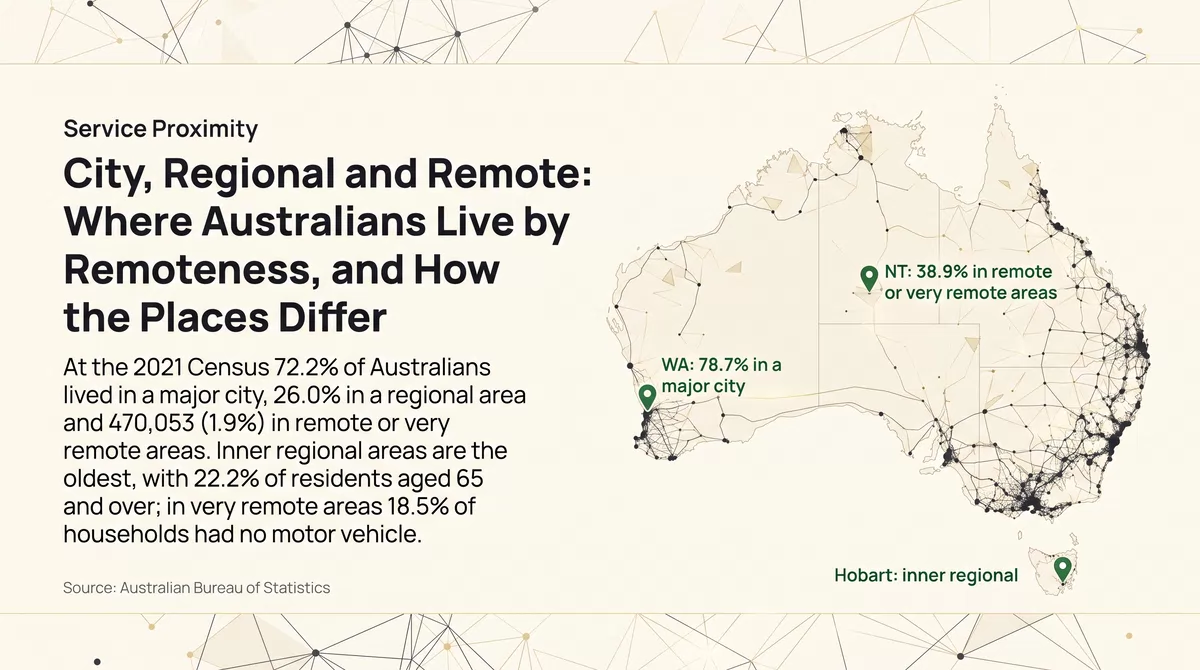

City, Regional and Remote: Where Australians Live by Remoteness, and How the Places Differ
At the 2021 Census 72.2% of Australians lived in a major city, 26.0% in a regional area and 470,053 (1.9%) in remote or very remote areas. Inner regional areas are the oldest, with 22.2% of residents aged 65 and over;...
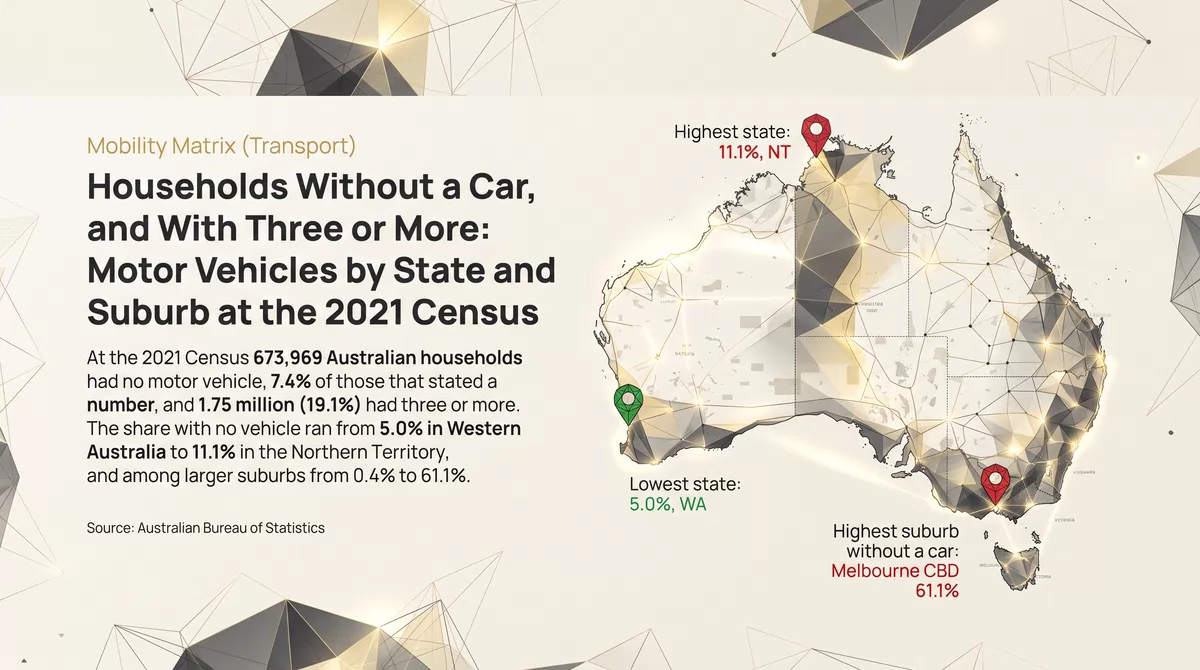
Households Without a Car, and With Three or More: Motor Vehicles by State and Suburb at the 2021 Census
At the 2021 Census 673,969 Australian households had no motor vehicle, 7.4% of those that stated a number, and 1.75 million (19.1%) had three or more. The share with no vehicle ran from 5.0% in Western Australia to 11.1% in...
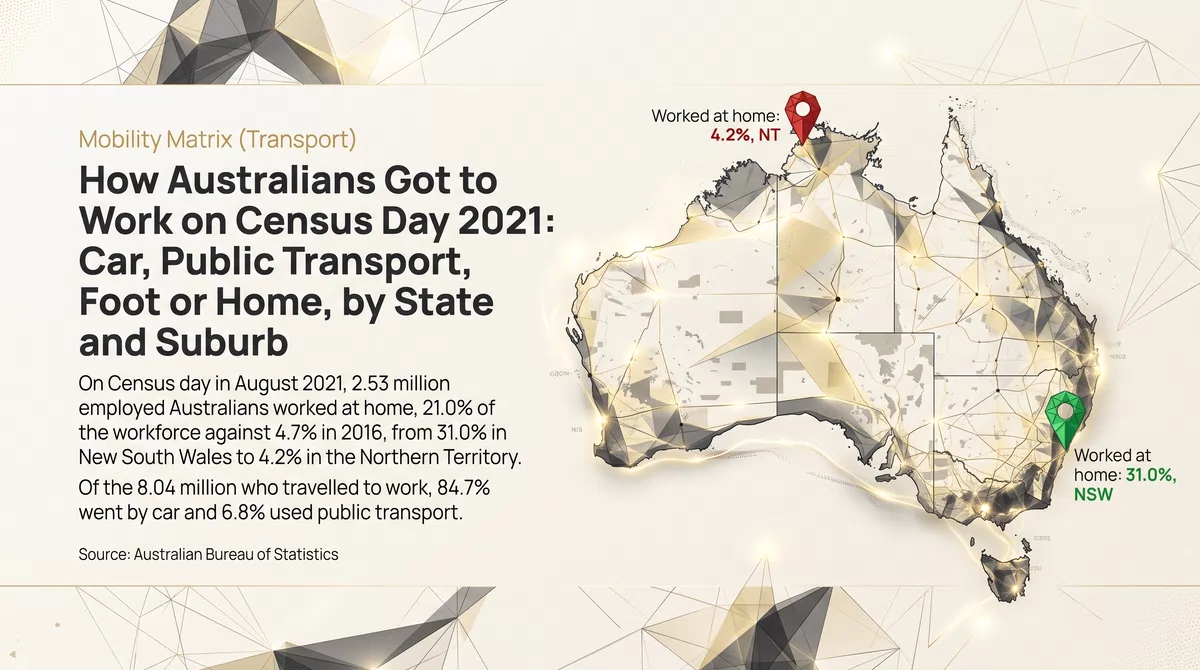
How Australians Got to Work on Census Day 2021: Car, Public Transport, Foot or Home, by State and Suburb
On Census day in August 2021, 2.53 million employed Australians worked at home, 21.0% of the workforce against 4.7% in 2016, from 31.0% in New South Wales to 4.2% in the Northern Territory. Of the 8.04 million who travelled to...
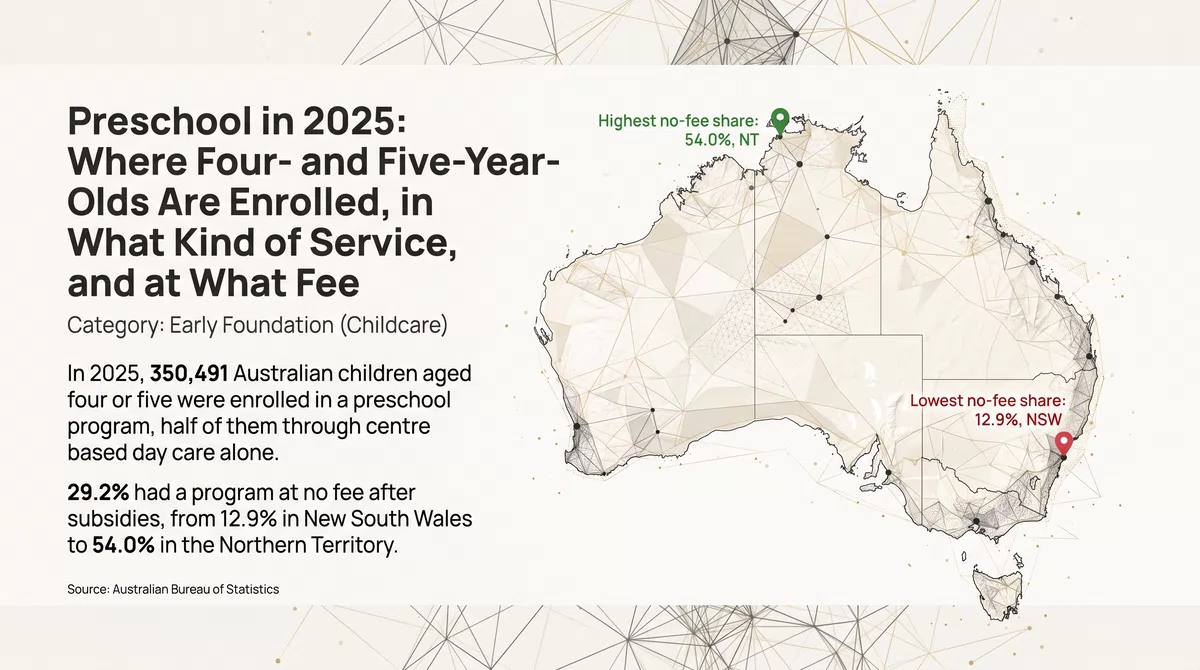
Preschool in 2025: Where Four- and Five-Year-Olds Are Enrolled, in What Kind of Service, and at What Fee
In 2025, 350,491 Australian children aged four or five were enrolled in a preschool program, half of them through centre based day care alone. 29.2% had a program at no fee after subsidies, from 12.9% in New South Wales to...
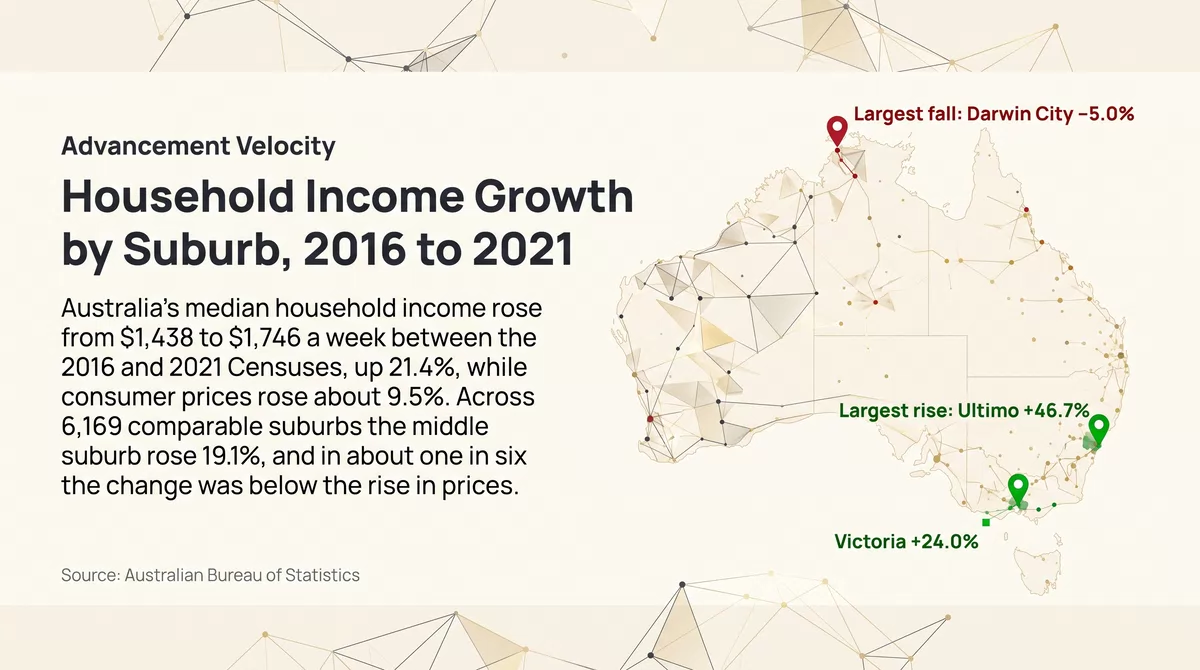
Household Income Growth by Suburb, 2016 to 2021
Australia's median household income rose from $1,438 to $1,746 a week between the 2016 and 2021 Censuses, up 21.4%, while consumer prices rose about 9.5%. Across 6,169 comparable suburbs the middle suburb rose 19.1%, and in about one in six...
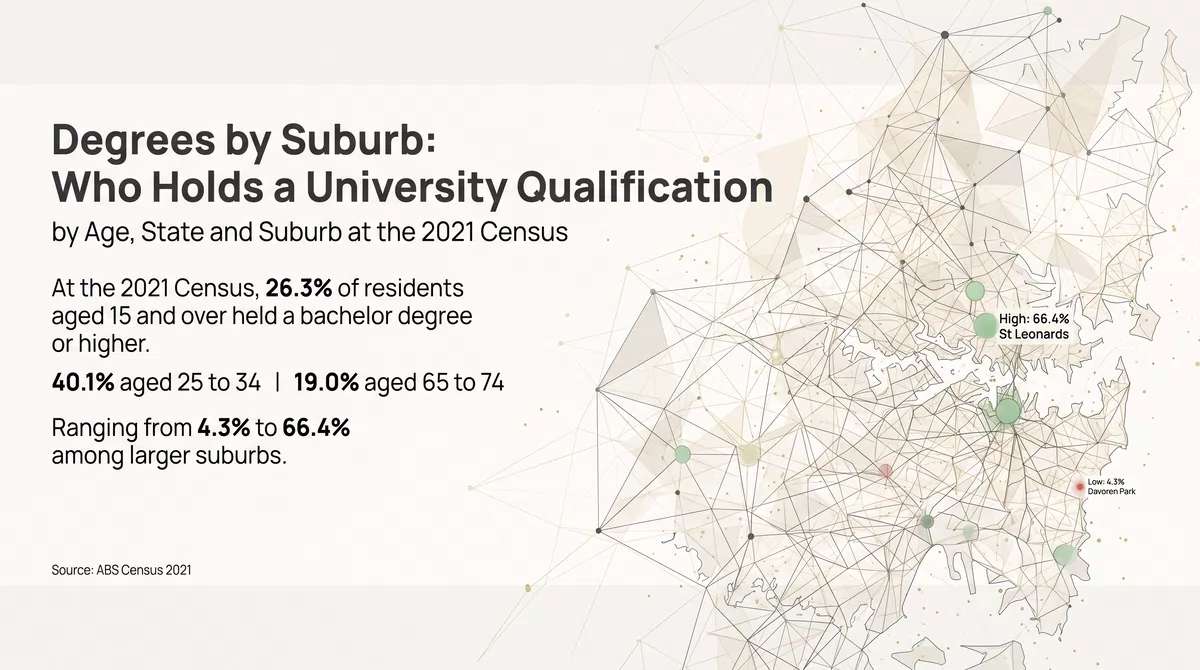
Degrees by Suburb: Who Holds a University Qualification, by Age, State and Suburb at the 2021 Census
At the 2021 Census 5.46 million people held a bachelor degree or above, 26.3% of residents aged 15 and over and 40.1% of those aged 25 to 34. The share rises with the size of the place, from 16.4% to...
