
The A$1.5B Fortress Bid: Link REIT’s Offer Confirms Systemic Repricing of Australian Prime Retail
APN ANALYSIS: A-251116-AUS130492
Executive Summary
Hong Kong’s Link REIT has launched a A$1.5 billion unsolicited offer for a 50% stake in three of Lendlease’s ‘fortress’ retail assets: Sunshine Plaza, Macarthur Square, and Lakeside Joondalup. This is a bellwether event, serving as the market’s first large-scale physical manifestation of a core APN thesis: a massive inflow of cross-border capital, blocked from new development by a crippled supply pipeline, is now being aggressively funnelled into a narrow and finite class of dominant, institutional-grade retail centres. The transaction is a powerful positive inflection signal for the APN Professional Sentiment Index™, confirming that sophisticated global capital sees deep value and resilience in Australia’s top-tier retail assets.
For property professionals, this transaction is not just another deal; it is the market confirming a systemic bifurcation. It validates that institutional capital is now aggressively competing for ‘Agora’ status assets, creating a significant pricing premium and widening the value gap between prime, dominant centres and secondary retail stock. This signals a new phase of capital allocation focused on resilience and dominance over speculative growth, fundamentally altering the risk and valuation landscape for the entire retail sector.
Background & Strategic Context
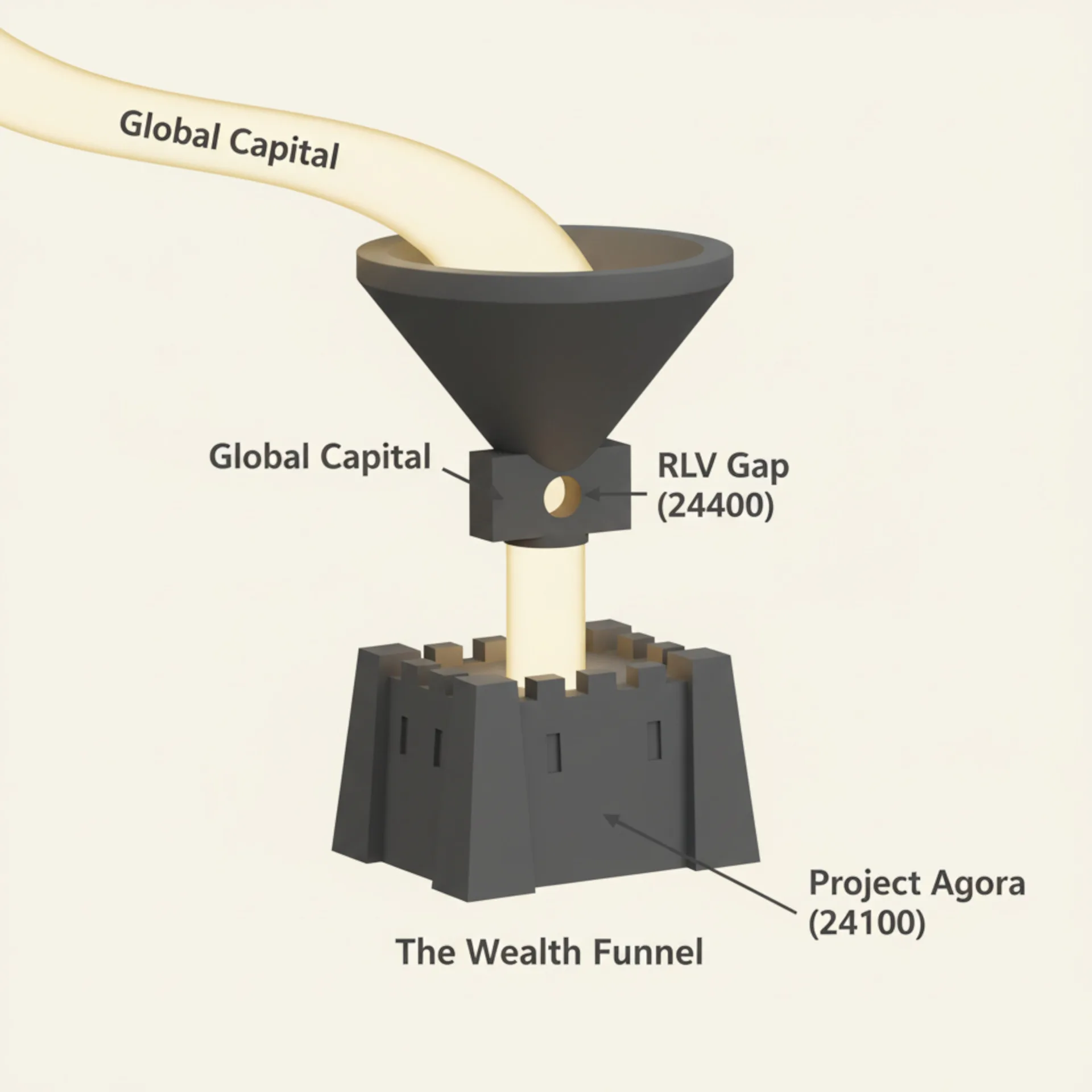
This analysis provides a direct, data-driven validation of the “Wealth Funnel” thesis, where a capital surplus is colliding with a supply deficit to reshape the market.
-
The ‘Wealth Funnel’ (A Macro Dynamic): This transaction is a textbook validation of the APN “Wealth Funnel” thesis. A $7.1 billion surge in Q3 cross-border investment, representing a vast pool of capital, is being blocked from new development outlets. This capital is now being forced into the existing secondary market, where it must compete for a limited supply of high-quality, income-producing assets. This dynamic directly benefits incumbent owners (like APPF Retail) by inflating asset values.
-
Asset Selectivity (Project Agora): This inbound capital is not indiscriminate; it is highly selective. The Link REIT bid specifically targets assets that perfectly align with the APN Agora™ (24140) definition: dominant, “fortress-style” regional centres that function as essential community hubs. These assets, pre-vetted by co-ownership with respected REITs (GPT, Vicinity), offer the resilient, non-discretionary cash flows that institutional capital demands in a volatile environment.
-
The Supply-Side Driver (The RLV Gap): The engine driving this “Wealth Funnel” is the collapse of new supply, a trend quantified by the APN Future Development Pipeline Index™ (24400). A 30-40% surge in construction costs has created a significant APN RLV Gap™ (24410), rendering most new large-scale retail projects financially unviable. This forecast contraction in the development pipeline is the critical constraint that makes existing, high-quality centres irreplaceable and, therefore, exceptionally valuable.
Deconstruction of the Source Event
This deconstruction is based on APN’s analysis of multiple corroborating financial news sources, primarily originating from The Australian Financial Review, as direct corporate filings are absent, consistent with a preliminary, unsolicited offer. The key facts are:
- The Offeror: Link Real Estate Investment Trust (Link REIT, 00823.HK), identified as Asia’s largest listed trust by market capitalisation.
- The Target: Lendlease’s Australian Prime Property Fund Retail (APPF Retail), a A$2.8 billion wholesale property fund.
- The Transaction: An unsolicited offer valued at approximately A$1.5 billion to acquire 50% stakes in three of the fund’s four remaining core assets.
- The Assets: A portfolio of dominant, institutional-grade regional shopping centres: Sunshine Plaza (QLD), Macarthur Square (NSW), and Lakeside Joondalup (WA).
- The Strategic Context: The bid targets a fund known to be under pressure to meet investor redemptions, having recently divested other assets for liquidity. This positions Link REIT as a sophisticated capital provider identifying a motivated seller to acquire assets that are seldom offered to the market.
- The Structure: This is a single portfolio acquisition, not a series of individual deals. It allows Link REIT to gain a billion-dollar-plus foothold in the Australian market with scale and efficiency, bypassing the friction of multiple negotiations.
Critical Analysis & Balanced View
The significance of this transaction extends beyond a simple ‘flight to quality’. It is a ‘flight to scale’. The portfolio nature of the bid is a strategic masterstroke, allowing Link REIT to deploy a substantial quantum of capital in a single move, achieving immediate and significant market presence. Furthermore, the co-ownership structure with Australian REIT heavyweights GPT Group and Vicinity Centres acts as a powerful de-risking mechanism. Link REIT is not just acquiring property; it is buying into established, best-in-class management partnerships, providing immense confidence in the assets’ operational excellence and market position.
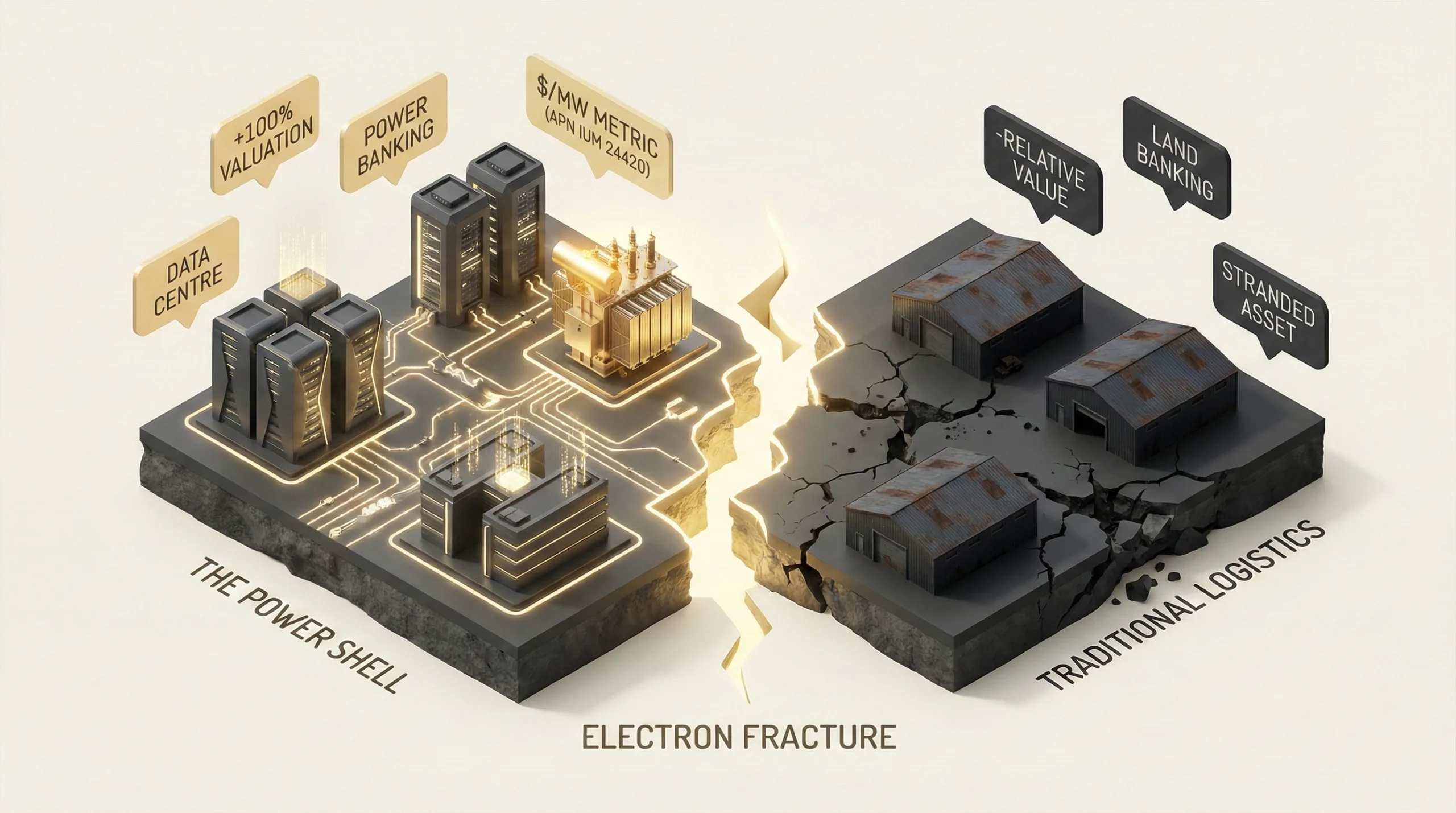
This event marks the definitive end of the simplistic ‘death of retail’ narrative. It is replaced by a more nuanced and accurate thesis: the ‘death of mediocre retail’. The market is now clearly bifurcated. While ‘fortress’ assets like those in the APPF portfolio command premium pricing and attract global capital, secondary centres without a clear strategic purpose or dominant trade area face a future of capital starvation and value erosion. The primary risk now shifts to the potential for an asset bubble. The intense concentration of capital into a very small number of prime assets could inflate valuations beyond their long-term fundamentals, creating vulnerability if the economic tailwinds or consumer behaviours that support them were to shift unexpectedly.
Strategic Implications for Property Professionals
- For Valuers & Financiers: The valuation methodology for retail assets must be immediately recalibrated. A quantifiable ‘Agora Premium’ now applies to dominant, fortress-style centres. Conversely, secondary assets must be discounted more aggressively to reflect their heightened liquidity risk and lack of access to institutional capital.
- For Asset & Fund Managers: The strategic imperative is now portfolio purification. The playbook is clear: divest non-core, B-grade, and secondary retail assets to fund the acquisition of, or consolidation of interests in, dominant regional centres. The Link REIT bid demonstrates that motivated sellers of prime assets are rare, but motivated sellers of entire funds are an actionable target.
- For Agents & Buyers’ Agents: Transactional activity will be intensely focused on the top end of the market. The greatest value lies in facilitating complex, off-market portfolio deals and sourcing strategic stakes in these prime assets. For clients unable to compete at this institutional level, the focus must be on identifying assets in the ‘next tier’ that exhibit strong, emerging Agora characteristics and have a clear pathway to achieving trade area dominance.
- For Developers: The significant Residual Land Value (RLV) Gap makes new, large-scale retail development fundamentally unviable. The strategic pivot is away from greenfield projects and towards the complex but potentially lucrative repositioning of existing B-grade centres. Opportunities lie in converting these underperforming assets into specialised, convenience-led, or mixed-use community hubs that serve a niche not dominated by the major regional players.
APN Index Management
The APN Codex 24000 Series is a proprietary set of indices that translates complex market forces into measurable metrics. This section outlines how the preceding analysis is validated against, and informs the calibration of, these frameworks.
- Validation: This analysis provides definitive validation for the APN Professional Sentiment Index™ (24300), capturing the ‘renewed confidence’ and inflection in professional risk appetite. It validates the core mechanism of The Wealth Funnel and confirms the asset-selection criteria of Project Agora (24100) are being actively deployed by global institutional capital.
- Index Calibration: The APN Professional Sentiment Index™ (24300) is calibrated to register a significant positive inflection based on this bellwether transaction. The weighting of the Future Development Pipeline Index™ (24400) is increased as a causal factor, reflecting the powerful role of the RLV Gap in forcing capital into existing assets.
- Data Capture: This event triggers a new data capture mandate to track and quantify the emerging ‘Fortress Premium’. APN will now actively monitor the bid-ask spread and yield compression differential between ‘Agora’ status assets and the broader retail market to create a measurable sub-index.
Disclaimer
The analysis and information contained in this deconstruction are for general informational and strategic purposes only and do not constitute financial, investment, legal, or any other form of professional advice. The Australian Property Network (APN) is a strategic intelligence organisation and is not a licensed financial advisor.
This analysis is based on data and information from third-party sources believed to be reliable; however, APN provides no warranty as to its accuracy, currency, or completeness. Images used in this analysis are for illustrative and conceptual purposes only and may not represent real persons, properties, or events.
All frameworks (Codex 24100-24800) are proprietary to APN.
Property values and market conditions can go up or down. Before making any property or investment decisions, you must conduct your own thorough research and seek independent professional advice tailored to your specific circumstances.