

The Tipping Point: Deconstructing Australia’s Perfect Storm of Housing Unaffordability
APN ANALYSIS: A-251009-AUS71
Executive Summary
The Australian housing market has reached a critical tipping point where a perfect storm of colliding government policies and market failures has rendered affordability structurally broken. A chronic shortfall in housing supply is clashing with record-high migration and demand-side stimulus, creating an inescapable squeeze for both buyers and renters. The data is unequivocal: dwelling approvals are failing, prices and rents are at record highs, and vacancy rates are at record lows.
The strategic implication for property professionals is that the fundamental drivers of the market are now in a state of deep conflict. While the price growth benefits existing owners, the underlying systemic failures, particularly the government’s inability to meet its own housing supply targets, are creating unprecedented risk and social tension. Navigating this environment requires a shift from cyclical market analysis to a deep understanding of the structural and political forces that are now pulling the market in opposite directions.
Background & Strategic Context
The convergence of these negative factors has created a systemic crisis that reveals deep flaws in national policy, a dynamic best understood through our core intelligence frameworks.
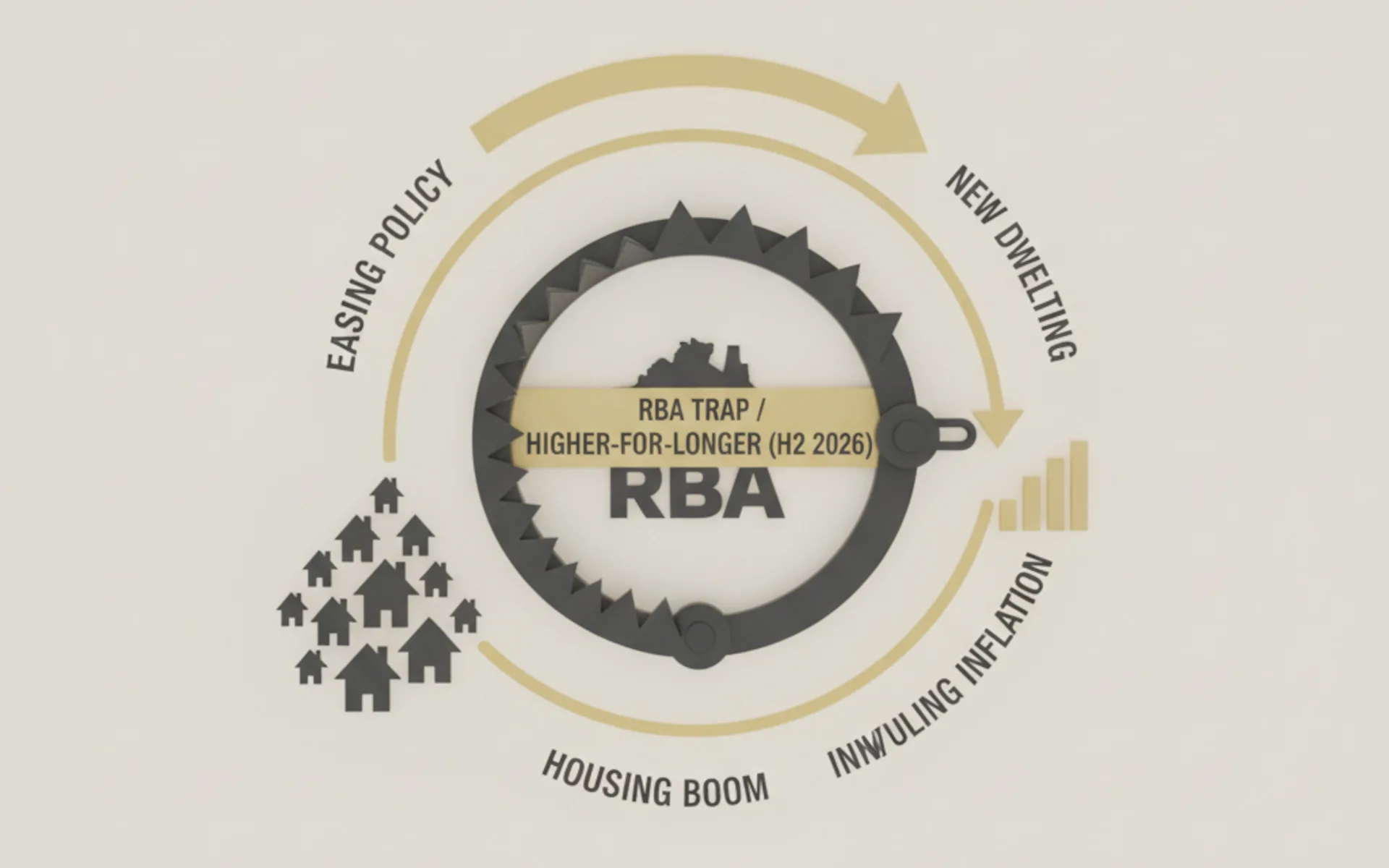
- A Failure of State Architecture (Project Overlord): This crisis is a catastrophic failure of Project Overlord. The government is actively pursuing two diametrically opposed strategies: stimulating demand through record immigration and first-home buyer schemes, while simultaneously failing to deliver the necessary housing supply. This internal policy contradiction is the primary architect of the current crisis, distorting the market and manufacturing unaffordability on a national scale.
- A Blocked Funnel (The Wealth Funnel): The affordability crisis has created a severe blockage at the entry point of The Wealth Funnel. For renters, the record-low vacancy rates and soaring costs make it impossible to save a deposit. For first-home buyers, accelerating prices and demand-side competition place homeownership further out of reach. The funnel is effectively seizing up for new entrants, dramatically widening the intergenerational wealth divide.
Deconstruction of the macrobusiness.com.au Report
The macrobusiness.com.au report collates data from multiple sources (ABS, Cotality, NHSAC) to paint a dire picture of a multi-faceted housing affordability crisis. The key points are:
- Supply Failure: Dwelling approvals are running 22% below the government’s National Housing Accord target, creating a deficit of 61,700 homes in just 14 months.
- Price Acceleration: Capital city dwelling values saw their fastest monthly growth in two years in September, hitting a new record high.
- Rental Crisis: The national rental vacancy rate has hit a record low of 1.4%, with rents increasing by 43% ($200/week) over the past five years.
- Demand Stimulus: Record net overseas migration is adding unprecedented demand, while the new 5% deposit scheme is funnelling more first-home buyers into a supply-starved market.
- Official Acknowledgment: The RBA Governor has acknowledged Australia’s “structural shortage” of homes, stating the supply issue is unlikely to improve for at least two years.
Critical Analysis & Balanced View
The most critical insight is that the Australian housing market is no longer functioning as a simple economic mechanism of supply and demand; it has become a direct and dysfunctional expression of conflicting government policy. The government’s own housing council (NHSAC) forecasts a 79,000-home deficit over the next five years, at the same time as the government is actively increasing population growth through migration and student intake policies. This is not a market cycle; it is a policy-induced structural failure.
The 5% deposit scheme, in this context, acts as an accelerant. It addresses the symptom (inability to save a deposit) while worsening the disease (a fundamental lack of homes). The government is effectively subsidising demand for a product it has failed to supply. The result is a brutal competition for scarce resources, manifesting as record prices and rents.
Balanced View: The housing affordability crisis has now moved past a point of simple market correction and has become a deeply entrenched, structural problem fuelled by contradictory government policies. While the market continues to deliver capital gains for existing owners, the foundations are becoming increasingly unstable. Without a radical and immediate shift in policy to massively increase the supply of new homes, the social and economic consequences of this crisis will only intensify.
Strategic Implications for Property Professionals
- For Developers: The message from the market and the government’s own data is unequivocal: the single biggest opportunity is in delivering new housing supply of all types. The regulatory and planning hurdles remain the primary barrier, making advocacy for streamlined approvals a key industry priority.
- For Investors: The rental market dynamics point to continued low vacancy rates and upward pressure on rents. While this offers strong yields, the risk of government intervention (e.g., rent controls) increases as the social crisis deepens. A long-term, sustainable approach to tenancy management is critical.
- For Agents: You are on the front line of this crisis. Managing the expectations of both buyers (facing extreme competition) and renters (facing a severe shortage) is now a core part of your role. Providing clear, data-driven advice is essential to maintaining client trust.
- For Mortgage Brokers: The 5% deposit scheme creates a new client base but also a high-risk cohort. Your duty of care to explain the risks of high-leverage debt in a market at its peak is paramount to the long-term financial health of your clients.
This article is based on a report from www.macrobusiness.com.au titled “The week housing affordability died”. You can find the original article here: https://www.macrobusiness.com.au/2025/10/the-week-housing-affordability-died/
Given the conflicting pressures of increasing demand through immigration and failing to meet housing supply targets, how can property professionals innovate to create more affordable and sustainable housing solutions that address the needs of a growing population while mitigating negative impacts on existing homeowners and renters?
Disclaimer
The analysis and information contained in this deconstruction are for general informational and strategic purposes only and do not constitute financial, investment, legal, or any other form of professional advice. The Australian Property Network (APN) is a strategic intelligence organisation and is not a licensed financial advisor.
This analysis is based on data and information from third-party sources believed to be reliable; however, APN provides no warranty as to its accuracy, currency, or completeness. Images used in this analysis are for illustrative and conceptual purposes only and may not represent real persons, properties, or events. Property values and market conditions can go down as well as up.
Before making any property or investment decisions, you must conduct your own thorough research and seek independent professional advice tailored to your specific circumstances.