
Victorian Crime Surge Confirms High-Velocity Social Capital Erosion and Threatens Urban Core Asset Value Proposition
APN ANALYSIS: A-251025-AUS36
Executive Summary
A 20.1% surge in Victorian criminal incidents, driven primarily by acquisitive property and retail crime, confirms a high-velocity degradation of social capital. This crime wave, which has seen the Melbourne LGA’s crime rate hit 17,792 incidents per 100,000 residents, is a quantifiable negative input to our Project Sentinel index.
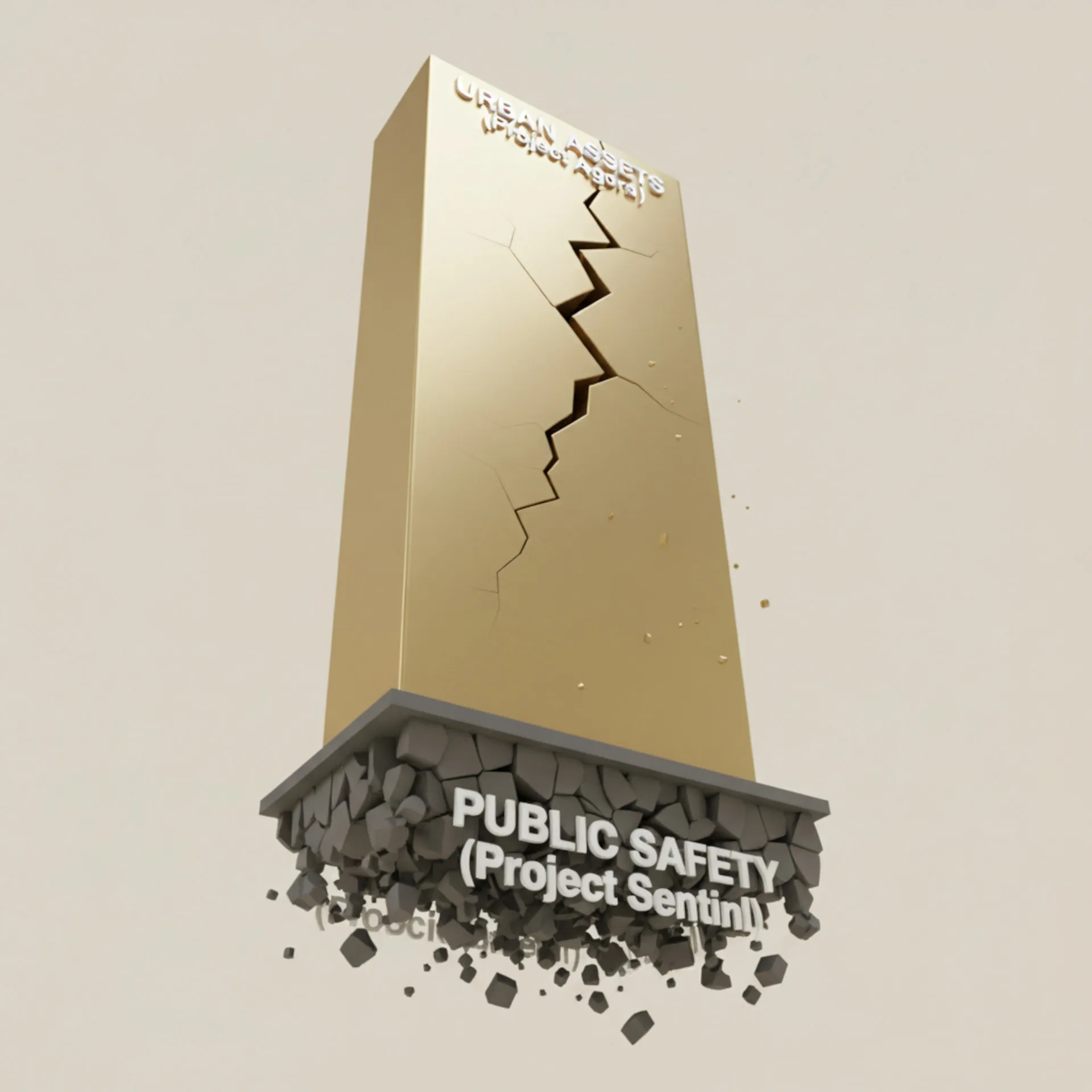
This erosion of public safety creates a fundamental, long-term threat to the value proposition of urban core assets. While property bodies remain silent, the crisis is creating a structural headwind for Project Agora assets (office, retail, and high-density residential) by undermining the prerequisite of a safe and vibrant commercial environment.
Background & Strategic Context
This surge in acquisitive crime represents a serious degradation of community safety, and its strategic implications are best understood through our core intelligence frameworks:
Social Capital Erosion (Project Sentinel) This event is a direct, quantifiable failure of Project Sentinel (The Safety & Sentiment Index), which is the foundational pillar of the APN Social Capital Index™ (24100). The 20.1% surge, driven by highly visible crimes like retail and car theft (+38.6% and +47.1% respectively), causes a high-velocity erosion of public trust and the perception of safety, which is then amplified by polarised political narratives.
Urban Asset Viability (Project Agora) The crime surge creates a structural tension with Project Agora (The Amenity & Access Index). The long-term value of office, retail, and high-density residential assets is fundamentally reliant on the prerequisite of public safety. By eroding the habitability and commercial vibrancy of the urban core, the Project Sentinel failure places a direct drag on the value proposition of Project Agora assets.
Erosion of State Efficacy (Project Overlord) The response to the crisis signals an erosion of faith in state-level protective functions. The City of Melbourne employing its own street security and retail associations demanding dedicated legislative reform are Project Overlord signals. This confirms a perceived failure of sufficient state-level policing, forcing municipal and private entities to step in.
Deconstruction of the Source Event
This deconstruction is based on an internal APN intelligence briefing. The key facts are:
- State-wide criminal incidents in Victoria increased by 20.1% year-on-year (to March 2025).
- The surge is led by acquisitive crimes: theft from motor vehicle (+39.3%), motor vehicle theft (+47.1%), and theft from a retail store (+38.6%).
- The Melbourne LGA recorded the highest crime rate at 17,792.1 incidents per 100,000 residents, a 21.3% increase.
- Retail associations have declared a “Victorian retail crime crisis,” with an offence occurring “at least once every five minutes.”
- The City of Melbourne has responded by employing its own private security guards for street patrols.
- Victoria Police has officially linked record-high retail theft directly to “cost of living pressures.”
Critical Analysis & Balanced View
The “real” story here is the economic causality and the subsequent disconnect in the public narrative. The police have empirically linked the acquisitive crime surge to socioeconomic instability (“cost of living pressures”). However, public fear and political framing often focus on violence, creating a disconnect between the statistical reality (theft) and the visceral public sentiment (fear).
- Indirect Threat to Asset Value: The “cone of silence” from major property bodies (PCA, REIV) indicates the risk is internally recognised but deemed too sensitive for public comment. This crime surge is an indirect social headwind, not a direct crash, but it structurally undermines the long-term investment thesis for urban renewal and density.
- Failure of Institutional Efficacy: The most critical signal is the intervention of non-state actors. When a municipal council must hire its own guards to patrol the CBD, it confirms a demonstrable loss of faith in the state’s ability to perform its core protective functions.
Balanced View: On the surface, this is a law-and-order crisis driven by cost-of-living pressures. However, the analysis reveals it is a high-velocity degradation of social capital (Project Sentinel) that has a direct, albeit lagging, negative impact on urban asset values (Project Agora). The “cone of silence” from property bodies signals that the risk is real, and the intervention of council-funded security proves that faith in institutional efficacy is eroding.
Strategic Implications for Property Professionals
- For Commercial Asset Owners (Office/Retail): You must budget for an immediate and permanent uplift in private security, surveillance, and loss prevention technology to mitigate the direct financial impact of this retail crime crisis and maintain a perception of safety for tenants.
- For Valuers & Lenders: A rising “social capital risk discount” must be applied to office and retail assets in the Melbourne CBD and inner LGAs. Sustained high crime will inevitably translate into a quantifiable drag on foot traffic, commercial rents, and long-term asset values.
- For Government & Policy: The clear link between economic pressure and crime suggests that policy aimed at improving socioeconomic stability will be a more effective long-term mitigation strategy for community safety than purely punitive measures.
- For Residential Developers: The “cone of silence” from peak bodies is your signal of an early-stage risk. A future shift in their narrative (from silence to public comment) will be the key indicator that the crime surge is materially impacting buyer sentiment, transaction activity, or residential values.
Disclaimer
The analysis and information contained in this deconstruction are for general informational and strategic purposes only and do not constitute financial, investment, legal, or any other form of professional advice. The Australian Property Network (APN) is a strategic intelligence organisation and is not a licensed financial advisor.
This analysis is based on data and information from third-party sources believed to be reliable; however, APN provides no warranty as to its accuracy, currency, or completeness. Images used in this analysis are for illustrative and conceptual purposes only and may not represent real persons, properties, or events.
Property values and market conditions can go down as well as up.
Before making any property or investment decisions, you must conduct your own thorough research and seek independent professional advice tailored to your specific circumstances.