
REMI Capital Collapse Validates Operational Risk Thesis and Accelerates ASIC’s Private Credit Consolidation Strategy
APN ANALYSIS: A-251023-AUS34
Executive Summary
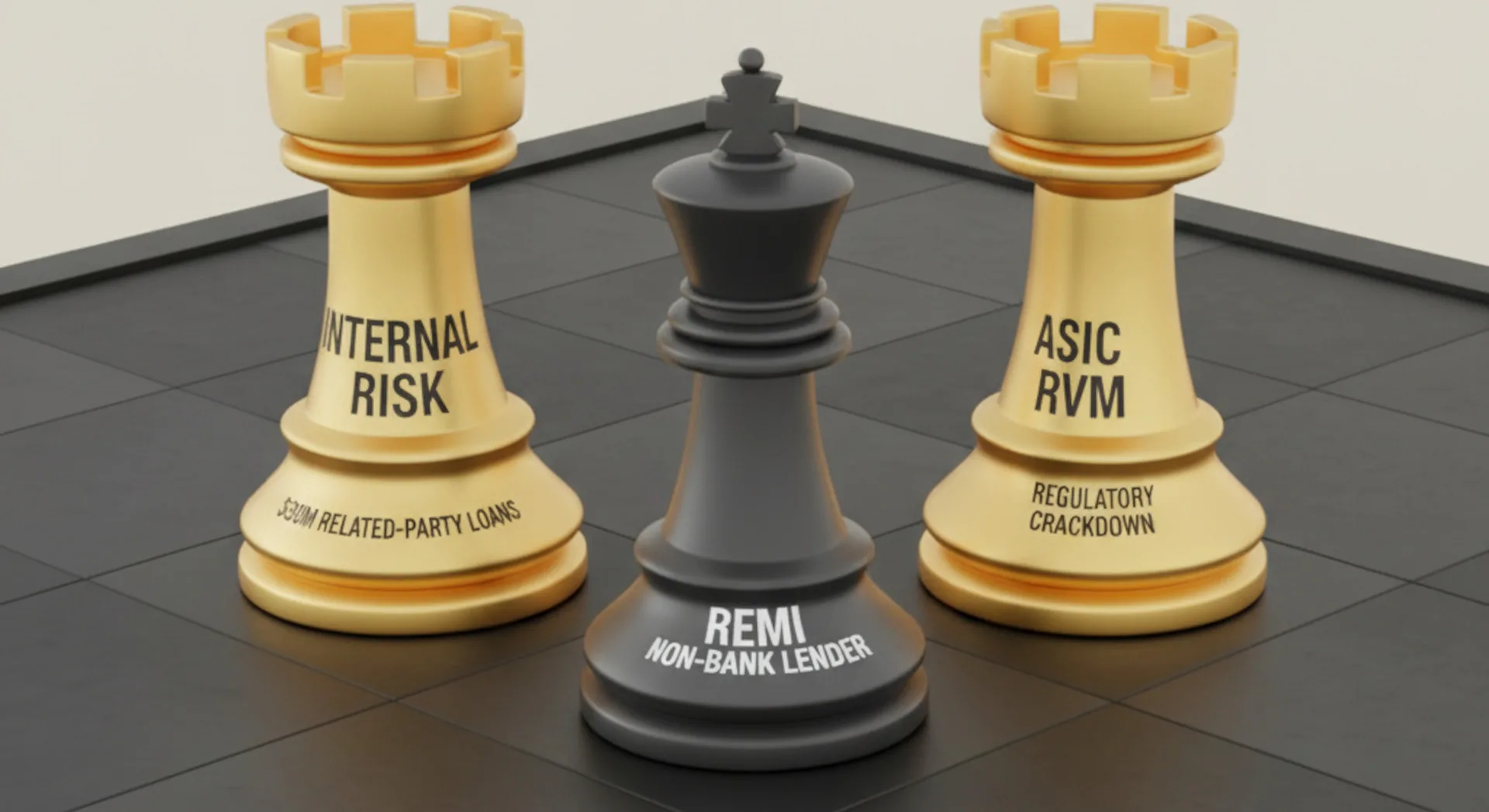
The collapse of REMI Capital, culminating in $124 million of debt owed to 433 investors, has been confirmed as a catastrophic materialisation of internal operational risk rather than a market-driven failure. Allegations of related-party loans and potential misappropriation have validated the core thesis of Project Cerberus Oz, reframing the failure as one of governance, not just credit.
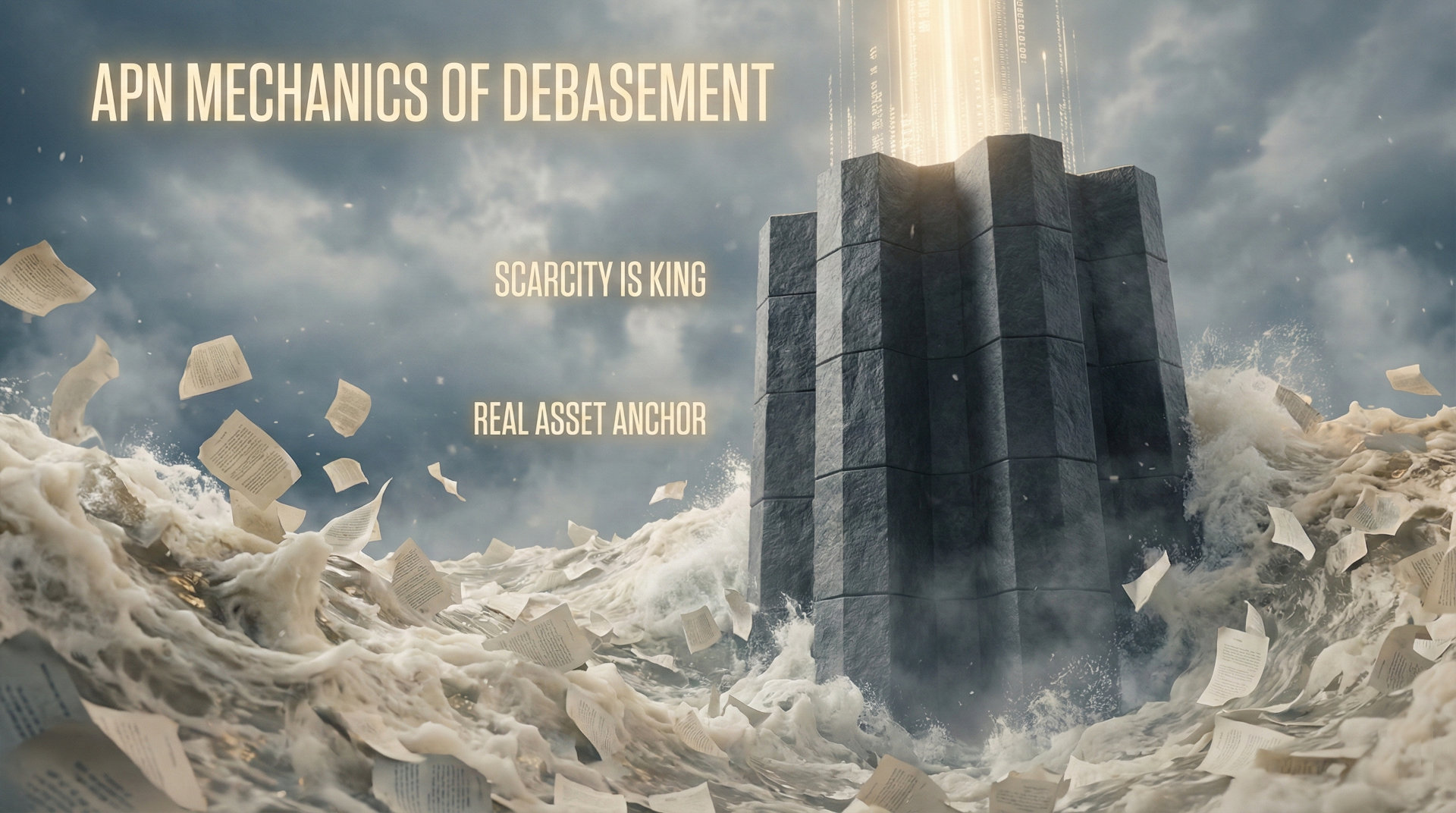
ASIC has seized on this event, cancelling the firm’s AFSL and launching sector-wide surveillance. This has created a powerful Regulatory Velocity Multiplier (RVM) across the $200 billion private credit sector, accelerating a “flight to quality” that will force market consolidation and directly validate The Wealth Funnel thesis.
Background & Strategic Context
This $124 million collapse is a textbook case study in systemic risk, and its strategic implications are best understood through our core intelligence frameworks:
Operational Risk Materialisation (Project Cerberus Oz): This is a definitive case study for Project Cerberus Oz (24300). The REMI failure was not a market or credit risk event; it was a catastrophic failure of internal controls, governance, and fiduciary duty. The liquidator’s discovery of a $30 million liability for “related entity loans” and allegations of a “Suspected Ponzi” scheme prove that internal operational risk is the primary threat vector.
Mandated Consolidation (The Wealth Funnel): The failure has acted as a catalyst for a sector-wide regulatory crackdown, accelerating The Wealth Funnel. ASIC is leveraging the collapse to “urgently lift standards,” which disproportionately pressures smaller, opaque funds. This forces a “flight to quality” as capital moves to larger, more regulated incumbents, leading to forced acquisitions or exits for smaller players.
Sentiment Shock (APN Professional Sentiment Index™ (24300)): The high-profile collapse, which trapped a significant number of self-managed super funds (SMSFs), has created a severe negative sentiment event. It breaches trust with retail investors and validates narratives of systemic stress in the non-bank sector, negatively impacting the APN Professional Sentiment Index™ (24300).
Deconstruction of the Source Event
This deconstruction is based on an internal APN intelligence briefing. The key facts are:
- REMI Capital Pty Ltd was placed into administration on May 25, 2022, with total outstanding debt confirmed at $124 million.
- The debt affected 433 investors, including a significant number of SMSFs.
- The core of REMI’s portfolio consisted of illiquid, long-horizon greenfield development sites (speculative land banks), not income-producing properties.
- A liquidator’s report identified a $30 million liability for “related entity loans”, pointing to poor governance and conflicts of interest.
- Public examinations explored serious allegations of personal fund misappropriation and the potential operation of a “Suspected Ponzi” scheme.
- ASIC’s regulatory response culminated in the cancellation of the AFSL of the associated entity on November 27, 2023, and the launch of sector-wide surveillance.
Critical Analysis & Balanced View
The “real” story of the REMI collapse is the structural fragility of its business model, which used pooled short-term investor funds to finance long-term, illiquid development assets. This “maturity transformation” risk was fundamentally unstable, and the internal operational failures were the catalyst, not the cause.
- RVM Acceleration: The failure provided ASIC with the perfect mandate to accelerate its RVM. By publicly calling for the $200 billion private credit sector to “urgently lift its standards,” ASIC is using this event to justify a permanent tightening of oversight and enforcement, especially on valuations and related-party transactions.
- Fragility Exposed: REMI’s model was exposed as fundamentally fragile. It relied on a constant flow of new investor capital to service its existing obligations, a model that shatters under external stress (e.g., rising rates) or internal crisis (e.g., loss of trust).
Balanced View: On the surface, this looks like an isolated case of alleged corporate malfeasance. However, the analysis reveals it was a systemic failure waiting to happen, providing ASIC with the ideal leverage to force consolidation. The REMI collapse has validated the thesis that operational risk is the primary threat and will be used as the justification to impose a new, higher regulatory baseline on the entire non-bank sector.
Strategic Implications for Property Professionals
- For Private Credit & Fund Managers: This is the new regulatory baseline. ASIC is actively hunting for poor governance, conflicted valuations, and related-party transactions. Smaller, poorly-governed lenders face immense pressure to professionalise, be acquired by larger entities, or be forced out of the market by regulatory action.
- For Investors (SMSF, HNW): This event mandates a “flight to quality.” Investors must now apply an extreme discount rate to any fund manager’s transparency that is not independently verified. The gap between a stated strategy (e.g., “boutique development”) and the actual asset composition (e.g., “illiquid land bank”) is the point of maximum risk.
- For Developers (Seeking Funding): The non-bank funding market will consolidate. Expect capital from opaque, boutique funds to dry up as they face regulatory heat. This will force a shift toward larger, more regulated incumbent fund managers, who will demand higher standards of due diligence and governance from their borrowers.
Disclaimer
The analysis and information contained in this deconstruction are for general informational and strategic purposes only and do not constitute financial, investment, legal, or any other form of professional advice. The Australian Property Network (APN) is a strategic intelligence organisation and is not a licensed financial advisor.
This analysis is based on data and information from third-party sources believed to be reliable; however, APN provides no warranty as to its accuracy, currency, or completeness. Images used in this analysis are for illustrative and conceptual purposes only and may not represent real persons, properties, or events.
Property values and market conditions can go down as well as up.
Before making any property or investment decisions, you must conduct your own thorough research and seek independent professional advice tailored to your specific circumstances.