

The Great Repricing: Deconstructing the National Climate Risk Assessment’s Impact on Property
APN ANALYSIS: A-250916-AUS28
Executive Summary
The release of Australia’s first National Climate Risk Assessment is a landmark event that moves climate change from a theoretical threat to a documented, material risk for the property sector. The report’s stark findings, projecting severe impacts on primary industries, health services, and coastal communities by 2050, serve as an official government acknowledgment of the challenges ahead. The key strategic takeaway is that this is the starting gun for a fundamental, market-wide repricing of climate risk. For property professionals, the ability to understand, quantify, and manage this risk is no longer a niche specialisation but a core and urgent business imperative.
This analysis deconstructs the key findings of this landmark report and their direct implications for the property sector. We’ll examine the primary mechanisms, such as the collapse of insurance affordability, through which climate risk will translate into real-world value loss, and the strategic shifts required by all property professionals to navigate this hotter, riskier future.
Background & Strategic Context
This official government assessment provides a stark validation of the systemic risks we have been tracking in our core intelligence frameworks.
- The Ultimate Threat Multiplier (Water Security & Climate): This report is the macro-level confirmation of our climate-focused intelligence. It proves that climate change is the ultimate “threat multiplier,” amplifying all other systemic stresses on our infrastructure, housing, and economy.
- A Climate Filter on the Funnel (The Wealth Funnel): The report’s findings introduce a new, powerful filter to the “Wealth Funnel.” Assets in high-risk areas will see their value suppressed or destroyed, while those in more resilient “climate havens” may see their value increase. This will trigger a massive, climate-driven reallocation of property wealth across the country.
Deconstruction of the National Climate Risk Assessment
The report, a synthesis of work from hundreds of experts, confirms that Australia’s key sectors face “very high or severe” climate impacts by 2050. The key headline risks relevant to property are:
- Property Value & Insurance: A direct threat to property values in vulnerable regions due to increased risks of flooding, coastal erosion, and extreme heat. This will be compounded by a parallel threat to the availability and affordability of insurance in those same areas.
- Infrastructure Failure: Critical public and private infrastructure, from roads and rail to energy grids, will be pushed “beyond its engineering limits,” threatening the viability of the communities they serve.
- Regional Disparities: The impacts will be unevenly distributed, creating a patchwork of high-risk and low-risk zones across the continent, which will in turn drive new patterns of investment and migration.
Critical Analysis & Balanced View
The report’s true impact lies not just in the scale of the threat, but in its official government endorsement.
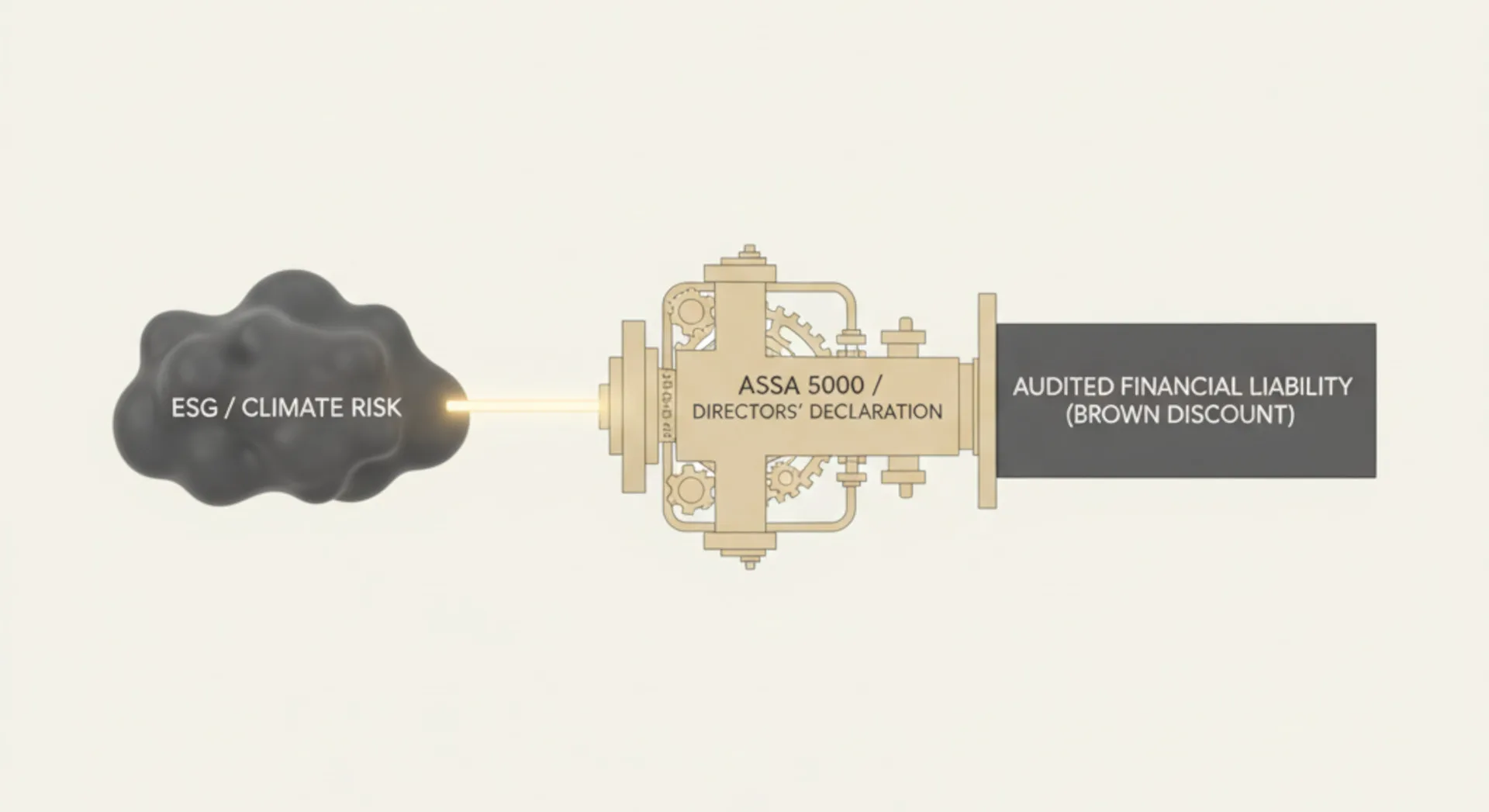
- The End of Insurability = The End of Value: The most critical insight is the implicit threat to insurability. As climate risks escalate, insurance premiums in exposed areas will become unaffordable, or coverage will be withdrawn entirely. An uninsurable property is effectively an un-mortgageable and unsellable asset. This is the primary financial mechanism through which climate risk will translate into catastrophic value loss.
- The Rise of “Climate Havens”: A key second-order effect will be the emergence of “climate havens”, regions perceived as being more resilient to the worst impacts of climate change. This will trigger a slow but powerful demographic and capital shift towards these areas, creating new property hotspots while accelerating the decline of others.
- From “Risk” to “Certainty”: The official nature of this government report is crucial. It moves the conversation from “potential risks” to government-acknowledged near-certainties. This shifts the task for property professionals from risk speculation to active risk management and pricing.
- Balanced View: The National Climate Risk Assessment provides a sobering but essential dose of reality. It catalogues the immense and now largely unavoidable costs of climate change. For the property market, this is a moment of profound repricing. While it presents immense challenges and will create clear losers in high-risk zones, it also creates significant opportunities for those who can lead in developing, financing, and managing resilient, climate-ready assets.
Strategic Implications for Property Professionals
- For Valuers & Lenders: A detailed climate risk assessment must now become a mandatory and core component of every valuation and loan application. The potential for a property to become uninsurable during the life of a 30-year mortgage is now a material financial risk that must be priced in.
- For Developers: The business case for climate-resilient design is no longer about marketing; it’s about financial necessity. Projects that can demonstrate lower insurance risk and greater resilience to extreme weather will command a premium and be easier to finance and sell.
- For Investors: A comprehensive climate risk audit of existing portfolios is now essential. Capital should be strategically reallocated away from high-risk coastal, flood-prone, and heat-exposed assets towards more resilient locations and asset types.
- For Agents: Communicating climate risk is now a key part of an agent’s duty of care. Being able to access and explain data on a property’s flood, fire, and coastal inundation risk will become a standard part of the sales process.
This article is based on a report from www.afr.com titled “Apocalyptic National Climate Risk Assessment shows Australia to face ‘severe’ climate risks”. You can find the original article here: https://www.afr.com/policy/energy-and-climate/extreme-heat-property-price-falls-australia-s-severe-climate-risk-20250915-p5mv16
How can property professionals proactively integrate climate risk assessments and adaptation strategies into their investment and development decisions to ensure long-term resilience and value in the face of projected regional climate impacts?
Disclaimer
The analysis and information contained in this deconstruction are for general informational and strategic purposes only and do not constitute financial, investment, legal, or any other form of professional advice. The Australian Property Network (APN) is a strategic intelligence organisation and is not a licensed financial advisor.
This analysis is based on data and information from third-party sources believed to be reliable; however, APN provides no warranty as to its accuracy, currency, or completeness. Images used in this analysis are for illustrative and conceptual purposes only and may not represent real persons, properties, or events. Property values and market conditions can go down as well as up.
Before making any property or investment decisions, you must conduct your own thorough research and seek independent professional advice tailored to your specific circumstances.