
The Monopoly Choke Point: Deconstructing the ACCC’s Probe into WA’s Waste Infrastructure
APN ANALYSIS: A-250908-WA1
Executive Summary
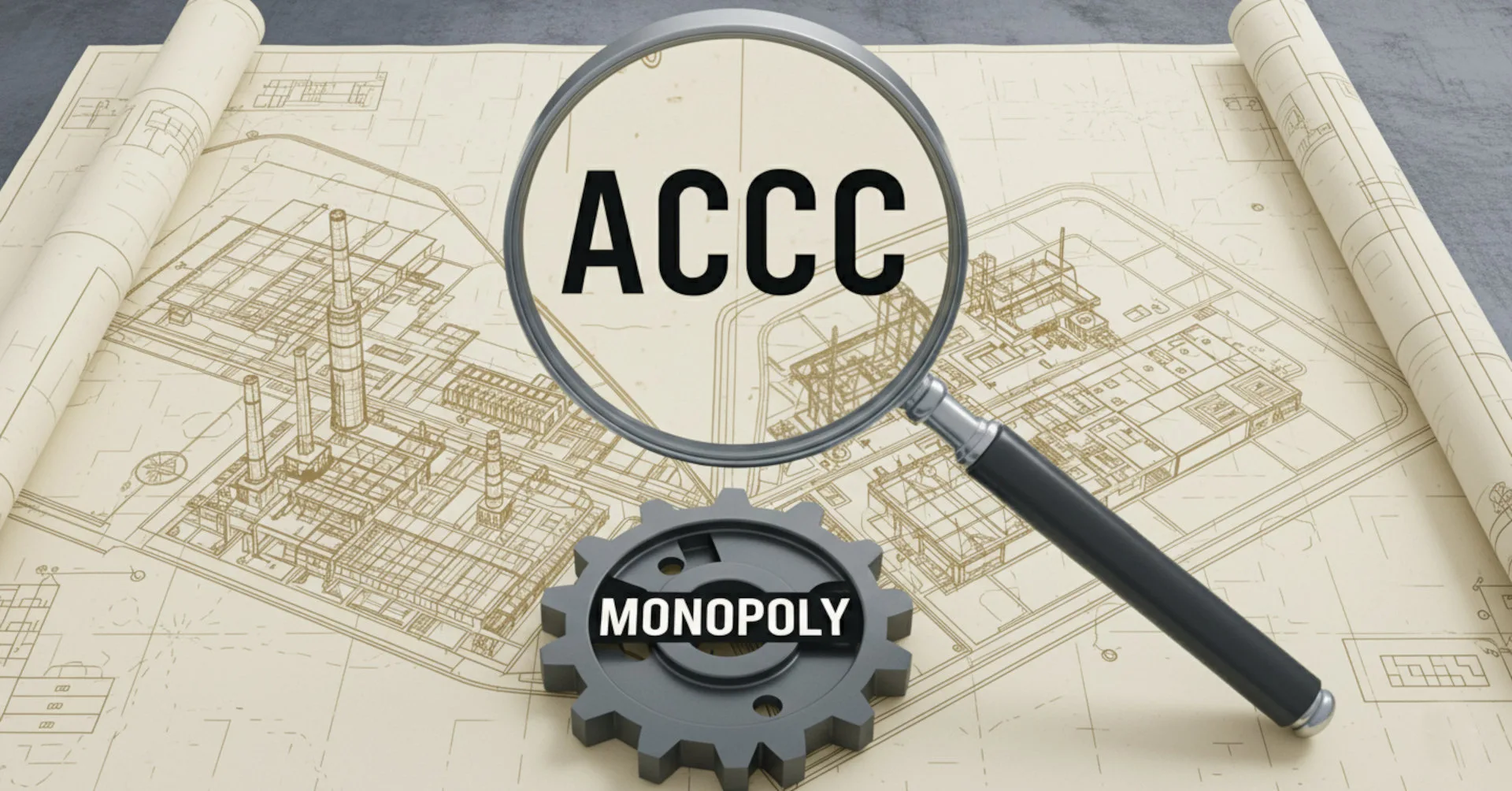
The Australian Competition and Consumer Commission’s (ACCC) intervention in Acciona’s bid for the East Rockingham waste-to-energy plant is a critical signal of heightened regulatory scrutiny over essential infrastructure. While framed as a niche competition issue, the probe has direct and material implications for the property and construction sectors in Western Australia. The key strategic takeaway is that a potential monopoly in a fundamental service like waste disposal threatens to create a new “choke point” for development, increasing project costs and operational overheads. This case highlights the vulnerability of the property sector to market concentration in dependent industries.
This analysis deconstructs the ACCC’s probe not as a regulatory procedure, but as a risk-defining event for property professionals. The high barriers to entry in the waste-to-energy sector make this a national precedent. The outcome will influence the cost base for developers and the operating income for asset managers, demonstrating that due diligence must now extend to the competitive landscape of all essential local services.
Background & Strategic Context
The ACCC’s investigation into this infrastructure deal is a manifestation of several core strategic pressures that APN has been tracking.
- The State as Market Referee (Project Overlord): This is a classic “Project Overlord” scenario where a regulator intervenes to prevent the consolidation of private power in a critical infrastructure sector. Acciona’s attempt to control 100% of the Perth and Peel regions’ waste-to-energy market is a move to establish a private monopoly. The ACCC’s action is an assertion of state power to preserve the competitive market dynamics that are essential for other industries, particularly construction, to function efficiently.
- The Hidden Tolls (The Wealth Funnel): The cost of waste disposal is a direct input cost for all new developments and a significant operational expense for commercial and industrial assets. As our “Wealth Funnel” analysis shows, a monopoly on such a service allows the operator to extract a higher, non-negotiable “toll” from the property sector. This wealth is captured from project budgets and tenant outgoings, ultimately impacting housing affordability and business profitability. The ACCC’s probe is an attempt to regulate the size of this critical toll gate.
- The Green Infrastructure Paradox (Sustainability & ESG): Waste-to-energy facilities are a key component of modern sustainability infrastructure, providing a higher-value alternative to landfill. However, the immense cost, long lead times, and complex approvals process create extremely high barriers to entry. This “green infrastructure paradox” means that the sector naturally trends towards monopoly, creating a direct conflict between environmental goals (which demand these facilities) and competition policy (which abhors monopolies).
Deconstruction of the Source Event (wastemanagementreview.com.au Report)
The initial trade report on the ACCC’s action provides the key facts:
- Event: The ACCC has released a Statement of Issues, flagging preliminary competition concerns regarding Acciona’s proposed acquisition of the East Rockingham Waste-to-Energy Project.
- Core Issue: If the acquisition proceeds, Acciona would own and operate 100% of the waste-to-energy facilities in the Perth and Peel regions, creating a monopoly.
- ACCC’s Position: ACCC Commissioner Philip Williams has stated the deal “is likely to substantially lessen competition in the supply of putrescible waste disposal services”.
- Market Context: High barriers to entry mean no new waste-to-energy competitors are expected in the region for at least a decade. The ACCC is examining whether traditional landfills provide a sufficient competitive constraint.
Critical Analysis & Balanced View
The ACCC’s concerns are straightforward, but the situation is complicated by the state of the asset and the market realities.
- The “Failed Project” Dilemma: The East Rockingham project is under administration. This places the ACCC in a difficult position. Blocking the acquisition by Acciona—the only other experienced operator in the region—might prevent a monopoly, but it could also lead to the total collapse of the East Rockingham project. This would result in less overall waste processing capacity, which would also harm competition and likely drive up prices. The regulator is caught between the Scylla of a monopoly and the Charybdis of a failed critical asset.
- The Landfill Fallacy: The idea that traditional landfills can provide a meaningful competitive check on advanced waste-to-energy facilities is a questionable assumption. As corporate and government ESG mandates increasingly demand landfill diversion, the two services are becoming less substitutable. Waste-to-energy is a premium, environmentally-driven service. Expecting a low-tech, environmentally inferior alternative to discipline its pricing is unrealistic in the long term.
- A National Precedent: The outcome of this probe will reverberate nationally. As other states grapple with waste management and approve new energy-from-waste projects, they will face the same “green infrastructure paradox” of high barriers to entry leading to natural monopolies. The ACCC’s decision in WA will set the benchmark for how competition in this emerging infrastructure class is evaluated across Australia.
- Balanced View: The ACCC’s concerns about the creation of a monopoly are well-founded. However, the regulator faces a choice between two poor outcomes: allowing a flawed monopoly to proceed or risking the failure of a critical piece of sustainability infrastructure. For the property sector, the conclusion is stark: regardless of the ACCC’s decision, the cost of waste disposal in WA is unlikely to decrease in the medium term. Both a monopoly and a reduction in planned capacity point towards sustained or rising costs.
Strategic Implications for Property Professionals
- For Developers & Construction Firms (WA): A higher risk premium for waste disposal costs must be factored into all new project feasibility studies and budgets for the Perth and Peel regions. This cost item can no longer be treated as a predictable, stable expense.
- For Commercial & Industrial Asset Managers (WA): This is a direct threat to Net Operating Income (NOI). Waste management contracts and outgoings clauses for existing and future tenants must be reviewed. This represents a new and material operational risk that requires active monitoring.
- For National Developers & REITs: This case is a crucial lesson. Due diligence for new acquisitions and developments must now include a thorough analysis of the competitive landscape for all essential local services (waste, power, water). The assumption of competitive pricing for these fundamental inputs is no longer safe.
- For Property Industry Bodies: The ACCC’s call for submissions is a direct opportunity for industry groups to provide evidence-based analysis on how a lack of competition in the waste sector directly impacts construction costs, commercial rents, and housing affordability.
This article is based on a report from wastemanagementreview.com.au titled “ACCC scrutinizes Acciona East Rockingham waste-to-energy bid”. You can find the original article here: https://wastemanagementreview.com.au/accc-scrutinizes-acciona-east-rockingham-waste-to-energy-bid/
Given the ACCC’s concerns about reduced competition, how can the waste-to-energy sector in Western Australia foster innovation and attract new entrants to prevent potential monopolies and ensure fair pricing and service quality for consumers?
Disclaimer
The analysis and information contained in this deconstruction are for general informational and strategic purposes only and do not constitute financial, investment, legal, or any other form of professional advice. The Australian Property Network (APN) is a strategic intelligence organisation and is not a licensed financial advisor.
This analysis is based on data and information from third-party sources believed to be reliable; however, APN provides no warranty as to its accuracy, currency, or completeness. Images used in this analysis are for illustrative and conceptual purposes only and may not represent real persons, properties, or events. Property values and market conditions can go down as well as up.
Before making any property or investment decisions, you must conduct your own thorough research and seek independent professional advice tailored to your specific circumstances.