
The Canberra Model: Deconstructing the ACT’s “Missing Middle” Housing Reforms
APN ANALYSIS: A-250917-AUS34
Executive Summary
The Australian Capital Territory government’s ambitious housing reforms, aimed at unlocking “missing middle” supply, have cleared a critical first hurdle by securing strong community support. A government consultation found that 72% of participants favour the changes, which are designed to facilitate more low-rise townhouses, duplexes, and secondary dwellings in Canberra’s established suburbs. This initiative is a core plank of the ACT’s strategy to meet its 30,000 new homes target by 2030.
For property professionals, the strong public mandate provides a powerful green light for a new wave of infill development opportunities. However, the path to implementation is fraught with significant planning risk. The reforms must now navigate a multi-stage legislative and committee review process, where the initial ambition could be diluted. The core strategic challenge for the industry is to ensure that the final, approved regulations retain the commercial incentives necessary to make these smaller-scale projects viable.
Background & Strategic Context
The ACT’s reforms are a direct response to the national housing crisis but represent a strategically different approach to that of other jurisdictions. This event provides a clear illustration of several of our core intelligence frameworks.
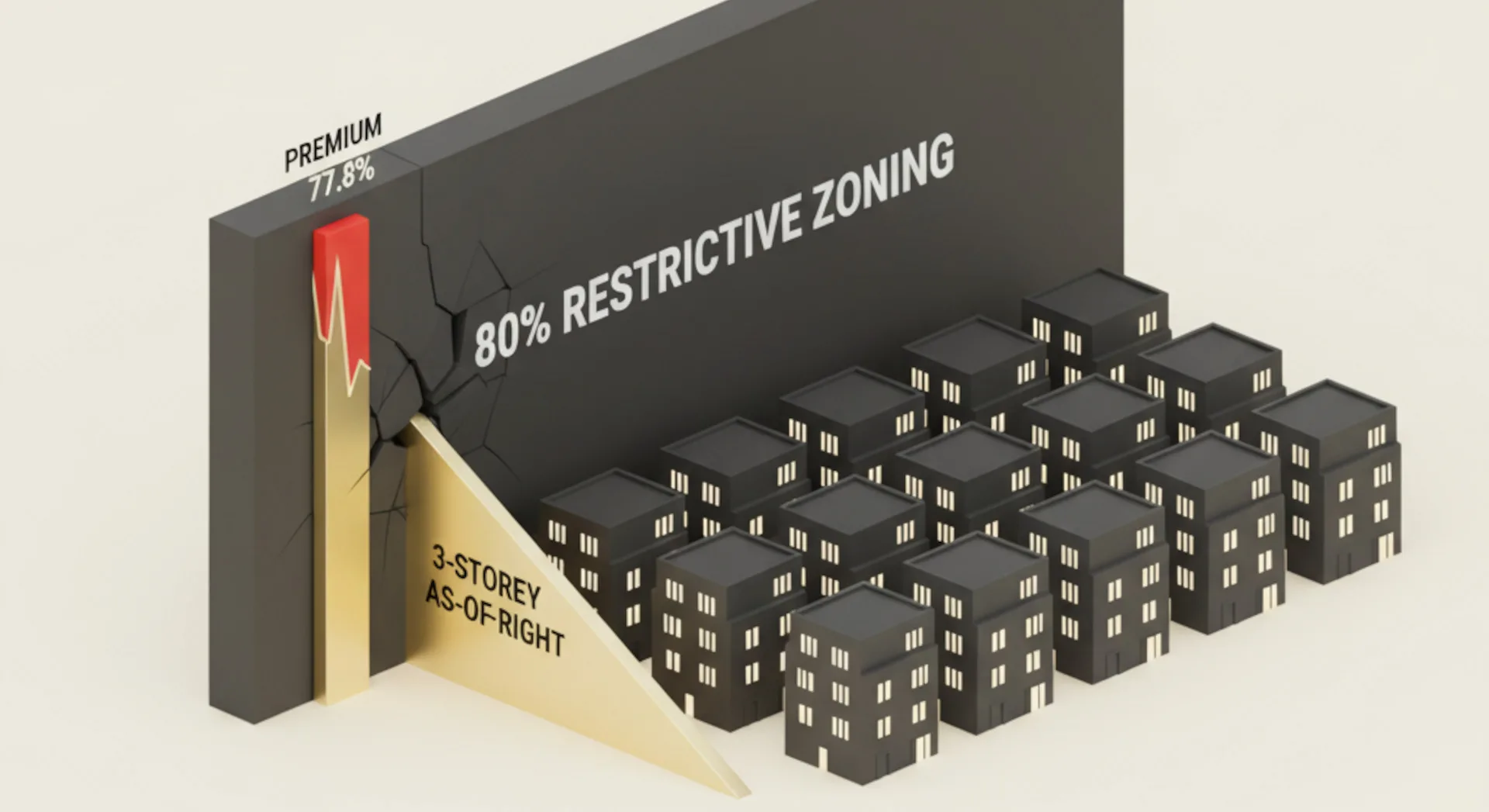
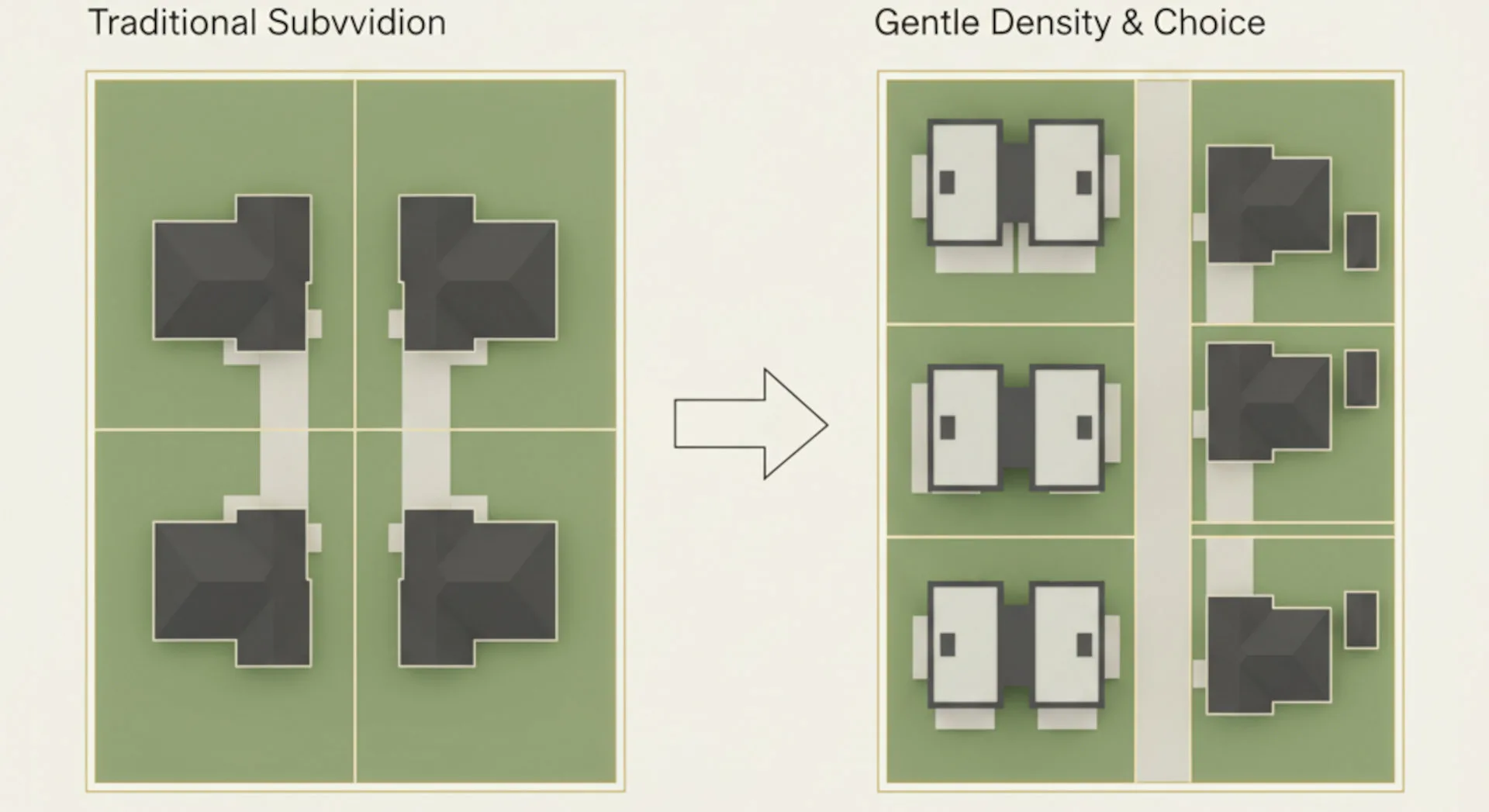
- Gentle Density (Housing Portability): This initiative exemplifies the Housing Portability thesis, focusing not on high-rise towers but on “gentle density” – townhouses, terrace homes, and duplexes – within existing suburban zones. It’s a politically astute strategy that aims to increase housing supply and choice without fundamentally altering the low-rise character of established neighbourhoods.
- Unlocking Latent Value (The Wealth Funnel): The proposed regulatory changes, specifically removing minimum block sizes and allowing subdivisions in RZ1 zones, act as the keys to unlocking the latent development value of thousands of suburban properties. This initiates a new, smaller-scale cycle of the Wealth Funnel for the infill developers, builders, and homeowners who can capitalise on the new rules.
- The Social License (Project Overlord): The government’s extensive consultation process and the resulting 72% public support highlight a successful effort to build a “social license” for densification. This is a critical Project Overlord theme, demonstrating how securing community buy-in is an essential prerequisite for implementing potentially controversial planning changes and overcoming NIMBY (“Not In My Back Yard”) resistance.
Deconstruction of the Source Event
The positive outcome of the community consultation is a key event, but it’s only one step in a longer process. The key components for professionals to track are:
- The Policy Goal: To increase the supply of diverse, low-rise housing options to help meet the ACT’s target of enabling 30,000 new homes by 2030.
- The Specific Mechanisms: The core of the reform lies in specific changes to the Territory Plan, including: removing minimum block sizes for dual-occupancy in RZ1 zones; allowing the subdivision of these blocks; and removing the 120-square-metre size limit for secondary dwellings.
- The Political Mandate: The high level of public support (72% of participants) provides Planning Minister Chris Steel with a strong mandate to push the reforms through the legislative process.
- The Legislative Gauntlet: The draft reforms now face a multi-stage review that is the primary source of risk. The process involves:
- Review by the Territory Planning Authority.
- Referral to a Standing Committee, which may hold its own inquiry.
- Final consideration by the Minister.
- Approval by the Legislative Assembly, which retains the power to reject changes.
Critical Analysis & Balanced View
The ACT’s approach presents a compelling model for other jurisdictions, but its success is far from guaranteed.
The primary opportunity lies in what could be termed the “Canberra Model” for housing reform: a politically savvy combination of ambitious planning changes with a robust, transparent community consultation process. This approach builds broad support and minimises political friction, creating a more stable and predictable environment for developers. If successful, it opens up the lucrative and highly sought-after infill market at a scale previously impossible, providing a new pipeline for small and medium-sized builders in particular.
The critical risk, however, is “death by a thousand cuts” during the legislative review. While the Minister has a strong mandate, the Standing Committee inquiry and subsequent debate in the Legislative Assembly could see the most impactful reforms diluted. Lobbying from various interest groups could lead to the reintroduction of restrictions, such as new parking requirements, floor space limits, or complex design caveats, that erode the commercial viability of the very housing types the reforms are meant to encourage, ultimately neutralising their impact.
Strategic Implications for Property Professionals
- For Developers (SMEs): This is a major opportunity for small to medium-sized developers who specialise in infill and medium-density projects. The key strategy is to remain actively engaged in the legislative process, either directly or through industry bodies, to advocate for the retention of the core reforms that drive feasibility.
- For Planners & Architects: A significant increase in demand for design and planning services related to medium-density housing in RZ1 zones is highly likely. Deep expertise in the new Design Guide and the amended Territory Plan will be a critical competitive advantage.
- For Investors: A window of opportunity now exists to acquire properties in RZ1 zones with clear subdivision or dual-occupancy potential. The primary investment risk is legislative; the final, approved reforms may be less favourable than the current draft, impacting potential returns.
- For Valuers: A fundamental re-evaluation of land in RZ1 zones is now necessary to account for the new “highest and best use” potential. Initially, valuations will need to be qualified with a risk rating based on the uncertainty of the final, approved reforms.
This article is based on a report from www.realestate.com.au titled “Majority of Canberrans Support Rezoning to Increase ‘Missing Middle’ Housing”. You can find the original article here: https://www.realestate.com.au/news/majority-of-canberrans-support-rezoning-to-increase-missing-middle-housing/
Given the potential for changes during the review process, how can developers proactively engage with the remaining consultation and legislative stages to ensure the final reforms effectively incentivise the desired “missing middle” housing types?
Disclaimer
The analysis and information contained in this deconstruction are for general informational and strategic purposes only and do not constitute financial, investment, legal, or any other form of professional advice. The Australian Property Network (APN) is a strategic intelligence organisation and is not a licensed financial advisor.
This analysis is based on data and information from third-party sources believed to be reliable; however, APN provides no warranty as to its accuracy, currency, or completeness. Images used in this analysis are for illustrative and conceptual purposes only and may not represent real persons, properties, or events. Property values and market conditions can go down as well as up.
Before making any property or investment decisions, you must conduct your own thorough research and seek independent professional advice tailored to your specific circumstances.