
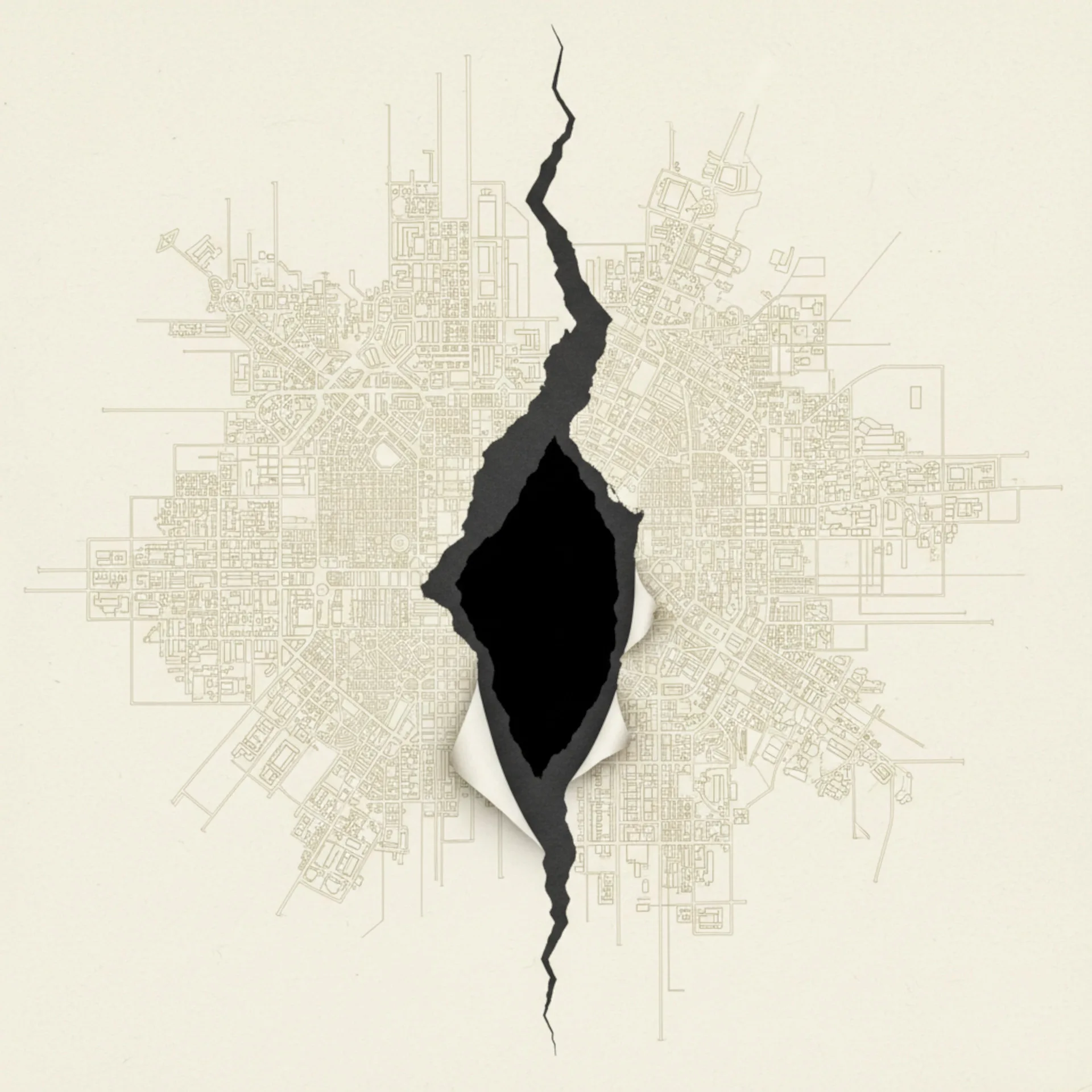

The Social Deficit: Why Australia’s Growth Strategy is Systemically Devaluing the Australian Dream
APN OPINION: O-251108-AUS47
APN Codex: 23400 (Policy Commentary & Critique)
The Core Argument
APN Senior Analyst’s blueprint lays bare a stark, structural deficit: we are absorbing population inflows at a rate that our housing and infrastructure delivery cannot possibly service. This is not a new observation, but to treat it as a simple supply-and-demand lag is to dangerously miss the point. The “so what” is not a temporary affordability crisis; it is the creation of a permanent and corrosive Social Deficit.
We are actively pursuing a national growth model that is systemically eroding the very “Australian Dream” of liveability and opportunity that we use to justify it. By failing to pre-fund and align population growth with the hard and social infrastructure required to support it, we are not just building a housing shortage. We are engineering a future of diminished social capital, fractured communities, and a two-speed society permanently divided between the infrastructure-rich and the infrastructure-poor. This is a profound failure of national strategy, and its cost will be measured in social cohesion long after the economic benefits have faded.
Defining the Social Deficit: From Abstraction to Lived Reality
The APN Senior Analyst’s foundational analysis is unequivocal. The data, from the widening chasm between Net Overseas Migration (NOM) and housing completions to the infrastructure-lag data from Project Sentinel, present an equation that simply does not balance.
But this “imbalance” is not a statistical abstraction. It is a daily lived reality for millions of Australians, and one we are choosing to worsen.
The “Liveability Ponzi”: A Failed Conceptual Model
For decades, Australia’s national identity has been built on a foundation of unmatched liveability. This “Australian Dream” was our greatest asset. Yet, our current national strategy treats it as a resource to be liquidated for short-term economic gain.
This is the “Liveability Ponzi.” We are borrowing against the social capital and quality of life of the current population to fuel headline GDP growth, while promising that this very growth will somehow pay for the amenities and infrastructure to fix the problems it creates.
As our ‘Social Capital Initiative’ tracking clearly shows, this bill is never paid in full. The data revealing a 28% decline in “community belonging” in high-growth, low-amenity postcodes is the first receipt. We are importing people to service an economy while simultaneously degrading the quality of life that underpins it for everyone. This is a self-defeating loop. The logical endpoint of this model is a “Big Australia” that is big only in number, not in quality, opportunity, or social connection.
The Second-Order Consequence: A Two-Speed Society
The infrastructure failure is the most potent and dangerous accelerant of this Social Deficit. The Project Sentinel data on commute times in Western Sydney and Melbourne’s north-west corridors (a 45% increase), highlighted by the APN analysis, is not an inconvenience; it is the architectural drawing of a two-speed society.
When we force growth into new suburbs before transport, schools, hospitals, and parks are funded, let alone built, we engage in a profound act of social engineering.
- The Infrastructure-Rich Core: The inner-city “laptop latitudes” where generations of established public amenities supercharge property values. Access to this core becomes an inherited privilege, concentrating wealth and opportunity.
- The Infrastructure-Poor Periphery: The sprawling “commuter deserts” where we force key workers, new families, and new Australians to live. Here, the government has abdicated its responsibility, offloading the cost of infrastructure failure onto its citizens’ private balance sheets, measured in commute times, fuel costs, social isolation, and lost family time.
This isn’t just a spatial divide; it’s a social and economic fracture. It breeds resentment, strangles productivity, and makes a mockery of the promise of an egalitarian society.
The Strategic “What If?”: A Warning from Overlord
The insights from Project Overlord (our long-range strategic modelling) have consistently warned of this exact scenario: a breaking point where the “affordability crisis” and the “infrastructure crisis” converge, triggering a political and social backlash.
If we continue on this path, the “what if” becomes a “when.”
- When key workers, nurses, teachers, and police are fully locked out of the cities they serve, public services will begin to fail.
- When an entire generation gives up on the dream of ownership, they also give up on the social and economic compact that binds them to the system.
- When the political narrative inevitably turns (as it is beginning to), the resulting backlash will not be a nuanced debate about infrastructure sequencing. It will be a blunt and damaging rejection of population growth itself, punishing the economy for the government’s failure to plan.
Strategic Conclusion
The APN Senior Analyst’s blueprint is a warning. The current model, haphazard, reactive, and “growth-at-all-costs”, is broken. The choice for Australia’s leaders is no longer whether to grow, but how.
We must fundamentally reverse the equation. The time for observation is over.
A new national compact is required, one that legislatively and financially ties population inflows directly to a pre-funded and delivered pipeline of housing, transport, and social amenities. We must stop funding new suburbs with the time and well-being of their residents. We must fund the community before we fill it, and build the infrastructure before we invite the growth.
To continue on our current path is a choice. It is a choice to actively devalue the Australian Dream, to drain our reserves of social capital, and to build a bigger, poorer, and more divided nation.
Disclaimer
The analysis, information, and opinions contained in this article are for general informational and strategic purposes only and do not constitute financial, investment, legal, or any other form of professional advice. The Australian Property Network (APN) is a strategic intelligence organisation and is not a licensed financial advisor.
The views, thoughts, and opinions expressed in this text belong solely to the author and do not necessarily reflect the official policy or position of the Australian Property Network (APN).
This content may be based on data from third-party sources believed to be reliable; however, APN provides no warranty as to its accuracy, currency, or completeness. Images used are for illustrative and conceptual purposes only and may not represent real persons, properties, or events.
Property values and market conditions can go up or down.
Before making any property or investment decisions, you must conduct your own thorough research and seek independent professional advice tailored to your specific circumstances.