
Based on findings from the APN Research Report: The Australian Property Market: Economic Driver or Diversification Drag?
Australia is currently grappling with a dual crisis: persistent cost-of-living pressures intertwined with a severe housing affordability crunch. Finding solutions is proving incredibly difficult, and a recent APN Research Report sheds light on a core reason why: the Australian property market itself is caught in a complex and challenging policy feedback loop. The report, titled “The Australian Property Market: Economic Driver or Diversification Drag?”, reveals how rising housing costs are not just a symptom of inflation but a significant driver, forcing policy responses that, in turn, exacerbate affordability stress and potentially hinder the very solutions needed.
Housing Costs as an Inflation Engine
It’s impossible to discuss inflation in Australia without focusing on housing. The APN report highlights that housing costs represent a substantial part of household budgets and are therefore key to overall inflation dynamics (Section III.A). Recent data cited in the report underscores this connection dramatically.
For the year to June, overall housing inflation clocked in at 5.2%. This was significantly driven by a sharp 7.3% rise in rents and a 5.1% increase in the price of newly built homes purchased by owner-occupiers. Crucially, this housing inflation rate significantly outpaced the headline Consumer Price Index (CPI) rise of 3.8% over the same period (Section III.A, ref 12). Further data shows rents paid across Australia surged by 7.8% in the year to Q1 2024 (Section III.A, ref 22). These aren’t minor increases; they represent substantial pressure on household budgets and a major contribution to the broader inflation challenge the Reserve Bank of Australia (RBA) is tasked with controlling.
The Deepening Affordability Crisis
These inflationary pressures in the housing sector translate directly into a worsening affordability crisis, as detailed in the APN report (Section III.A, Table 3). Median house prices have reached eye-watering levels, particularly in capital cities. Sydney’s median house price, for example, hit approximately $1.3 million by the end of 2023 – more than double its level just a decade earlier (Table 3, ref 22). Other capitals like Melbourne (approx. $840,000) have also seen substantial price growth.
It’s not just buyers feeling the pinch. Renters face escalating costs, with advertised rents in capital cities jumping significantly (Table 3, ref 22). This decline in affordability, driven by factors including strong demand, population growth, and persistent housing undersupply (Section III.A, ref 12, 22, 23), leads to rising housing stress. The report notes that in 2019-20, over a million low-income households were spending more than 30% of their income on housing costs. The burden falls disproportionately on private renters, with a staggering 58% experiencing housing stress, compared to 37.4% of low-income homeowners with a mortgage (Table 3, ref 22).
The RBA’s Tightrope Walk
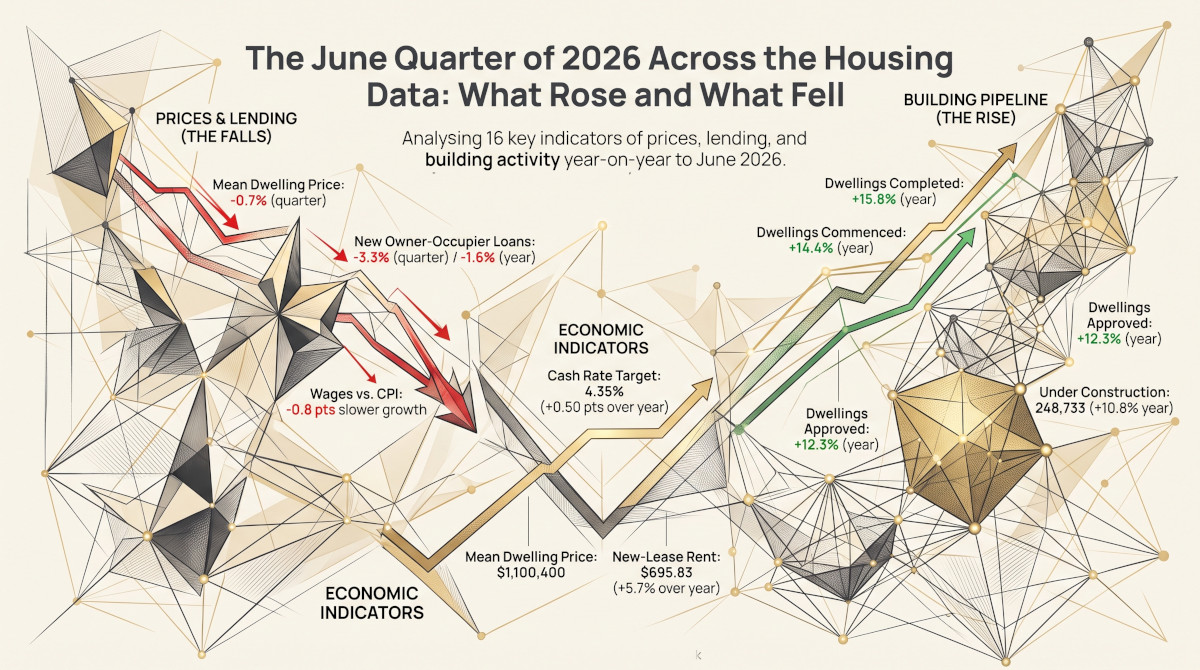
Faced with broad inflationary pressures, significantly fuelled by housing costs, the RBA deployed its primary weapon: raising interest rates. The APN report traces the aggressive monetary policy tightening cycle that saw the cash rate climb from a historic low of 0.10% in May 2022 to a peak of 4.35% by November 2023 (Section III.B, ref 40). While a slight easing began in February 2025 with a cut to 4.1% (Section III.B, ref 36), the RBA maintains a cautious stance.
The intention of these rate hikes is to cool demand across the economy and bring inflation back to the target 2-3% range. However, the report underscores the direct and often painful impact on households via the housing channel. Higher interest rates immediately translate into higher mortgage repayments for variable-rate borrowers, significantly increasing financial stress. Indeed, the report notes that since 2021, the housing cost burden has increased considerably faster for mortgagors than for renters, precisely because of these rate rises (Section III.A, ref 22).
The Feedback Loop Dilemma
This is where the policy bind becomes most apparent, as highlighted in the APN report’s analysis. The very tool used to combat inflation – higher interest rates – directly worsens the housing affordability crisis for mortgage holders (Section III.A, ref 22).
Furthermore, there’s a potential knock-on effect on the supply side. Higher interest rates increase borrowing costs not just for households but also for developers, potentially dampening enthusiasm for new residential construction projects (Section III.B, ref 8, 33). This is problematic because a significant factor driving up rents and contributing to inflation is the persistent undersupply of housing relative to demand (Section III.A, ref 12).
Therefore, the policy action taken to curb inflation risks constraining the very construction activity needed to alleviate the supply shortages that are themselves contributing to inflation and the affordability crisis (Section III.A, ref 12, 33). It’s a difficult feedback loop: high housing costs fuel inflation, prompting rate hikes that worsen mortgage stress and potentially slow down the building of new homes needed to ease price pressures in the long run.
Conclusion: Navigating the Bind
The APN Research Report paints a clear picture of the policy challenge. The Australian property market isn’t just reacting to inflation; it’s actively contributing to it, particularly through rents and construction costs. The necessary monetary policy response, however, creates significant pain for mortgage holders and potentially undermines efforts to address the fundamental supply issues driving the affordability crisis.
This policy bind presents no easy answers for the RBA, the government, or the property industry. It underscores the need for integrated strategies that look beyond interest rates alone, potentially encompassing planning reform, infrastructure investment to support new housing, and measures to boost construction sector productivity, alongside continued efforts to manage demand and inflation. Until this complex interplay is effectively navigated, the twin pressures of high living costs and housing stress are likely to remain central challenges for the Australian economy and its people.
Disclaimer: This article is based on interpretations and findings presented in the “APN Research Report: The Australian Property Market: Economic Driver or Diversification Drag?”. Readers are encouraged to consult the full report for detailed analysis and references.