
Melbourne’s Accelerated Crime Growth: An Elevated Risk for Urban Asset Values
APN INSIGHT: I-251212-AUS132155
When the Victorian crime statistics for the year ending March 2025 revealed a recorded 20.1% accelerated growth, it was dismissed by some as a statistical anomaly or a post-COVID echo. The latest data, released by the Crime Statistics Agency (CSA), has invalidated that position. The September numbers have hardened the warning into a trend, confirming a material erosion of the social capital that underpins the value of our cities.
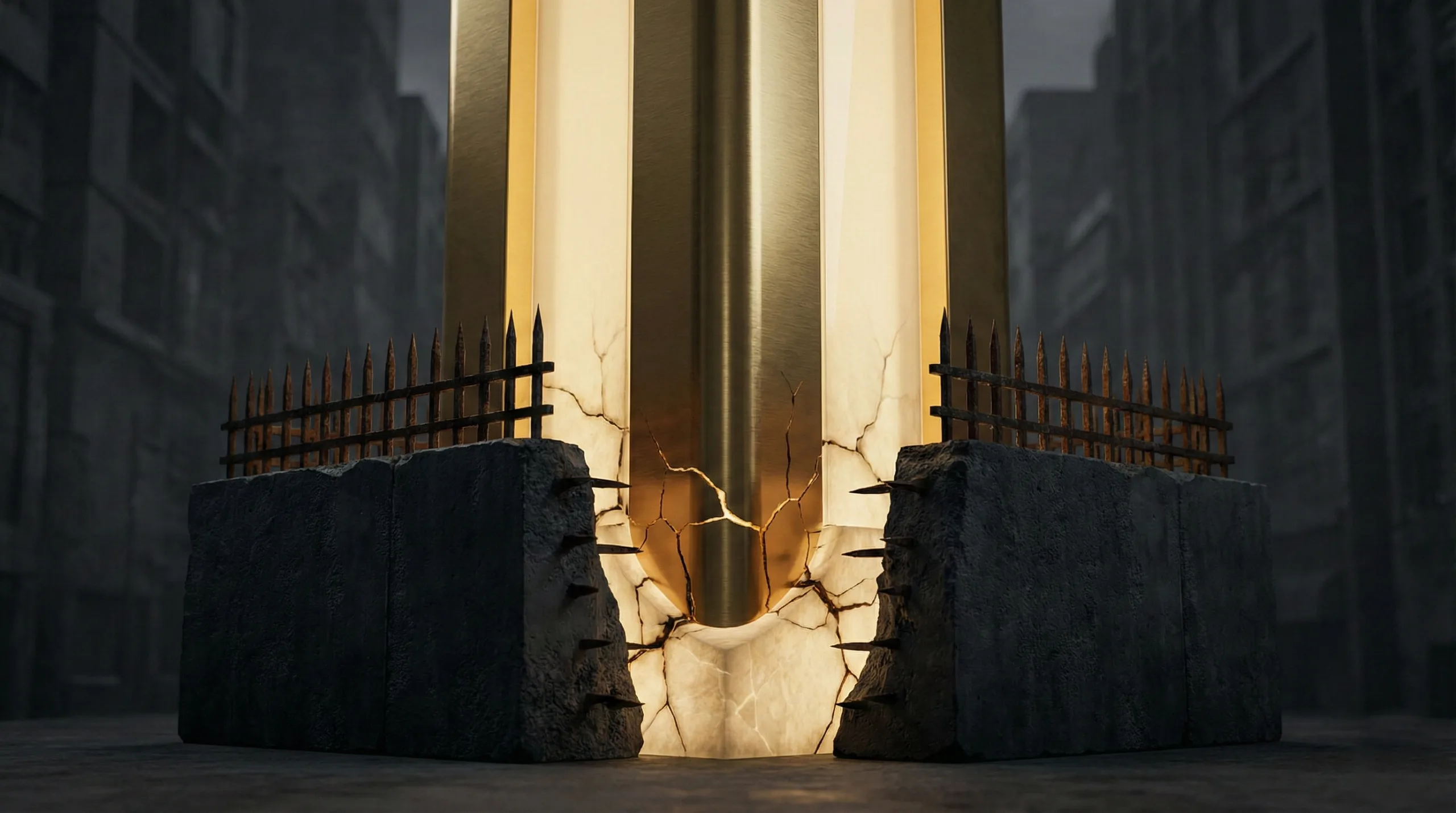
While property industry bodies maintain a conspicuous cone of silence, a fundamental structural pressure has become structurally embedded against the investment thesis of the urban core. This analysis concerns not law and order, but economic causality and its inevitable, lagging impact on asset values. The initial March data, now validated by the September confirmation, represents a quantifiable failure of ‘Project Sentinel’ (Safety & Sentiment). This failure places a direct and structural drag on the commercial viability of ‘Project Agora’ assets, the office towers, retail centres, and high-density residential developments that depend on an economically active and, above all, safe urban environment.
Structural Deterioration of Social Capital: From Material Increase to Structural Condition
Let us be clear about the trajectory. The March data flagged a wave of crime driven by acute affordability constraints. The September update shows this was not a transient event, with incident rates now accelerating. Total criminal incidents have risen by 12.3% to reach 483,313, while total recorded offences are up 10.8% to 640,860.
Most notably for asset owners, the Melbourne LGA, the economic heart of the state, is the primary locus of this material deterioration. The offence rate has accelerated from nearly 18,000 in March to a recorded 22,955.5 per 100,000 residents today.
This persistence confirms that we are witnessing a structural adjustment of the social contract, driven by structurally embedded cost-of-living pressures. The most telling signal is not the crime itself, but the response. The City of Melbourne’s decision to launch a $2 million annual “Community Safety Officer” program in November, deploying 11 officers to patrol the streets seven days a week, is a landmark development. It is an APN Sovereign Policy Composite Index™ (SPCI, 24800) signal confirming a material erosion of confidence in the state’s core protective functions. It represents a “soft secession” of responsibility, where municipal and private actors are required to address the gap left by the state.
The Consequence of Sentinel Deterioration for Agora Viability
For decades, the investment case for urban assets has rested on ‘Project Agora’: the combination of amenity and access that a central business district provides. The premium paid for a CBD office floor, a retail flagship, or a ‘walk-to-work’ apartment is a direct capitalisation of this economic activity. But safety—Project Sentinel—is the non-negotiable prerequisite. It is the invisible foundation upon which the entire Agora is built.
The sustained nature of this increase in crime, spanning two consecutive reporting periods, is a direct pressure on this foundation. With total retail-related offences up 11.2%, industry bodies now estimate a theft occurs “at least once every five minutes,” with incidents nearing 100,000 annually. This reduces tenant profitability and solvency. Each car break-in erodes the perception of safety for commuters. This creates a material disincentive that deters foot traffic and discourages after-hours activity. The result is a progressive decline in the intrinsic value of the urban experience, which will inevitably be priced into rents, yields, and capital values.
The Absence of Industry Commentary as a Risk Indicator
Perhaps the most significant indicator for property professionals is not what is being said, but what is not. The notable absence of commentary from major property bodies like the Property Council of Australia and the REIV has persisted through both the March and September releases. This is a strategic choice. It signals that the risk is understood internally but considered too commercially sensitive for public discourse.
This silence is an early-stage risk indicator. For residential developers, this serves as an early-stage risk indicator. A future shift from silence to public commentary will be the key sign that the structural pressure point is no longer a peripheral concern but is materially impacting buyer sentiment. For commercial valuers, the concept of a “social capital risk discount” must be translated from theory to practice. To continue valuing Melbourne CBD assets without pricing in this demonstrated, multi-quarter erosion of public safety is to ignore a fundamental risk.
A Strategic Re-evaluation
The structural condition facing Victoria extends beyond a need for more policing. The data indicates a socioeconomic problem manifesting as a crime problem. For property professionals, the path forward requires a strategic pivot. Commercial asset owners must accept that higher security overheads, like the City of Melbourne’s $2 million levy, are no longer cyclical, but a permanent cost of doing business.
Investors and valuers must begin the work of quantifying social capital risk. The assumption of public safety as a constant is no longer tenable; the data from March to September proves that the deterioration is quantifiable, and the market must now price it in.
Disclaimer
The analysis, information, and opinions contained in this article are for general informational and strategic purposes only and do not constitute financial, investment, legal, or any other form of professional advice. The Australian Property Network (APN) is a strategic intelligence organisation and is not a licensed financial advisor.
The views, thoughts, and opinions expressed in this text belong solely to the author and do not necessarily reflect the official policy or position of the Australian Property Network (APN).
This content may be based on data from third-party sources believed to be reliable; however, APN provides no warranty as to its accuracy, currency, or completeness. Images used are for illustrative and conceptual purposes only and may not represent real persons, properties, or events.
Property values and market conditions can go down as well as up. Before making any property or investment decisions, you must conduct your own thorough research and seek independent professional advice tailored to your specific circumstances.