

Energy Grid Tiering: Structural Divergence and its Impact on Australian Property Valuations
APN ANALYSIS: A-260131-AUS136105
Executive Summary
The Australian energy market has undergone a structural adjustment. Once a cohesive utility, it has devolved into a tiered system of access, affordability, and asset valuation, driven by accelerated decarbonisation policy, the retirement of thermal generation, and volatile macroeconomic conditions. This ‘Energy Grid Tiering’ segments the market into beneficiary cohorts, ‘Power Hosts’ in rural areas earning energy annuities and the ‘Solar Asset Class’ avoiding grid costs, and adversely affected cohorts, primarily the ‘Renter Cohort’, who bear the escalating financial burden through a regressive ‘Captive Tax’ on fixed network charges. The December 2025 statistically significant CPI reading, with its 21.5% accelerated growth in electricity prices, confirms this is a structural inflationary force, not a transitory event, fundamentally altering the economic landscape.
For property professionals, this energy divergence is no longer a background utility cost but the primary driver of valuation divergence and operational risk. Understanding whether an asset is a beneficiary or is adversely affected by this structural adjustment, a ‘Power Host’ or an ‘Amenity Victim’, located in a protected ‘Light Zone’ or a ‘Dark Zone’, is now an essential component of due diligence, valuation, and strategic asset management. Treating energy as a simple line item is no longer sufficient; it is now the central determinant of asset performance and liability.
Background & Strategic Context
This event validates and calibrates APN’s core macro-theses, demonstrating how state-level intervention is the primary force shaping market outcomes. The energy transition, as a deliberate policy choice, is a textbook example of the APN Sovereign Policy Composite Index™ (SPCI, 24800) in action, which systematically transfers the financial burden of decarbonisation from capital-rich asset owners to captive consumer cohorts. The resulting market distortions are best understood through APN’s proprietary frameworks.
The Volt-Split Structural Adjustment (APN Infrastructure Uplift Multiplier™): The bifurcation of rural land values into premium ‘Power Host’ properties and devalued ‘Amenity Victim’ neighbours is a direct manifestation of infrastructure’s impact on value. While the APN IUM™ typically measures uplift, this scenario forces its application to also quantify the structural devaluation imposed on properties that bear the visual cost without the financial benefit of hosting infrastructure.
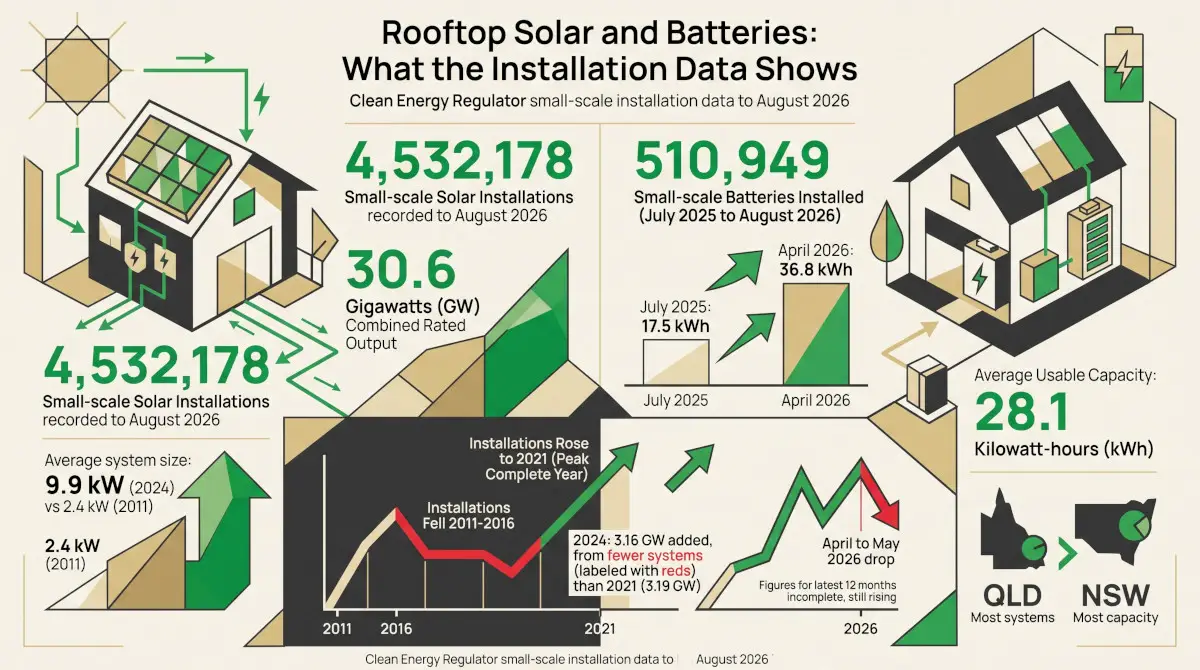
The Regressive Reallocation Engine: The National Electricity Market’s ‘Residual Cost’ mechanism is a primary example of this structural process. As solar owners reduce their volumetric consumption, fixed network costs are reallocated onto non-solar users, primarily renters. This creates a ‘Captive Tax’ via inflated daily supply charges, representing a direct wealth transfer from the asset-poor to the asset-rich.
Grid Reliability Tiering (APN Regional Brown Discount™): The distinction between protected ‘Light Zones’ (data centres) and ‘Dark Zones’ (heavy industry subject to load-shedding) is a direct application of the APN Regional Brown Discount™. Energy insecurity is no longer a hypothetical risk but a quantifiable operational liability that creates a valuation discount on industrial assets in vulnerable locations.
Deconstruction of the Source Event
This deconstruction is based on APN’s forensic analysis of the December 2025 CPI release, regulatory filings from the AER, and market performance reviews. The key facts are:
- Statistically Significant CPI Reading: The December 2025 headline CPI accelerated to 3.8%, driven by a 21.5% annual accelerated growth in electricity prices, significantly overshooting consensus forecasts.
- Subsidy Distortion: The electricity price escalation was primarily an outcome of state-based energy rebates expiring. Forensic analysis shows the underlying price rise would have been a more manageable 4.6% had subsidies remained, exposing the sensitivity of the official disinflation narrative.
- Core Inflation Acceleration: The RBA’s preferred measure of core inflation, the Trimmed Mean, rose 0.9% for the quarter, a ‘material deviation’ against its 0.75% forecast. This indicates inflationary pressures are now structurally embedded in the services sector, a phenomenon known as the ‘Toothpaste Effect’.
- The ‘Captive Tax’ Mechanism: To guarantee their revenue under the ‘Revenue Cap’ model, network providers have materially increased fixed daily supply charges (e.g., to $1.59 in Victoria). This creates an unavoidable ‘poll tax’ on grid connection that imposes a structural constraint on energy efficiency and disproportionately impacts low-income households.
- The ‘Energy Annuity’ Windfall: Landowners hosting renewable infrastructure (‘Power Hosts’) are securing state-guaranteed, inflation-indexed incomes exceeding $30,000 per kilometre per year, causing their properties to be re-rated with valuation premiums of 15-30% above the agricultural baseline.
Critical Analysis & Balanced View
The central paradox of Australia’s energy transition is that a policy aimed at a collective environmental good is being implemented via mechanisms that entrench economic inequality. The ‘Regressive Reallocation Engine’ is not an unforeseen consequence but a direct structural consequence of policy and regulatory design, specifically the ‘Revenue Cap’ model for networks and the inversion of the ‘Causer Pays’ principle. This framework incentivises the socialisation of costs onto those least able to avoid them.
Furthermore, the ‘Volt-Split’ in rural markets exposes a critical deficiency in the Land Acquisition (Just Terms Compensation) Act 1991. The legislation’s binary nature—compensating only for direct land acquisition—fails to recognise or remedy the materially adverse financial outcomes caused by proximity-based amenity loss, creating uncompensated negative externalities on a vast scale. While global data shows Australia’s electricity prices are not the world’s highest in purchasing power parity terms, this statistical reality is irrelevant to the ‘Captive Cohort’. The critical issue is the structurally constraining rate of price change combined with the regressive structure of fixed charges, which drives insolvency rather than rewarding efficiency.
Strategic Implications for Property Professionals
- For Valuers & Financiers: Valuation models must now incorporate a new ‘Energy Tier’ variable. This requires moving beyond simple utility cost analysis to quantify the ‘Energy Annuity’ for ‘Power Hosts’, the ‘Brown Discount™’ for ‘Dark Zone’ industrial assets, and the ‘Amenity Victim’ devaluation for properties near new infrastructure.
- For Agents & Buyers’ Agents: Marketing collateral and due diligence must now feature ‘Energy Audits’. For sellers, this means articulating the financial value of solar assets (Tier 2) or infrastructure hosting rights (Tier 1). For buyers, it means identifying exposure to the ‘Captive Tax’ (Tier 3) and the devaluation risk from proximity to proposed REZ corridors.
- For Developers (Rural & Industrial): Site acquisition strategy must now be overlaid with energy infrastructure maps. In rural areas, focus on acquiring land within designated REZ corridors to capture the ‘Power Host’ premium. In industrial markets, prioritise sites within ‘Light Zones’ with guaranteed grid reliability to attract high-value tenants like data centres and logistics operators.
- For Property & Asset Managers: The rise of the ‘Captive Tax’ and mandatory efficiency standards transforms property management into active asset management. Proactive capital investment in energy efficiency for rental portfolios is no longer optional but an essential strategy to mitigate landlord compliance costs, preserve asset value, and maintain tenant appeal in a high-cost energy environment.
APN Index Management
The APN Codex 24000 Series is a proprietary set of indices that translates complex market forces into measurable metrics. This section outlines how the preceding analysis is validated against, and informs the calibration of, these frameworks.
- Validation: This analysis provides validation for the core thesis of the APN Sovereign Policy Composite Index™ (SPCI, 24800), and is evidenced by the NEM’s regressive cost-shifting.
- Index Calibration (APN IUM™ 24420): The APN Infrastructure Uplift Multiplier™ is calibrated to include a negative weighting factor for ‘Amenity Victim’ properties, quantifying the ‘Volt-Split’ devaluation effect alongside the established uplift calculation for ‘Power Hosts’.
- Index Calibration (APN Regional Brown Discount™ 24520): The APN Regional Brown Discount™ is now calibrated to incorporate AEMO’s System Integrity Protection Scheme (SIPS) curtailment risk data, formally distinguishing between high-value ‘Light Zones’ and liability-exposed ‘Dark Zones’ in industrial property valuations.
- Data Capture (APN Agora™ 24140): This triggers a new data capture mandate for the APN Agora™ Index to track the location of REZ transmission corridors, large-scale batteries, and data centres as structurally significant infrastructure assets that fundamentally influence regional amenity, connectivity, and value.
Disclaimer
The analysis and information contained in this deconstruction are for general informational and strategic purposes only and do not constitute financial, investment, legal, or any other form of professional advice. The Australian Property Network (APN) is a strategic intelligence organisation and is not a licensed financial advisor.
This analysis is based on data and information from third-party sources believed to be reliable; however, APN provides no warranty as to its accuracy, currency, or completeness. Images used in this analysis are for illustrative and conceptual purposes only and may not represent real persons, properties, or events.
All frameworks (Codex 24100-24800) are proprietary to APN.
Property values and market conditions can go up or down. Before making any property or investment decisions, you must conduct your own thorough research and seek independent professional advice tailored to your specific circumstances.