
The Housing Poverty Trap: Deconstructing the HILDA Report’s Findings on Single-Parent Households
APN ANALYSIS: A-250924-AUS59
Executive Summary
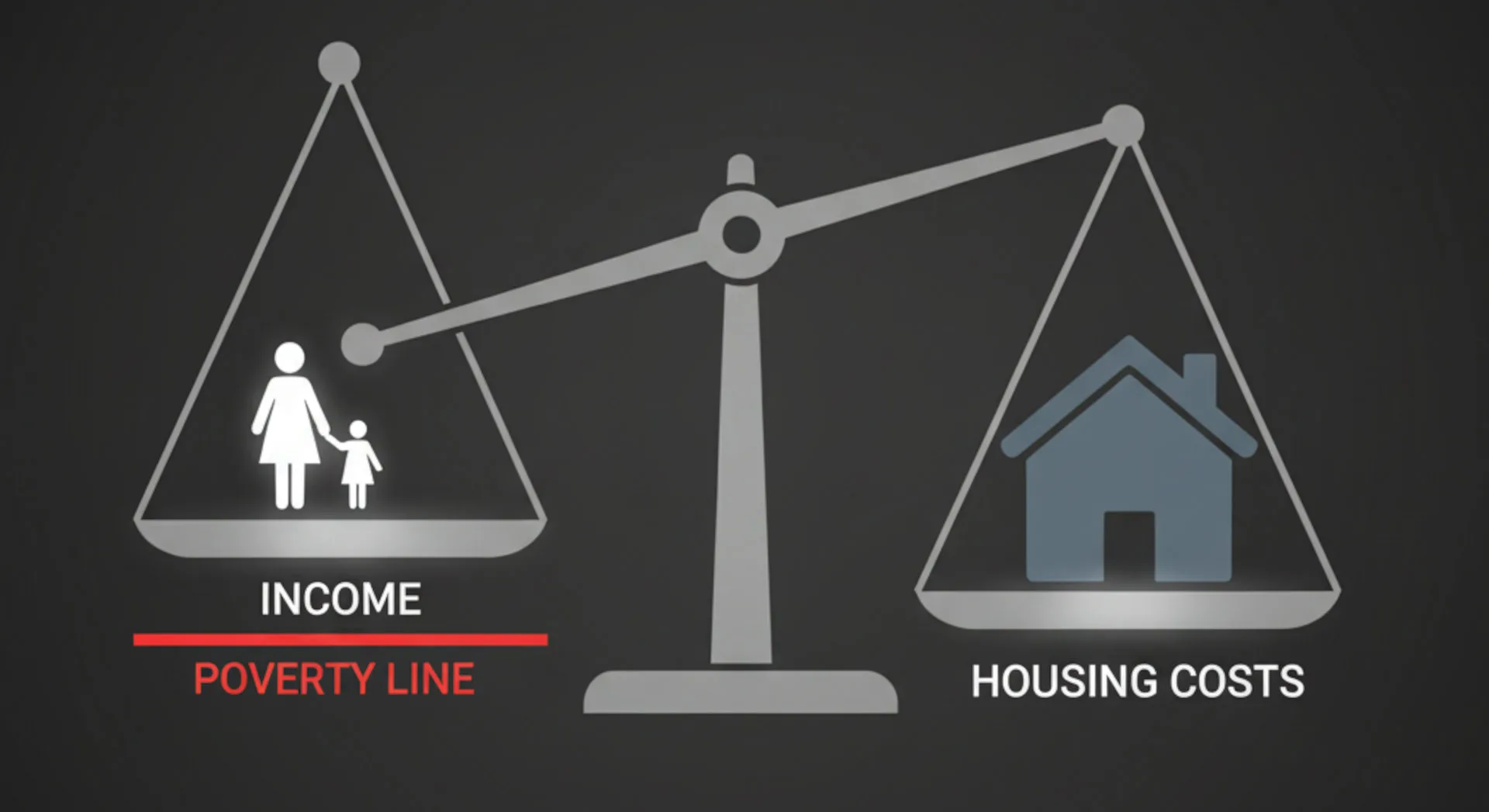
The 2025 Household, Income and Labour Dynamics in Australia (HILDA) survey has delivered a sobering assessment of the link between housing costs and poverty, revealing that 31.3% of single-parent households were living below the poverty line in 2023. This rate, nearly three times that of two-parent families, highlights a deep and worsening structural problem within the Australian property market. The report’s co-director directly links the trend to past government policy changes that reduced financial support for this demographic.
For property professionals, the key takeaway is that this large and vulnerable group represents a significant and chronically under-served segment of the housing market. The HILDA data provides a clear, quantitative picture of the immense affordability pressures in the rental sector. This underscores both a growing social risk that could trigger further government intervention and a substantial market opportunity for developers and investors who can deliver viable affordable housing solutions.
Background & Strategic Context
The HILDA survey is one of Australia’s most important longitudinal studies, and its latest findings on poverty are a critical input for understanding the social dimension of the property market, illustrating several of our core intelligence frameworks.
- The Social Impact of Housing Costs (APN Social Capital Index): This report is a powerful case study for the APN Social Capital Index. It provides hard data showing how high housing costs are a primary driver of poverty and inequality, particularly for women and their children. This level of housing stress erodes social cohesion and trust, creating a less stable and more volatile operating environment for the entire property sector.
- A Market Failure? (Project Overlord): The data points to a significant market failure, a key theme of Project Overlord. The private market is demonstrably failing to provide adequate and affordable housing for a substantial demographic. This failure increases the likelihood of significant and potentially disruptive state intervention in the future (e.g., rental caps, inclusionary zoning, direct government housing provision) as the social consequences become politically untenable.
- The Underserved Market (The Wealth Funnel): The report highlights a massive, underserved segment of the market that sits largely outside the traditional Wealth Funnel of home ownership. This presents a clear opportunity for innovative models, such as Build-to-Rent with an affordable component, or partnerships with community housing providers, to create new, scalable solutions that can attract impact investment and government support.
Deconstruction of theguardian.com Report
The theguardian.com report on the 2025 HILDA survey clearly outlines the scale of the problem.
- The Core Finding: The HILDA survey reveals that 31.3% of single-parent households in Australia were living below the poverty line in 2023 after housing costs are accounted for.
- The Comparison: This rate is nearly three times higher than that of two-parent households, highlighting a significant and specific demographic vulnerability.
- The Policy Link: The report attributes the worsening trend over the last decade to policy changes under previous governments that shifted single parents onto less generous unemployment benefits, an analysis provided by HILDA co-director Roger Wilkins.
- The Child Poverty Crisis: A critical second-order finding is that 34.7% of children in these single-parent households are living in poverty, underscoring the severe long-term societal consequences of the housing affordability crisis.
Critical Analysis & Balanced View
The report’s most powerful insight is its use of an after-housing-costs poverty measure. This methodology clearly isolates the cost of shelter as the primary factor pushing these households into poverty. It reframes the issue from one of simply low income to one of fundamentally unaffordable housing. The data effectively proves that, for this demographic, the housing market is a cause of poverty, not a solution to it.
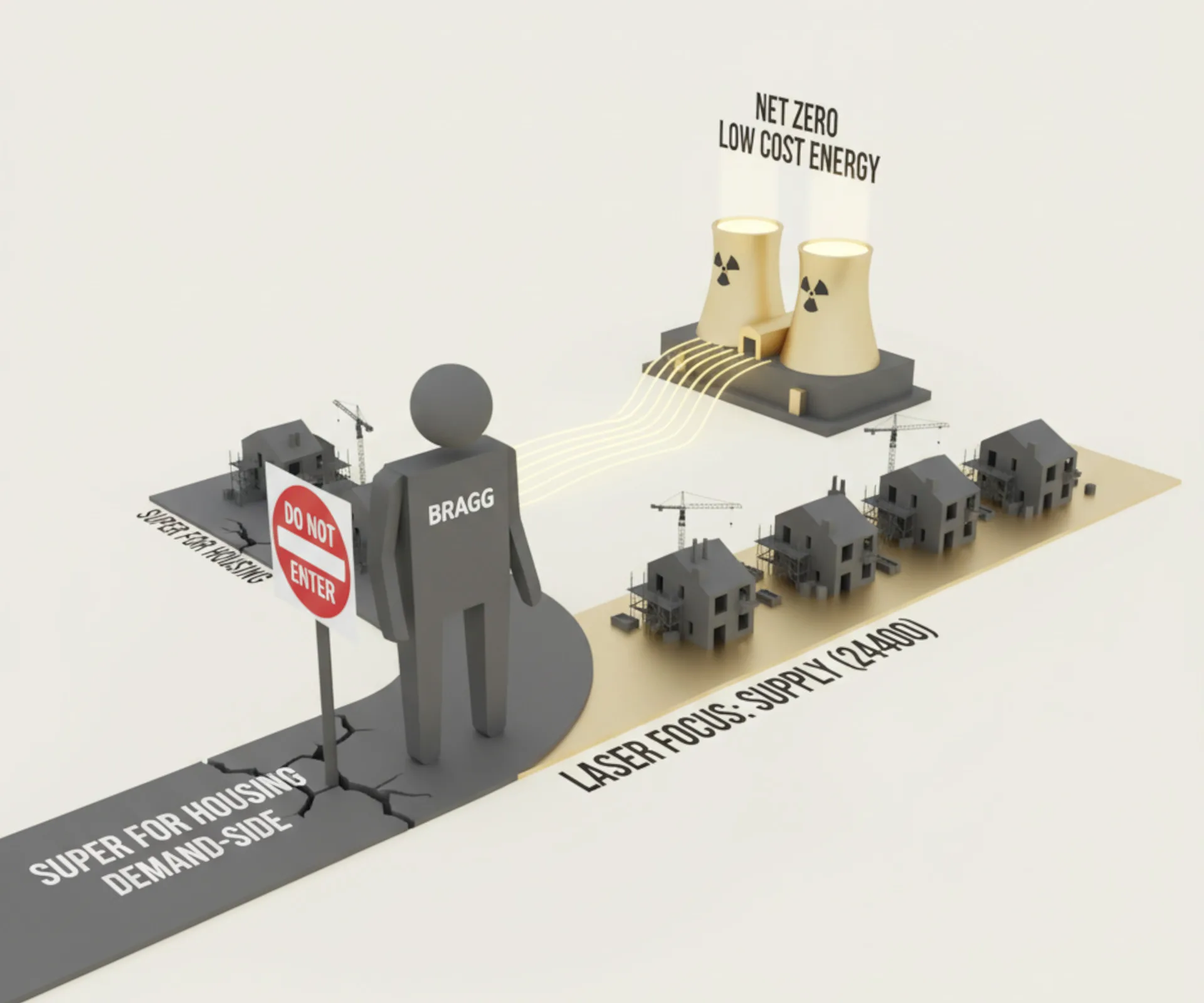
While the report rightly calls for more government action, a balanced view must acknowledge the limits of recent interventions. The Albanese government’s extension of parenting payments and increases in rent assistance are significant demand-side subsidies. However, in a chronically under-supplied rental market, such subsidies can be partially absorbed by rising rents without fundamentally improving affordability for the end-user. The core issue remains a structural lack of low-cost housing supply, which demand-side subsidies alone cannot fix.
Strategic Implications for Property Professionals
- For Rental Market Investors & Managers: This data provides a clear picture of the financial fragility of a large segment of the tenant base. It underscores the business risk of relying on a market where many tenants have no capacity to absorb rental shocks, and it highlights the importance of long-term, stable tenancies.
- For Developers: The report provides a clear, data-driven business case for affordable housing. There is a large, demonstrable, and government-supported market for smaller, well-located, and lower-cost housing products. Developers who can innovate in design, construction, and financing to serve this “missing middle” market may unlock new project pipelines.
- For the Build-to-Rent (BTR) Sector: This is a major opportunity. Institutional BTR developers are uniquely positioned to deliver affordable housing at scale as part of their larger projects (as seen in the Hoddle Street BTR approval). This HILDA data will strengthen their case when negotiating with state governments for planning concessions in exchange for mandated affordable housing components.
- For Policy Advocates: For industry bodies, this report is a powerful tool to advocate for policies that boost the supply of affordable rental housing. The data on child poverty is a particularly compelling argument for urgent government action on the supply side, including planning reform and direct investment in social housing.
This article is based on a report from www.theguardian.com titled “Nearly one in three single-parent households in Australia live in poverty, Hilda report shows | Poverty”. You can find the original article here: https://www.theguardian.com/society/2025/sep/19/nearly-one-in-three-single-parent-households-australia-live-in-poverty-hilda-report-shows
Given the disproportionate poverty rates among single-parent households and the long-term societal harms, what innovative housing models and policy interventions can property professionals advocate for to address affordability and stability for this vulnerable demographic?
Disclaimer
The analysis and information contained in this deconstruction are for general informational and strategic purposes only and do not constitute financial, investment, legal, or any other form of professional advice. The Australian Property Network (APN) is a strategic intelligence organisation and is not a licensed financial advisor.
This analysis is based on data and information from third-party sources believed to be reliable; however, APN provides no warranty as to its accuracy, currency, or completeness. Images used in this analysis are for illustrative and conceptual purposes only and may not represent real persons, properties, or events. Property values and market conditions can go down as well as up.
Before making any property or investment decisions, you must conduct your own thorough research and seek independent professional advice tailored to your specific circumstances.