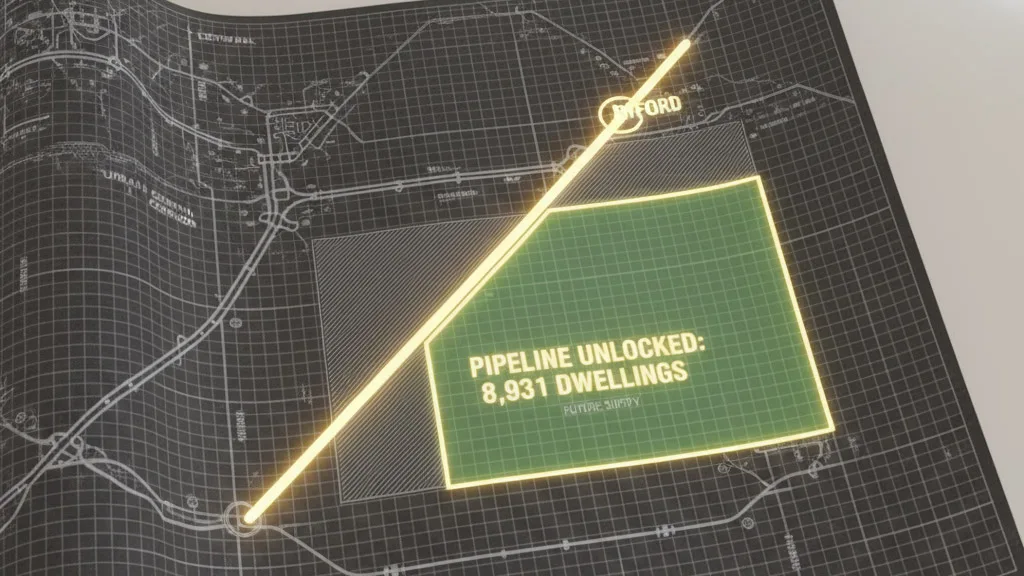


The Long Road: Deconstructing the Richmond Road Upgrade as a Precursor to the Next Western Sydney Land Boom
APN ANALYSIS: A-250906-NSW2
Executive Summary
The NSW Government’s initiation of strategic planning for the Richmond Road Corridor upgrade is a critical early signal for the next phase of property development in Western Sydney. While the project is in its infancy, its official placement on the state’s agenda confirms the long-term strategic importance of this arterial route. The key strategic takeaway for property professionals is that this is not a trigger for immediate speculative action, but a foundational indicator for long-range planning and positioning. The eventual upgrade will unlock significant industrial and residential land, and the time for strategic engagement and acquisition analysis begins now.
This analysis looks beyond the preliminary government announcement to deconstruct the project’s role as a piece of “enabling infrastructure.” We will assess its multi-faceted importance, from facilitating freight logistics to enhancing climate resilience, and outline a strategic framework for developers, investors, and landholders. The opportunity is real and substantial, but it lies on a 5-to-15-year horizon, requiring patience and careful monitoring of key project milestones.
Background & Strategic Context
The Richmond Road announcement is a single move in the multi-decade chess game of developing Western Sydney. To understand its true significance, it must be placed within our broader strategic frameworks.
- The State as Market-Maker (Project Overlord): This project is a classic example of state-led “enabling infrastructure,” a core concept of our “Project Overlord” analysis. The government is not reacting to the market; it is actively shaping it by laying the essential arterial groundwork to direct and facilitate future private sector development in its preferred growth corridors. This public expenditure is the necessary precursor to unlocking billions in private investment.
- Infrastructure Chasing Demographics (Housing Portability): The North West growth corridor is a primary destination for Sydney’s expanding population. As our “Housing Portability” intelligence details, rapid demographic shifts often result in a significant lag in public infrastructure, leading to congestion and reduced liveability. The Richmond Road upgrade is the state’s attempt to get ahead of this curve, future-proofing a critical corridor to manage anticipated urban growth.
- Engineering for Resilience (Water Security): The explicit inclusion of flood resilience and improved evacuation routes as a project goal is a critical data point. As per our “Water Security” analysis, climate resilience is now a primary consideration in all major infrastructure planning. In flood-prone regions like the Hawkesbury-Nepean valley, the quality of state-funded evacuation infrastructure will become a direct and quantifiable factor in property valuations and insurance risk assessments.
Deconstruction of the Source Event (transport.nsw.gov.au Project Page)
The initial government announcement is a statement of intent, not a fully formed project plan. The key facts are:
- Project: Early-stage strategic planning for the future upgrade of the Richmond Road Corridor, from the M7 Motorway to The Driftway.
- Current Status: The project is in its infancy, currently focused on a community and stakeholder consultation phase to gather feedback and data.
- Stated Objectives: To support the growth of residential communities and employment hubs, improve freight efficiency and access to the M7, enhance flood resilience and evacuation capacity, and cater to all future transport users (including pedestrians and cyclists).
- Immediate Action: Transport for NSW is seeking public input to inform the creation of a long-term strategic plan for the corridor. No designs, costs, or construction timelines have been confirmed.
Critical Analysis & Balanced View
The government’s announcement is a clear signal, but its implications must be interpreted with professional caution and a realistic understanding of infrastructure delivery cycles.
- Intent vs. Delivery: The most important distinction for property professionals is between the government’s clear intent and the profound uncertainty of delivery. This announcement confirms the strategic direction, which is invaluable for long-term planning. However, it does not guarantee a timeline or budget. As the CWO REZ cost blowout demonstrated, the path from a press release to a ribbon-cutting ceremony is long and fraught with fiscal and political risk.
- Consultation as a Lead Indicator: The community consultation phase, while a standard part of the process, is a critical lead indicator that must be monitored. The tone and nature of community feedback, whether it’s broad support or focused opposition to specific routes, can significantly influence the project’s final design, cost, and, most importantly, its timeline. This phase is a source of both opportunity (for shaping the outcome) and risk (of delays).
- The “Value Capture” Question: The project is framed as “unlocking” land. A more critical analysis acknowledges that it also creates enormous value through public expenditure. The key beneficiaries will be the current landowners along the corridor who will see the value of their holdings multiply. This raises the long-term policy question of “value capture”, whether the government will seek to recoup some of this publicly created wealth to help fund the project itself.
- Balanced View: The initiation of planning for the Richmond Road upgrade is a credible and highly significant signal for the future of the North West property market. The long-term trajectory towards a major industrial and residential boom in the corridor is now clearly marked. However, this is a 5-to-15-year play. The immediate period is not for speculation but for strategic positioning: engaging in the planning process, undertaking detailed site analysis, and preparing to act when concrete milestones are achieved.
Strategic Implications for Property Professionals
- For Developers & Land Bankers: This announcement provides the strategic justification for long-term land banking in and around the corridor. The key is securing sites with favourable zoning potential well in advance of any official rezoning decisions. Active participation in the government’s consultation process is crucial for shaping a final corridor plan that aligns with development objectives.
- For Industrial Property Specialists: The corridor’s destiny as a prime logistics and warehousing hub connecting to the M7 is now all but certain. Specialists should begin identifying key land parcels, establishing relationships with landowners, and developing a deep understanding of the region’s topographical and planning constraints to gain a first-mover advantage.
- For Residential Agents: In the short term, this announcement becomes a powerful marketing tool. It adds a compelling “future growth story” to properties in adjacent suburbs like Marsden Park, Schofields, and Riverstone, which can be used to bolster buyer confidence. Transparency about the project’s long timeline is essential.
- For Valuers & Planners: Valuers must exercise caution in assigning immediate value uplift; the current value is speculative potential, not bankable reality. Planners can provide significant value to clients by advising them on how to structure future development applications that align with the stated strategic goals of the new corridor plan.
This article is based on a report from www.transport.nsw.gov.au titled “Richmond Road Corridor – M7 Motorway to The Driftway”. You can find the original article here: https://www.transport.nsw.gov.au/projects/current-projects/richmond-road-corridor-m7-motorway-to-driftway
How can property professionals proactively leverage community engagement insights from infrastructure projects like the Richmond Road Corridor upgrade to anticipate and capitalise on future property value shifts and development opportunities in the North West?
Disclaimer
The analysis and information contained in this deconstruction are for general informational and strategic purposes only and do not constitute financial, investment, legal, or any other form of professional advice. The Australian Property Network (APN) is a strategic intelligence organisation and is not a licensed financial advisor.
This analysis is based on data and information from third-party sources believed to be reliable; however, APN provides no warranty as to its accuracy, currency, or completeness. Images used in this analysis are for illustrative and conceptual purposes only and may not represent real persons, properties, or events. Property values and market conditions can go down as well as up.
Before making any property or investment decisions, you must conduct your own thorough research and seek independent professional advice tailored to your specific circumstances.