

The Lindfield Anomaly: Deconstructing the Rise of the Strategic YIMBY
APN ANALYSIS: A-250923-AUS48
Executive Summary
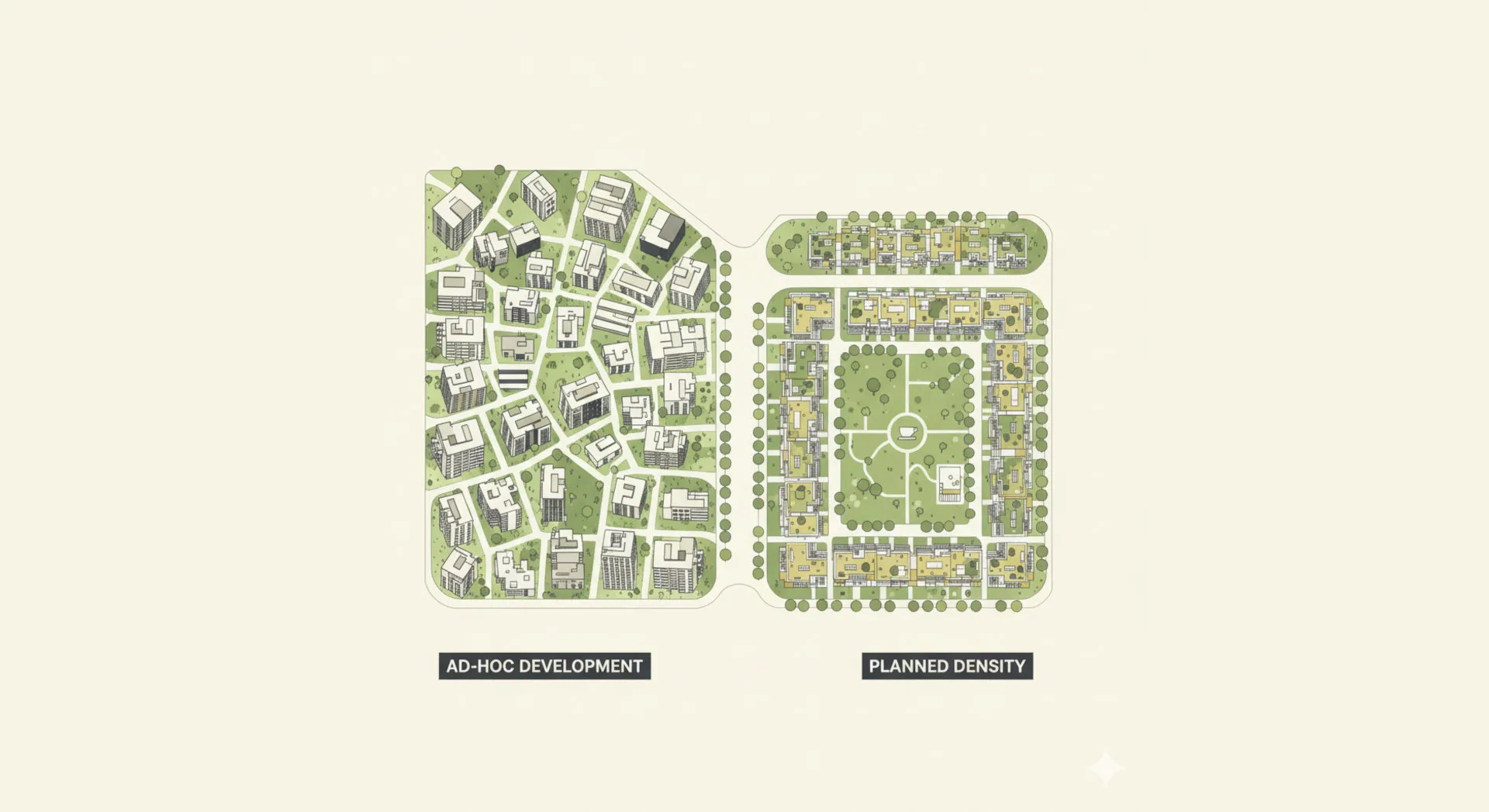
In a rare and strategically significant development, a group of residents in the affluent Sydney suburb of Lindfield are actively petitioning for increased housing density in their area, as reported by the Australian Financial Review. This move presents a powerful counter-narrative to the typical “Not In My Back Yard” (NIMBY) stance often encountered in established suburbs. The residents’ push is driven by a desire to take control of inevitable development, preferring a coordinated, master-planned approach to the ad-hoc, disruptive projects currently being approved.
For property professionals, this “Yes In My Back Yard” (YIMBY) movement is a potential game-changer. The key takeaway is that a new, more sophisticated form of community stakeholder is emerging, one that is not anti-development, but anti-bad-development. This creates a powerful opportunity for developers, planners, and councils to engage in genuine, collaborative planning that can accelerate housing supply while simultaneously improving local amenity, potentially creating a new template for resolving urban densification conflicts.
Background & Strategic Context
The resident-led push for upzoning in Lindfield is a strategically significant event that provides a powerful counterpoint to the standard narrative of community opposition to housing density, illustrating several of our core intelligence frameworks.
- The Proactive Stakeholder (APN Social Capital Index): This is a fascinating case study for the APN Social Capital Index. Instead of depleting social capital through endless opposition, this resident group is attempting to build it by proactively engaging with the planning process. They are moving from a position of protest to one of proposition, a rare and valuable form of community engagement that can lead to better, more widely accepted outcomes.
- Community-Led Planning (Carrying Capacity): This event flips the Carrying Capacity debate on its head. Usually, residents argue that an area’s capacity is full. Here, residents are acknowledging that capacity must be increased to meet housing targets and are seeking to become partners in planning how that is achieved. They want to co-design a solution that includes the necessary supporting infrastructure, rather than have ad-hoc projects forced upon them one by one.
- De-risking Development (Project Shield): For developers, a proactive, pro-density community group is a major de-risking factor, a key theme of Project Shield. Engaging with a “YIMBY” group can significantly reduce planning risk, shorten approval timelines, and mitigate the threat of costly legal challenges in the Land and Environment Court, which are common features of development in affluent suburbs.
Deconstruction of the afr.com Report
The afr.com report details a highly unusual and counterintuitive community action.
- The Core Anomaly: Residents in Lindfield are actively petitioning their local council for broader upzoning and increased housing density.
- The Catalyst: This proactive stance is ironically driven by their negative experience with an already approved 8 to 10-storey building. The report cites resident Paul Grimble’s concerns about extensive disruption and loss of amenity from this ad-hoc project as the motivation for seeking a more planned, holistic approach to the suburb’s inevitable densification.
- The Strategic Logic: The residents’ logic represents a crucial shift from outright opposition to strategic engagement. They recognise that development is coming and believe a coordinated, master-planned upzoning, shaped with their input, is preferable to a piecemeal, developer-led approach that ignores infrastructure and liveability.
Critical Analysis & Balanced View
This “strategic YIMBYism” could be a game-changer for urban development in established middle-ring suburbs. It suggests a potential pathway beyond the usual expensive and time-consuming deadlock between developers and resident action groups. It creates the opportunity for truly collaborative planning that can deliver both increased housing supply and improved local amenity, a genuine win-win scenario that is rarely seen.
However, this situation is not without complexity. This proactive group of residents does not necessarily represent the entire suburb. It’s highly likely that a traditional NIMBY faction also exists and will vociferously oppose this petition, viewing it as a betrayal by their neighbours. Developers and the local council will have to navigate a complex and potentially fractured community landscape, caught between a pro-density group and an anti-density group. Furthermore, the Lindfield residents are likely to be highly educated, well-resourced, and strategically savvy professionals. Their nuanced approach may not be easily replicated in other communities that lack this specific combination of social and intellectual capital.
Strategic Implications for Property Professionals
- For Developers: This is a golden opportunity, but one that requires a new skillset. The traditional, often combative, approach to community consultation will fail. The winning strategy here is one of partnership and co-design. Developers who can engage with this group transparently, listen to their ideas on amenity and infrastructure, and treat them as partners will face a much smoother and less risky path to approval.
- For Urban Planners & Local Government: This is a gift. Councils should embrace this proactive engagement and use it as a model for a new form of collaborative precinct planning. It provides the political cover to make difficult but necessary decisions on increasing density in a way that brings at least part of the community along.
- For Agents & Valuers: The outcome of this petition will have a significant impact on local property values. A successful, well-planned upzoning with accompanying infrastructure investment could lead to a broad uplift in land values across the precinct. A chaotic, contested process could create years of uncertainty and patchy outcomes.
- For Policy Advocates: The Lindfield case should be championed as a national example of sophisticated community-led planning. It provides a powerful counter-narrative to the simplistic idea that all residents in established suburbs are opposed to density and can be used to argue for more sophisticated engagement models.
This article is based on a report from www.afr.com titled “Lindfield residents petition for upzoning to meet dwelling targets”. You can find the original article here: https://www.afr.com/politics/rezoning-for-more-high-rise-blocks-deal-us-in-say-these-residents-20250908-p5mt74
Given the increasing density in established residential areas, how can property professionals better balance development with the preservation of existing residents’ quality of life and property values?
Disclaimer
The analysis and information contained in this deconstruction are for general informational and strategic purposes only and do not constitute financial, investment, legal, or any other form of professional advice. The Australian Property Network (APN) is a strategic intelligence organisation and is not a licensed financial advisor.
This analysis is based on data and information from third-party sources believed to be reliable; however, APN provides no warranty as to its accuracy, currency, or completeness. Images used in this analysis are for illustrative and conceptual purposes only and may not represent real persons, properties, or events. Property values and market conditions can go down as well as up.
Before making any property or investment decisions, you must conduct your own thorough research and seek independent professional advice tailored to your specific circumstances.