
The Sentinel State: Policing the Displaced
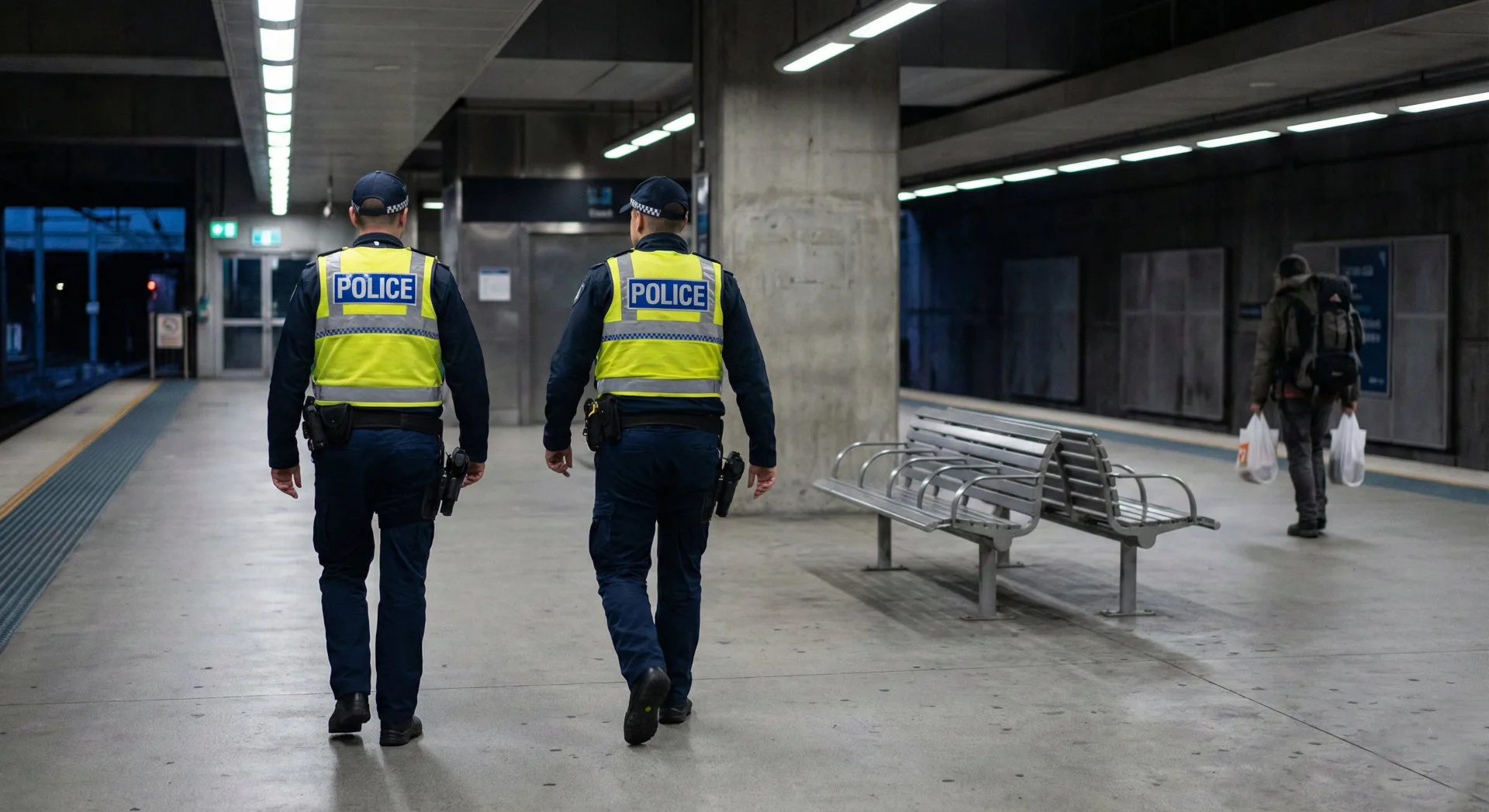
If you walk through the concourse of Central Station or Flinders Street, you will see two distinct groups of uniformed personnel.
One group is assisting tourists with their luggage. The other is scanning the corners, the alcoves, and the benches for anyone who looks like they might be settling in for the night.
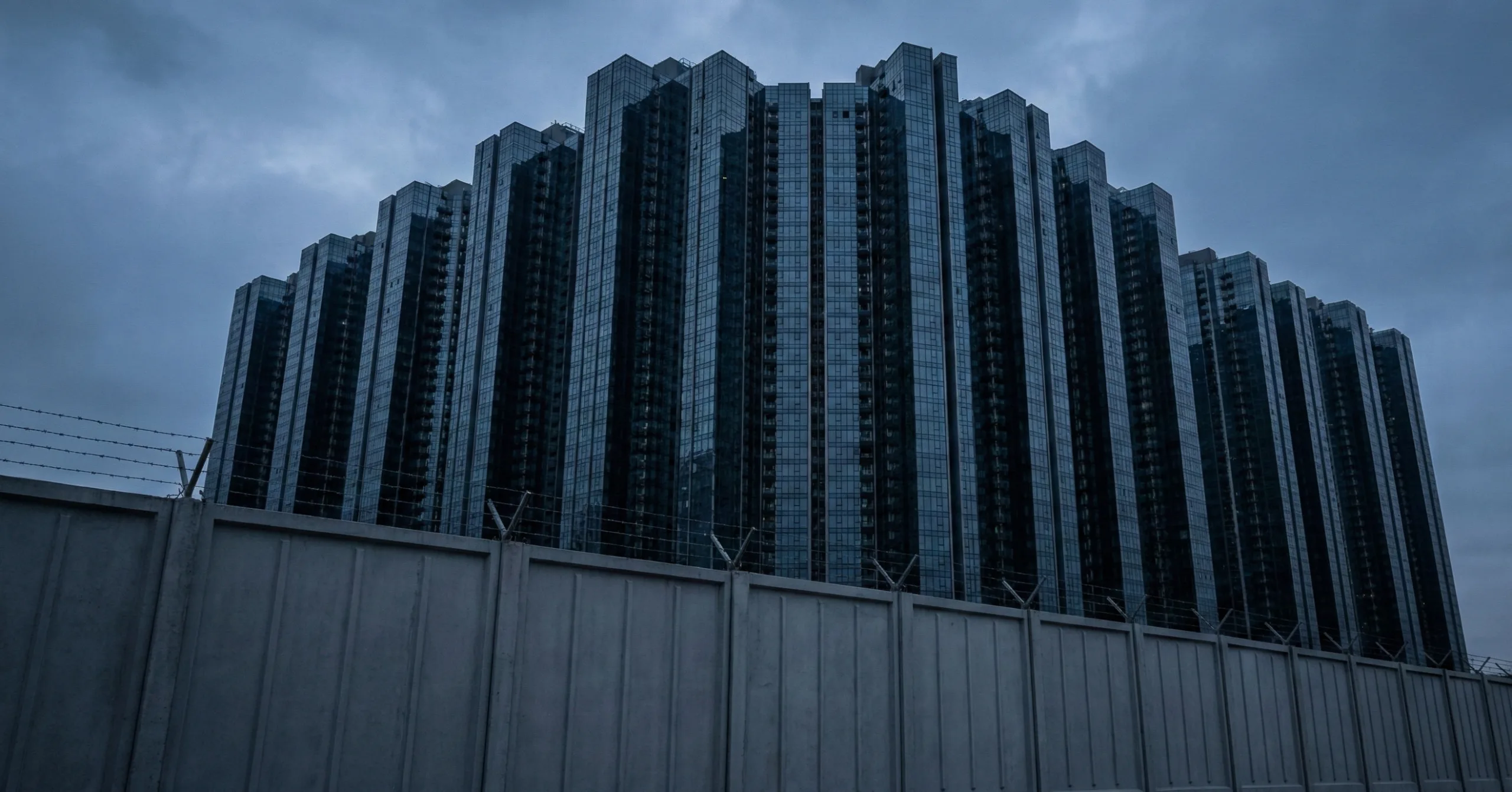
In The Asset Wall, we detailed the economic barrier that has structurally excluded 375,000 Australians from the housing market. When an individual encounters such a structural barrier, they are displaced into the public sphere.
And when homelessness becomes visible, the state stops treating it as a welfare issue and starts treating it as a security issue.
Welcome to The Sentinel State.
Public Space Management and Visual Amenity
In the lead-up to Christmas, major Australian municipalities initiate what are euphemistically termed “safety audits”. These function as displacement operations.
The goal is not to provide housing for people experiencing homelessness; it is to remove the visual evidence of homelessness from high-traffic retail and tourist zones.
Under “move-on” powers, police and council rangers can direct rough sleepers to leave an area. With shelters at capacity, this order perpetuates a cycle of displacement.
The consequences are materially adverse. In the structural disruption of a forced move, rough sleepers often lose the essential items required for their subsistence: scripts for medication, identification documents, and sleeping bags. When authorities direct a person to move on, it can materially impede that person’s capacity for social and economic re-integration.
The Care-to-Prison Pipeline
The structural issue of the Sentinel State is not limited to its adverse social outcomes; it is also characterised by its fiscal inefficiency.
We are funding a “Care-to-Prison” pipeline. By criminalising the acts associated with homelessness—camping in public, loitering, begging—we are directing displaced individuals into the justice system.
The cost of processing an individual experiencing homelessness through the courts and the prison system is materially higher compared to the cost of “Housing First” initiatives.
- Cost of Prison: ~$300 – $400 per day.
- Cost of Supportive Housing: ~$50 – $80 per day.
Public funds are being allocated to manage the secondary effects of poverty through the justice system, rather than allocating a fraction of that expenditure to address the underlying structural drivers of poverty.
Hospitals as Shelter
When the police don’t intervene, the paramedics do.
With housing options at 0.9% vacancy, the hospital Emergency Department (ED) has become the shelter of last resort. Our data shows a 99% increase in homelessness-related ED presentations in Melbourne alone.
These are not medical emergencies in the traditional sense. They are admissions for heat exhaustion, dehydration, and the physical deterioration that results from sleeping on concrete. Clinicians are admitting patients to provide them with a bed for the night, cognisant that discharging them back to the street would present a materially adverse health outcome.
The Logic of Containment
The Australian response to the housing structural pressure point has shifted. The policy focus has moved from resolution to containment.
This implies an acceptance of a structurally persistent cohort of displaced individuals. “Hostile architecture” is used—such as benches with spikes, slanted seats, and gated alcoves—to physically deter their presence. Authorities relocate them from one council zone to another, resulting in a pattern of inter-jurisdictional displacement.
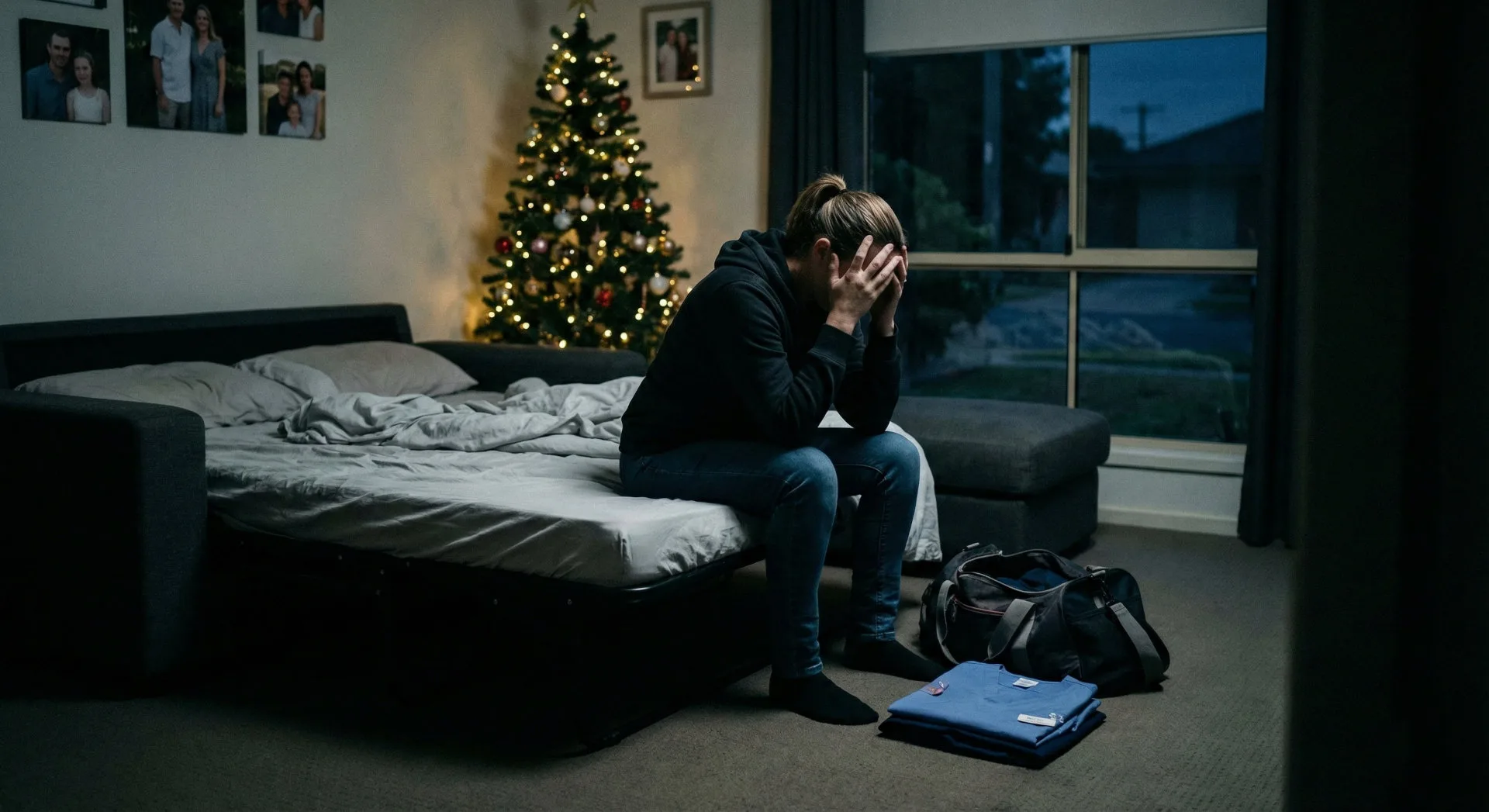
Nightly, thousands of Australians face a choice: sleep in a visible location and risk citation or arrest, or seek shelter in insecure, concealed locations and risk violence.
In The Christmas Cliff, the finale of this series, we examine the displacement of families from motels to accommodate holiday tourists, and the material public health risks posed by summer heat.
Disclaimer
The analysis, information, and opinions contained in this article are for general informational and strategic purposes only and do not constitute financial, investment, legal, or any other form of professional advice. The Australian Property Network (APN) is a strategic intelligence organisation and is not a licensed financial advisor.
The views, thoughts, and opinions expressed in this text belong solely to the author and do not necessarily reflect the official policy or position of the Australian Property Network (APN).
This content may be based on data from third-party sources believed to be reliable; however, APN provides no warranty as to its accuracy, currency, or completeness. Images used are for illustrative and conceptual purposes only and may not represent real persons, properties, or events.
Property values and market conditions can go down as well as up. Before making any property or investment decisions, you must conduct your own thorough research and seek independent professional advice tailored to your specific circumstances.