
Glenside High-Rise Go-Ahead: SA’s Green Light for Redevelopment Sparks Debate
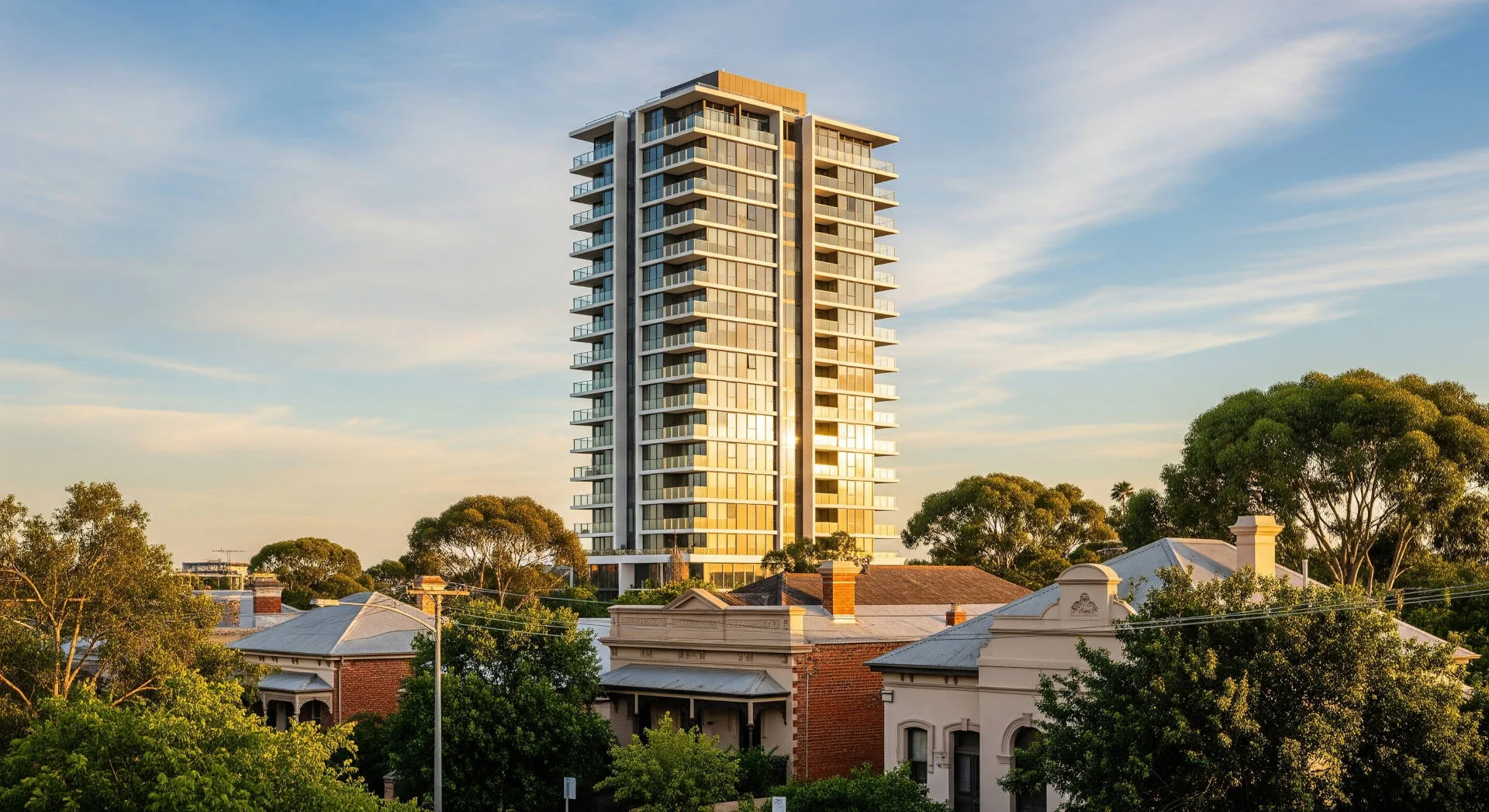
The South Australian government has approved a planning code amendment to allow for the construction of apartments up to 20 storeys high at the former Glenside Hospital site in Adelaide’s inner-eastern suburbs, a decision announced by Planning Minister Nick Champion on Friday, July 4, 2025. This rezoning, impacting parts of the site near Fullarton and Greenhill roads, represents an increase from the previously permitted eight storeys and marks a significant shift in development scale outside of the Adelaide central business district (CBD).
Cedar Woods, the developer who acquired the land in 2016 for $25.8 million, argued that the increased height was necessary for the Glenside development to reach “its full potential” and submitted the planning code amendment application in December 2023. The company has already undertaken significant redevelopment of the site, including townhouses and an eight-storey apartment building.
The approval allows for the potential addition of up to 200 homes to the existing plans for 1,000 homes on the site, according to Cedar Woods. Chief Operating Officer Patrick Archer stated that the amendment applies to a cluster of four buildings, with one proposed to reach 20 storeys and the others “cascading down to lower heights”.
This decision has significant implications for development feasibility in the area. The increased density could lead to higher land values and potentially greater returns for developers. However, it also introduces planning risk, as the final development proposal still requires approval from the State Planning Commission. This approval process will likely involve further scrutiny of the project’s design, its impact on local infrastructure, and its alignment with broader strategic planning objectives.
The rezoning has faced opposition from a local group, the “Glenside Development Action Group”, who argue that the 20-storey building would cause overshadowing and strain local infrastructure. Concerns raised include increased traffic congestion and inadequate parking. Glenside resident Deborah Munro stated she would have reconsidered purchasing her apartment if she had known about the plans for taller buildings. Local Member of Parliament (MP) Jack Batty criticised the government for allegedly ignoring community wishes.
Minister Champion acknowledged the community feedback, stating that “there was a lot of commentary and a lot of submissions and a lot of feedback” which was considered in the decision-making process. He added that infrastructure and traffic issues will be addressed later by the State Planning Commission.
The Urban Development Institute of Australia (UDIA) SA division CEO Liam Golding welcomed the decision as a “signal of intent for the future”. Property Council SA executive director Bruce Djite agreed, stating that denying the 20-storey development “would have been a disappointment, especially in the middle of a housing crisis.”
This rezoning decision highlights the ongoing tension between the need for increased housing density and the concerns of local communities. For property professionals, this case underscores the importance of proactive community engagement strategies and thorough assessment of infrastructure capacity when planning and developing high-density projects. The outcome of Cedar Woods’ final development proposal and its subsequent impact on the Glenside area will be closely watched as a potential precedent for future developments in similar locations.
This article is based on a report from www.abc.net.au titled “SA government approves rezoning for high-rise housing in Glenside redevelopment”. You can find the original article here: https://www.abc.net.au/news/2025-07-04/high-rise-apartments-glenside-code-amendment/105495728
Given the community concerns and infrastructure limitations, how can developers and planners proactively collaborate to ensure that future high-density projects demonstrably enhance existing community infrastructure and quality of life, rather than detract from it?
Disclaimer
The information contained in this article is for general informational purposes only and does not constitute financial, investment, or legal advice. The Australian Property Network (APN) is not a licensed financial advisor. The content is based on data from third-party sources and is provided without any warranty as to its accuracy, currency, or completeness. Property values can go down as well as up. Before making any property or investment decisions, you should conduct your own research and consider seeking independent professional advice tailored to your specific circumstances.