
101-Storey Skyscraper Aims to Top Aussie High-Rise Charts
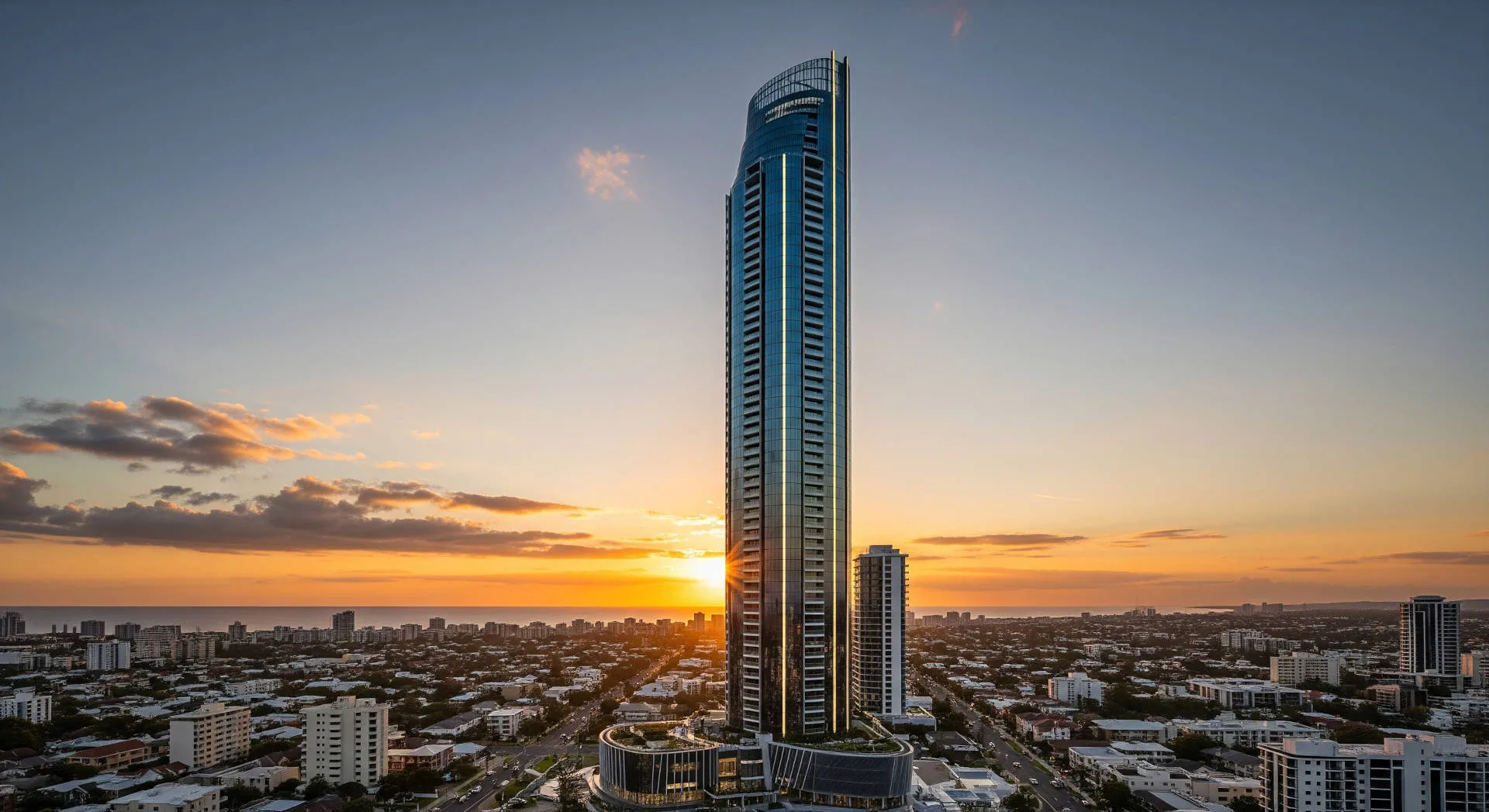
A proposal has been lodged with the Gold Coast City Council for a 101-storey tower in Southport, aiming to become Australia’s tallest building, according to architectureau.com.
The development application (DA) outlines plans for two buildings: a 60-storey commercial office tower and a 101-storey residential tower featuring 197 apartments, reaching nearly 400 metres in height, as stated in the original article. The project, named One Park Lane, is proposed for a site within a low-density, priority development area, currently approved for a 60-storey building called the Au Tower, designed by Cox Architecture (formerly Cox Rayner Architects).
The revised proposal, initially prepared in 2022 by BKK Architects, has been further developed by Cottee Parker for a Melbourne-based consortium led by developer Tony Goss and development partner Baracon, according to the source article. The DA’s submission marks a significant step, but the project faces potential hurdles in the planning approval process, given its scale and the existing zoning regulations.
The proposed development’s scale could have a notable impact on the Southport skyline and potentially influence future development patterns in the area. Property professionals will be keenly observing the council’s assessment of the DA, particularly regarding its compliance with height restrictions, density controls, and infrastructure capacity. The project’s success could set a precedent for similar high-rise developments in other priority development areas across the Gold Coast.
According to the architectural statement, the two towers are designed to be connected by a skybridge on the twenty-second floor, incorporating dining spaces and landscaped areas that offer “spectacular 360-degree views, creating a unique communal experience for residents.” This design element aims to enhance the project’s appeal to potential residents and differentiate it from other high-rise developments.
The design incorporates landscaping elements at ground level, with the towers “perched on an elevated, splayed podium structure that draws inspiration from the root structure of the Moreton Bay fig tree,” according to the source. Landscape architecture practice TCL has contributed to the project’s landscaping, including a landscaped forecourt beneath the podium canopy that links the ground floor entry atriums of both buildings. Landscaping is also employed across various amenity levels, designed to break the massing of the taller building into quadrants defined by distinct apartment types. These amenity floors “are conveyed as ‘slices’ through the building, expressing the sculpted trusses,” according to the design statement.
The architectural statement notes that the planting has been selected from “both the immediate area and wider Queensland, and which can work with both indoor and outdoor environments to provide a sense of scale, shelter, shade and vibrancy to the scheme.” Each apartment will feature balconies and wintergardens designed to capture easterly summer breezes. The design statement also notes that “the shallow footprint and spacious nature of the building footprint means that many apartments benefit from dual facade access and cross ventilation. On the levels where wind conditions allow, balconies are intended to be fully operable to maximise the temperate climate on the Gold Coast.”
To minimise solar heat gain, both buildings are designed with high-performing glazed facades that are dark blue-grey in colour, except at public levels, where the envelope is more transparent, according to the architectural statement. Building-integrated photovoltaic panel technology is planned for the western facades and at each spandrel level. The architectural statement concludes that the “modern design creates a sleek, elegant appearance, reflecting the natural surroundings and seamlessly integrating into the coastal landscape.”
The development’s potential impact on the local property market, including apartment supply and pricing, will be of significant interest to investors and developers. Furthermore, the project’s environmental sustainability features, such as the use of photovoltaic panels and high-performance glazing, may influence future design standards for high-rise buildings in the region.
This article is based on a report from architectureau.com titled “Proposal for 101-storey tower vies for Australia’s tallest”. You can find the original article here: https://architectureau.com/articles/proposal-for-101-storey-tower-vies-for-australias-tallest/
Given the scale and ambition of this project in a low-density area, how will the development’s infrastructure and services integrate with and enhance the existing community fabric, rather than overwhelm it?
Disclaimer
The information contained in this article is for general informational purposes only and does not constitute financial, investment, or legal advice. The Australian Property Network (APN) is not a licensed financial advisor. The content is based on data from third-party sources and is provided without any warranty as to its accuracy, currency, or completeness. Property values can go down as well as up. Before making any property or investment decisions, you should conduct your own research and consider seeking independent professional advice tailored to your specific circumstances.