

Checkmate: The RBA’s Forced Admission and the Dawn of Australia’s Housing Stagflation
APN INSIGHT: I-251212-AUS132097
The Reserve Bank’s November 4th decision to hold the cash rate at 3.60% was not a pause; it was a surrender. It was the moment the RBA was forced to publicly admit its 2025 easing cycle was a catastrophic policy failure. In halting the cuts, the central bank conceded that its own monetary policy had become a primary domestic driver of the very inflation it is mandated to defeat, pouring fuel on the fire of housing and construction costs.
This is not just another market update. It is the definitive, real-world validation of The Wealth Funnel thesis; the principle that loose monetary policy disproportionately funnels capital into asset prices, benefiting incumbent owners while crippling the productive economy. The RBA is now trapped, the development sector is being pushed into a stagflationary vortex, and the rulebook for property investment and development for the next cycle has been violently rewritten.
The Unspoken Confession
To understand the gravity of this moment, one must read between the lines of the RBA’s statement. The admission that underlying inflation was “materially higher than expected” was the trigger, but the cause was the damning part. The Bank explicitly linked its “recent interest rate reductions” to a housing market where “prices are rising” and “dwelling construction costs… to increase again”.
This is the central bank providing the explicit causal chain for its own policy misstep: RBA easing stimulated demand, which supercharged the housing market, which in turn drove construction costs higher, feeding directly into the persistent inflation that breached its own target band. The market’s reaction was immediate and brutal, wiping out all hope of further cuts and forcing economists to recalibrate their forecasts. The Governor’s confirmation that the Board “did not consider cutting rates” was the final nail in the coffin of the 2025 easing cycle.
The Wealth Funnel Validated
For years, our commentary has centred on The Wealth Funnel, a framework explaining how monetary policy acts not as a broad economic stimulant, but as a narrow mechanism for asset price inflation. The theory holds that lowering the cost of capital disproportionately benefits those who already hold assets, allowing them to leverage further and bid up prices, while simultaneously increasing the costs (like labour and materials) for new production. The result is a widening wealth gap and a less productive economy.
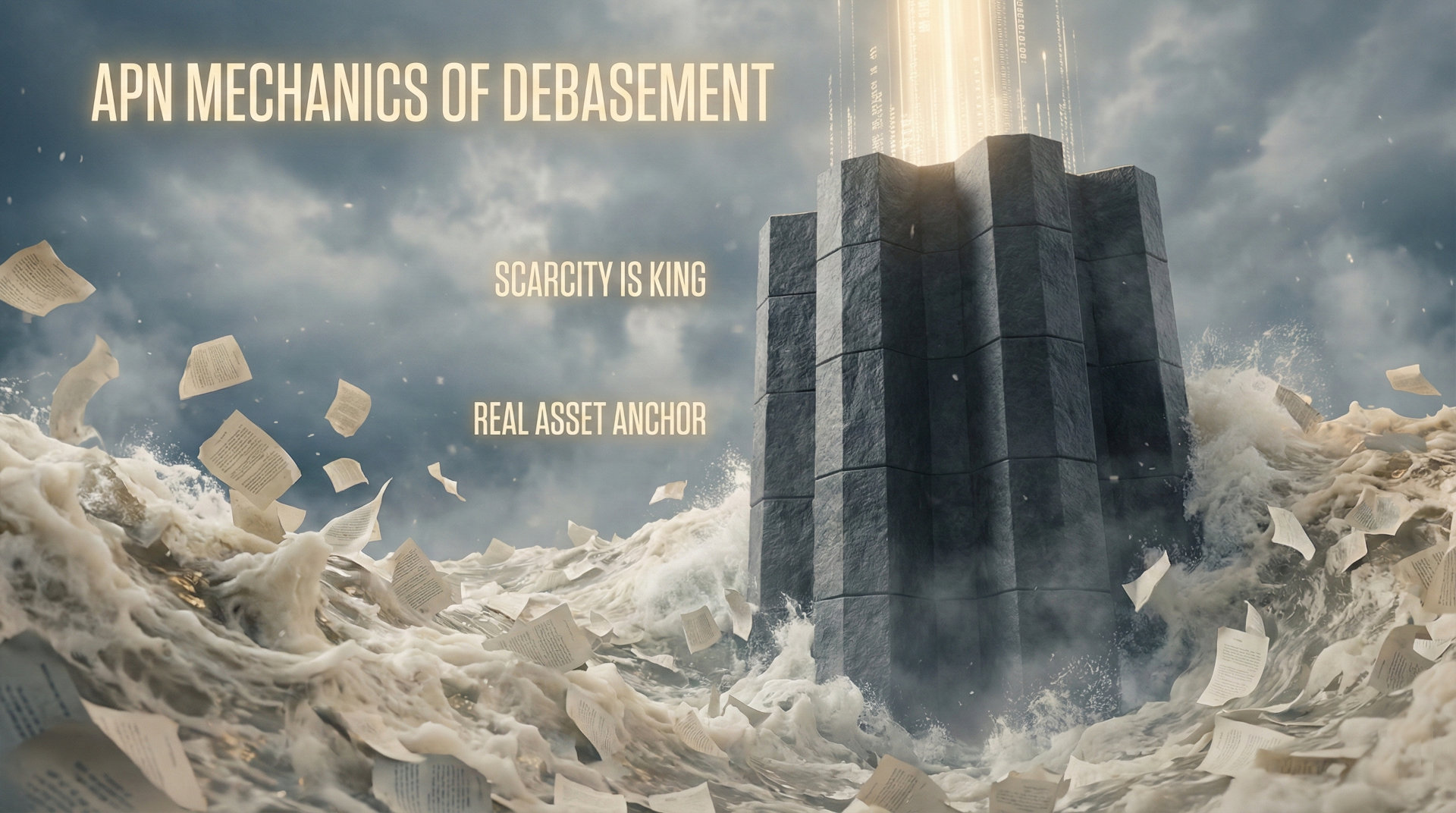
The RBA’s November pivot is the textbook case study. The easing cycle did not primarily stimulate broad business investment or wage growth; it funnelled cheap money directly into the housing market. This ignited asset values for existing homeowners but made it prohibitively expensive to build new homes, creating a structural supply shortage. The RBA has now been forced to admit it was fighting a monster of its own creation.
The Stagflation Trap is Sprung
The consequence for the property sector is a structural “Stagflation Trap,” a concept that will now dominate the strategic thinking of every developer and lender. The high construction costs, baked in by the failed easing cycle, have made new project feasibility almost impossible. This chokes the supply of new housing, representing the ‘stagnation’ component.
Simultaneously, the chronic undersupply of housing, particularly in the rental market, becomes an entrenched source of high inflation. This housing-led inflation prevents the RBA from making the future rate cuts that would be necessary to restore developer feasibility. This is the doom loop: no new supply keeps inflation high, and high inflation prevents the policy action needed to deliver new supply. This dynamic will be a primary negative driver for the APN Future Development Pipeline Index™ for the foreseeable future, ensuring developer sentiment remains deeply subdued.
A New Reality for Capital and Policy
The strategic implications are profound and immediate. The terminal cash rate for this cycle is now 3.60%, at a minimum. Every developer, funder, and investor who predicated their financial models on a lower rate floor must tear them up. The risk of another hike is no longer a fringe theory but a prudent inclusion in any high-risk modelling.
For investors, the case for existing, well-located assets has never been stronger. With the pipeline of new, competing supply effectively crippled by the stagflation trap, incumbent assets will continue to capture the upside of chronic undersupply through rental growth and capital appreciation.
Most critically, this event places the burden of solving the housing crisis squarely back on government. The RBA is in a policy straitjacket. It has now been proven that monetary policy is a blunt and counter-productive tool for addressing a supply-side problem. Without meaningful, aggressive, and immediate reform in planning, zoning, and infrastructure delivery, Australia’s housing crisis will only deepen. The RBA has played its last card; the game is now in the hands of policymakers.
Disclaimer
The analysis, information, and opinions contained in this article are for general informational and strategic purposes only and do not constitute financial, investment, legal, or any other form of professional advice. The Australian Property Network (APN) is a strategic intelligence organisation and is not a licensed financial advisor.
The views, thoughts, and opinions expressed in this text belong solely to the author and do not necessarily reflect the official policy or position of the Australian Property Network (APN).
This content may be based on data from third-party sources believed to be reliable; however, APN provides no warranty as to its accuracy, currency, or completeness. Images used are for illustrative and conceptual purposes only and may not represent real persons, properties, or events.
Property values and market conditions can go down as well as up. Before making any property or investment decisions, you must conduct your own thorough research and seek independent professional advice tailored to your specific circumstances.