
ASIO Sabotage Warning Confirmed as Regulatory Velocity Multiplier, Escalating Threat from Espionage to Active Sabotage
APN ANALYSIS: A-251112-AUS007
Executive Summary
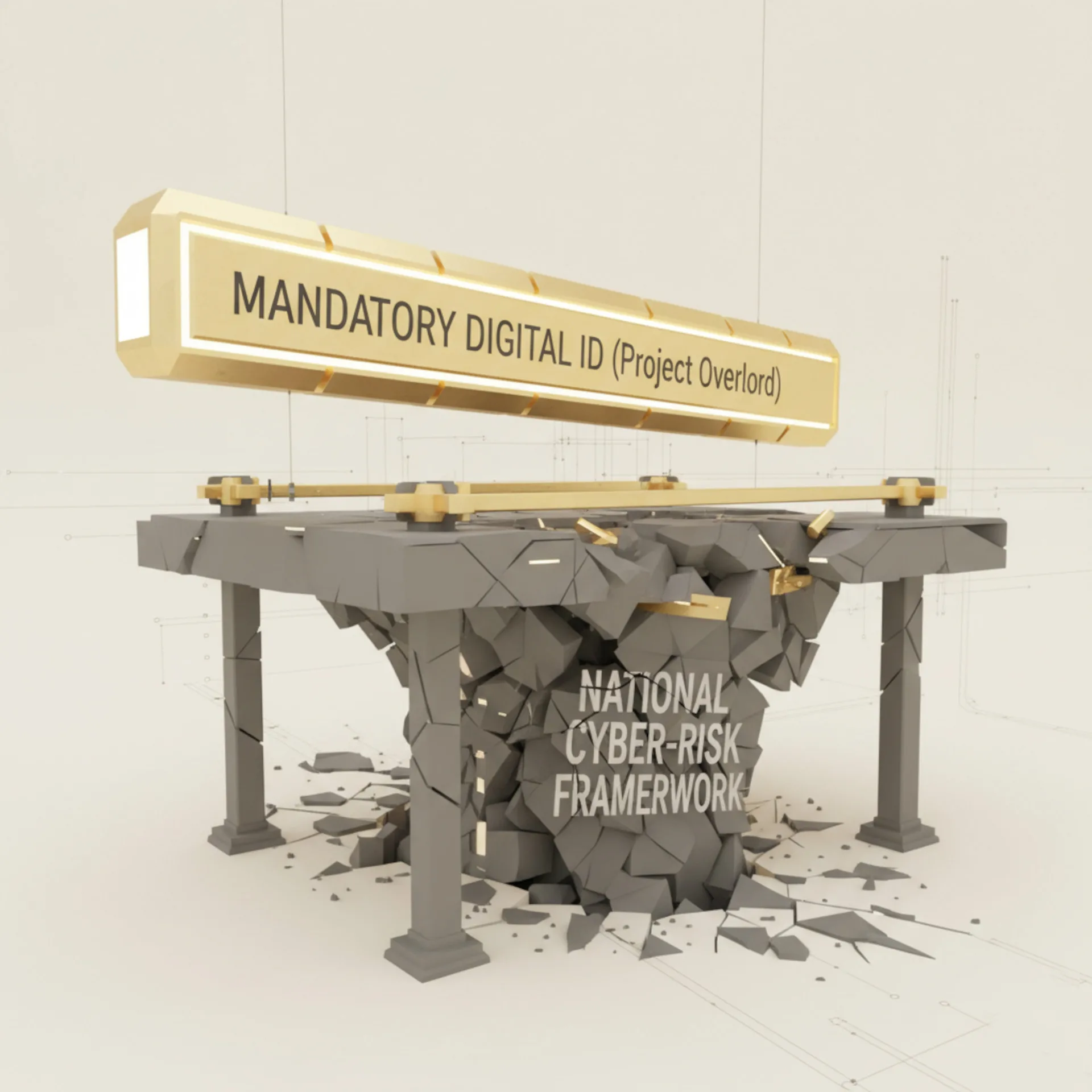
The ASIO Director-General’s November 11 warning is a material escalation of Australia’s threat doctrine, shifting from passive espionage to active, “high-impact sabotage” via the “pre-positioning” of malicious code. Our analysis confirms this speech was the unassailable political justification used in Parliament to accelerate new cybersecurity legislation, making this a definitive APN Regulatory Velocity Multiplier™ (24210) event.
For property professionals, this is not a distant cyber threat; it is an immediate and costly new liability. The accelerated legislation (SOCI Act reforms) creates a permanent, non-discretionary, and largely non-public compliance burden (CapEx/OpEx) for all new developments that rely on the critical infrastructure (energy, water, transport) that ASIO has named as a primary target. This new cost is a direct, hidden input that will widen the APN RLV Gap™ (24410).
Background & Strategic Context
This analysis identifies a specific, high-impact political catalyst that has permanently re-rated the risk and cost environment for Australian infrastructure and property. This event validates and operationalises three core APN frameworks.
- A National Security Catalyst (APN RVM™): The ASIO DG’s speech is a textbook APN Regulatory Velocity Multiplier™ (24210) event. It successfully shifted the narrative from a corporate/criminal problem (espionage) to an existential, national security crisis (sabotage). This “crisis atmosphere” provided the overwhelming political will needed to overcome industry friction and fast-track pre-existing legislation (the Cyber Security Bill).
- New Costs for Critical Infrastructure (APN Risk & Compliance Index™): The impact is concentrated on the APN Risk & Compliance Index™ (24200). The targets explicitly named by ASIO, “energy,” “water,” “telecommunications,” and “transport”, are the non-negotiable, critical inputs for all large-scale property development. The accelerated SOCI Act reforms will mandate new, higher standards of resilience, creating a new, permanent cost layer.
- A Hidden Liability (APN RLV Gap™): The market’s “NIL RETURN” on this event is the key finding. It signifies the costs are not being debated publicly; they are being absorbed internally as a sensitive, non-public liability. This new compliance cost is a direct, hidden input that is widening the APN RLV Gap™ (24410). Our analysis must now quantify this cost by analysing the legislation itself, not by monitoring public reaction.
Deconstruction of the Source Event
This deconstruction is based on an internal APN intelligence briefing. The key facts are:
- The Catalyst: A public speech by ASIO DG Mike Burgess on November 11, 2025.
- The Threat Actors: Explicitly named “Chinese hackers,” specifically the state-sponsored units “Volt Typhoon” and “Salt Typhoon.”
- The Threat Escalation: The doctrine has shifted. “Salt Typhoon” was for “espionage,” but “Volt Typhoon” is for “pre-positioning for potential sabotage.”
- The Targets: “Energy,” “telecommunications,” “water,” and “transport” networks.
- The Political Justification: The DG’s warning was cited verbatim in Parliamentary Hansard as the primary justification for accelerating the Cyber Security Bill, which “builds upon previous reforms to the SOCI Act.”
- ASIO’s Doctrine: “Once access is gained – the network is penetrated – what happens next is a matter of intent, not capability.”
- The Market Reaction: A “NIL RETURN” for public industry reaction on new project compliance costs, confirming these calculations are occurring via non-public channels (e.g., the Critical Infrastructure Security Centre).
Critical Analysis & Balanced View
The “real story” is the masterful execution of a political and communications strategy by ASIO. The dual, high-impact warnings (assassination and sabotage) within seven days were deliberately designed to create a crisis atmosphere, providing the political cover for a new, aggressive, and costly national defence posture.
This new doctrine renders traditional “perimeter defence” (firewalls, prevention) obsolete. The new ASIO doctrine presumes the threat is “already in,” forcing a strategic, philosophical, and costly shift to mandatory resilience, redundancy, and incident response. This is a permanent, non-negotiable elevation of standards. The “NIL RETURN” from industry confirms this is not a public debate but a national security directive. The costs are not being argued; they are being calculated. This confirms our APN RLV Gap™ (24410) analysis must pivot to quantify the direct compliance costs of the new SOCI Act standards, as this is a new, hidden liability for any significant project.
Strategic Implications for Property Professionals
- For Developers (Large Scale): Your CapEx and OpEx models are now incomplete. You must factor in new, mandatory compliance costs for cyber resilience (e.g., mandated redundancy, incident response plans, mandatory reporting) as dictated by the accelerated SOCI Act reforms.
- For Investors (Infrastructure & Property): Due diligence for large-scale assets must now include a mandatory national security risk metric. The primary question is: what is the asset’s compliance buffer against the new, stringent SOCI Act standards?
- For Valuers (Critical Assets): The risk profile for critical infrastructure (energy grids, water plants, data centres) has fundamentally changed. These assets now carry a latent, geopolitical activation risk tied to “a major crisis or conflict.”
- For Digital Infrastructure: This national security imperative dramatically reinforces the value of geographically diverse digital assets. The APN Agora™ (24140) value uplift for assets outside the Sydney concentration (like the Tabua cable) is now amplified by this critical, strategic de-risking.
APN Index Management
The APN Codex 24000 Series is a proprietary set of indices that translates complex market forces into measurable metrics. This section outlines how the preceding analysis is validated against, and informs the calibration of, these frameworks.
- Validation: This analysis provides high-confidence validation of the APN Regulatory Velocity Multiplier™ (24210). The ASIO warning is confirmed as the political catalyst that escalated a threat from “corporate” to “national security,” providing the unassailable political will to accelerate legislation (the core RVM™ mechanism).
- Index Calibration (24200): The APN Risk & Compliance Index™ (24200) is calibrated to reflect this permanent, non-discretionary escalation. The new SOCI Act compliance standards are now a primary, high-impact variable for all property developments reliant on critical infrastructure.
- Index Calibration (24410): The APN RLV Gap™ (24410) model is updated. The “NIL RETURN” finding confirms a new hidden cost vector. We must now quantify the soci_compliance_cost (OpEx/CapEx for mandatory redundancy/response) as a new, non-public liability, widening the gap.
- Data Capture (24310): The APN Symbiotic Intelligence Network™ (24310) is tasked to pivot from monitoring public commentary (NIL RETURN) to a direct analysis of the Cyber Security Bill and associated SOCI Act reforms to quantify these new, mandatory compliance costs.
Disclaimer
The analysis and information contained in this deconstruction are for general informational and strategic purposes only and do not constitute financial, investment, legal, or any other form of professional advice. The Australian Property Network (APN) is a strategic intelligence organisation and is not a licensed financial advisor.
This analysis is based on data and information from third-party sources believed to be reliable; however, APN provides no warranty as to its accuracy, currency, or completeness. Images used in this analysis are for illustrative and conceptual purposes only and may not represent real persons, properties, or events.
All frameworks (Codex 24100-24800) are proprietary to APN.
Property values and market conditions can go up or down. Before making any property or investment decisions, you must conduct your own thorough research and seek independent professional advice tailored to your specific circumstances.